Microeconomic Foundations and the Nobel Prize in Economics
On Monday morning, economics enthusiasts worldwide tuned in to a significant announcement from Sweden, as the Nobel Prize in Economics winners were revealed. Robert Hall from Stanford University and Michael Woodford from Columbia University were honored for their crucial contributions to the microeconomic foundations of macroeconomic stabilization.
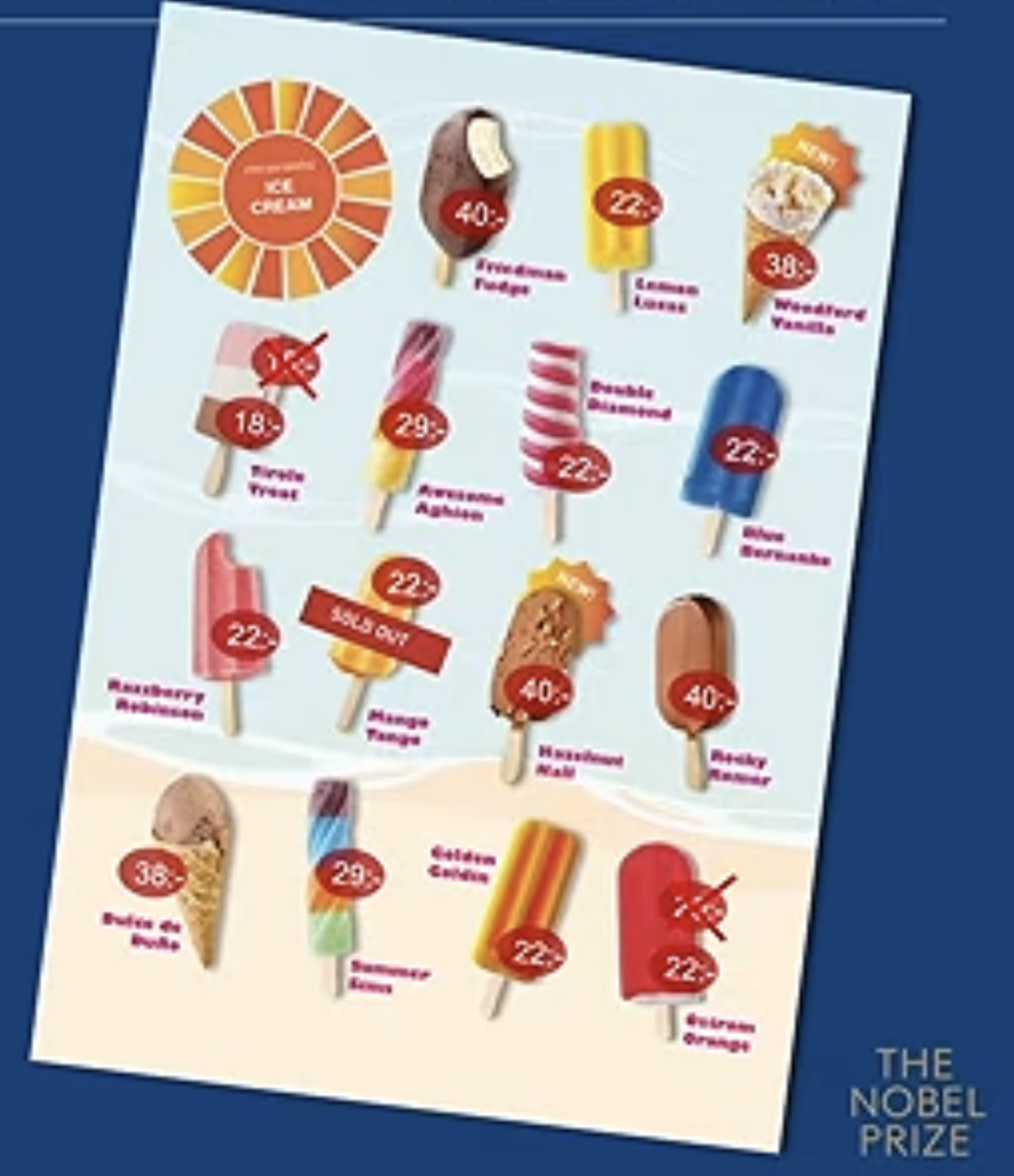
To illustrate their work, Timo Boppart, an economist at Stockholm University and member of the prize committee, delivered an engaging presentation. He employed an ice cream menu as a vivid example to explain how firms determine prices.
“How do firms actually set prices?” Boppart questioned, pointing out that prices don’t adjust continuously but remain set for extended periods, like a season.
The concept of sticky prices—where prices resist changes despite economic shifts—proved central in reviving and reshaping macroeconomic theory. This year’s prize acknowledged work foundational to New Keynesian economics.
Historical Context of Keynesian Economics
John Maynard Keynes, considered the father of macroeconomics, provided solutions for government involvement to alleviate economic slumps during the Great Depression. His theories argued that the invisible hand of the free market was inadequate to restore employment and boost economic health.
Keynes influenced economists and policymakers profoundly, even drawing admiration from Milton Friedman. However, in the 1970s, Keynesian models encountered difficulties with simultaneous inflation and unemployment, known as stagflation.
Economists like Robert Lucas and Edward Prescott, both Nobel Laureates, criticized the reliance on historical economic patterns without accounting for individual decisions. They developed models like “real business cycle” theory, which assumed flexible prices and wages responding swiftly to demand changes.
New Keynesian Economics: A Rebirth
Hall and Woodford played pivotal roles in reconstructing macroeconomic theories. They acknowledged individual expectations and actions, reconnecting macroeconomics with microeconomic perspectives.
In scenarios like declining ice cream demand during recessions, sticky prices lead to reduced production and employment. Unlike flexible wage models, stickiness explains persistent joblessness.
“Bringing price rigidities into the framework was key,” emphasized Boppart.
These insights reinforced the necessity for government policy intervention. New Keynesian models accepted criticisms of classic models and incorporated individual decision-making processes.
Hall and Woodford’s work influenced strategies like the Federal Reserve’s “forward guidance” during the Great Recession. By signaling future interest rates, central banks aimed to stimulate immediate economic activity.
Keynesian economics evolved, with substantial acceptance of sticky price assumptions among economists. As Gregory Mankiw noted, “Most economists today—buy into the sticky price assumption.”
In sum, New Keynesian models continue to shape policy approaches in managing recessions and inflation, affirming the enduring relevance of Keynesian insights.