U.S. Army Prepares for Domestic Threats Amid Advances in Technology
The U.S. military traditionally focuses on countering threats overseas. Changes are occurring due to the rising threat of drones, cyberattacks, and long-range weaponry. The Army is now strategizing for potential domestic attacks before deploying forces abroad.
Adjusting Military Assumptions
Gen. Christopher LaNeve, the acting chief of staff for the Army, discussed these new challenges. Previous conflicts in Iraq and Afghanistan led to assumptions of secure bases and supply lines at home. LaNeve explained that the military is questioning those assumptions as it anticipates conflicts with advanced adversaries like China.
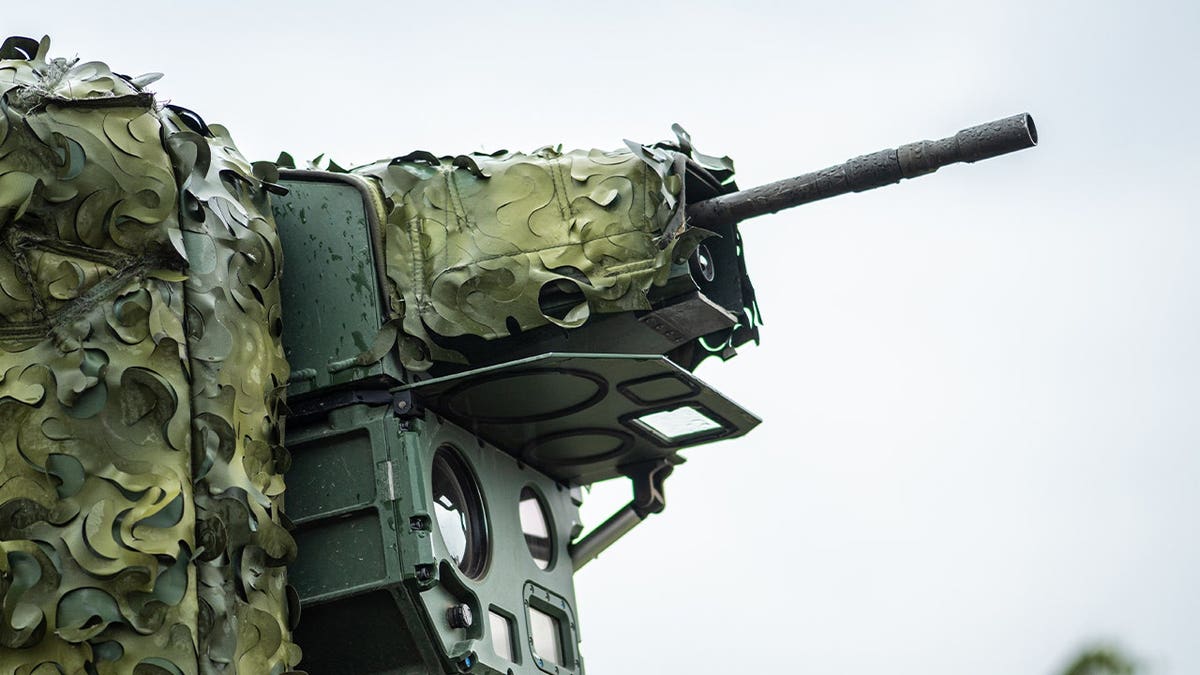
The FBI has noted that battlefield-style drone attacks might soon impact U.S. soil. An anti-drone laser system has been tested on a Stryker combat vehicle in Ukraine, highlighting the Army’s concern about future threats to bases.
Preparation for Homeland Defense
The Pentagon stresses defending homeland military outposts and infrastructure. Past drone incidents in Virginia and New Jersey remain unlinked publicly to China, but they reflect broader security concerns.
The Army has released the “How the Army Fights” framework. This operational guideline focuses on deployment and communication if U.S. bases or supply chains face disruption.
LaNeve emphasized the importance of this guideline, stating it sets the Army’s direction and priorities. He discussed operating under adversary disruption, highlighting the ability to constantly maneuver while maintaining operational capabilities.
Strengthening Domestic Security Measures
Efforts include the Joint Interagency Task Force 401 collaborating with agencies to reinforce counter-drone defenses. Acting Army Secretary Adam Telle points to the southern border, where counter-drone technology is actively tested and used.
Biological threats are now part of routine combat training. Soldiers learn to operate in the face of disease outbreaks and biological attacks.
Technological Advances in Surveillance
Air Force Secretary Troy Meink voiced concerns regarding advancing surveillance technologies. These could make military operations more detectable globally. Meink indicated adversaries might soon track military assets with increased ease.
The Pentagon works on making forces more resilient by employing autonomous systems, allowing operations in dangerous environments without risking manned platforms.
Criticism of Technological Readiness
War Secretary Pete Hegseth criticized the Pentagon’s response to technological changes. He believes that recent administrations haven’t kept pace with developments in hypersonics, space weaponization, and drone technology.
LaNeve concludes by emphasizing soldier reliance over technology. While technological advancements enhance capabilities, fundamental combat skills remain crucial.