Mahjong Makers in Taixing, China Capitalize on U.S. Demand Surge
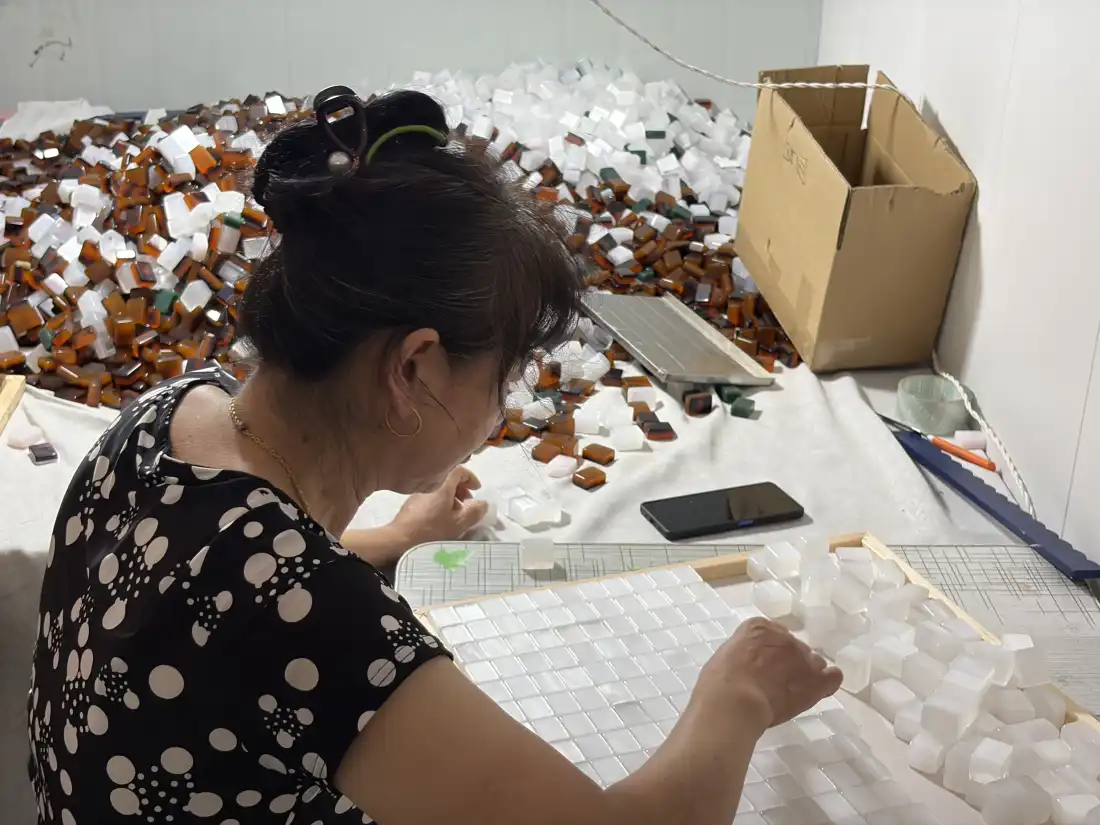
A worker in a mahjong workshop in Taixing, China, inspects each tile meticulously before they are shipped to the U.S., where they sell for hundreds per set. Inside this eastern city, a village home doubles as a workshop for producing mahjong sets, a game that is currently gaining popularity in the U.S.
Three workers from Taixing Senju Cultural Entertainment Supplies handle burnt-orange and pearl-white tiles with care, examining every edge against the light. Tiles with imperfections drop into a milk crate, as only flawless pieces are sent overseas. Workshop co-owner Wang Hao explains, “Clients sell these sets for $300 to $400, while we produce them for about 200 yuan ($30) each.” Due to high profit margins, clients do not grumble about U.S. tariffs or rising shipping costs, despite geopolitical issues and supply chain disruptions.
Mahjong, originating in China in the late 1800s, spread to the U.S. in the 1920s. A recent revival, fueled by social media, has led to increased demand. Wang, observing a surge in search volume for mahjong while working at Alibaba.com, left to distribute mahjong to the U.S., where styles differ from Chinese versions. American sets are smaller and more colorful, crafted from acrylic, requiring different techniques and equipment.
Wang’s transition from distribution to direct manufacturing stemmed from Taixing producers struggling to meet U.S. demands. “The supply was tight,” Wang recalls. “Even early payments couldn’t guarantee timely shipments.” Overhauling manufacturing was necessary as American preferences differ. Traditional sets, made from melamine, offer a heavy, stone-like feel, yet U.S. buyers favor smaller, colorful acrylic sets, which demand distinct production methods.
One early adopter, Zhu Xingyao, shifted his family business toward these American preferences. Zhu’s company, Taixing City Jiale Melamine Products, once primarily targeted the domestic market. Now, nearly all sets are destined overseas with vibrant designs.
The overseas demand has prompted Zhu to abandon the domestic market. Chinese sales peaked during COVID-19 lockdowns but have declined as consumers become more frugal. In September, retail sales barely rose by 1.1%, reflecting broader hesitance among Chinese buyers.
Despite waning local demand, new mahjong manufacturers have emerged in China. Zhu notes that the market has become fiercely competitive, driven by a concept called ‘neijuan,’ or ‘involution.’ This intense rivalry extends to Zhu’s former factory workers establishing new ventures in regions like Henan and Anhui, benefiting from lower wages. These lower costs enable competitors to reduce prices, appealing to price-sensitive domestic buyers.
American consumers prioritize quality and reliability over cost, says Wang. Prospective client Ju Jiaojuan, from a family of traditional mahjong makers, seeks to export Wang’s designs to the U.S., seeing a two-to-three-year window of opportunity before competition drives down profits.
Wang emphasizes premium presentation, including precise packaging. “Mahjong tiles must be wrapped perfectly; no air gaps or loose seams,” to enhance the unboxing experience crucial for social media promotion. Videos of American buyers unwrapping their purchases on TikTok and Instagram highlight these details.
During the interview, Wang received an urgent request from an American buyer, illustrating the ongoing high demand. Jasmine Ling contributed to this report.