Israeli Election Tests Netanyahu’s Grip on Power
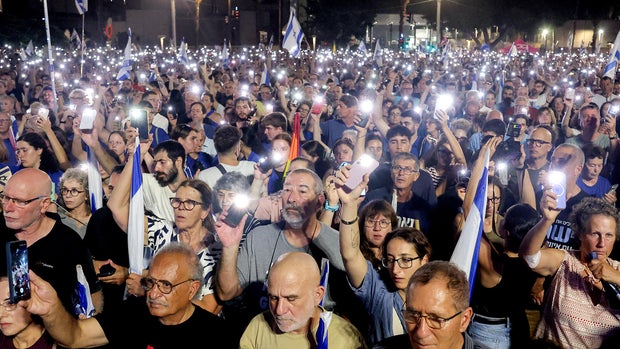
By October 25, 2026, tens of thousands took to the streets in Tel Aviv. They demanded accountability from Benjamin Netanyahu’s government for the failures leading to the October 7 terror attacks. A protestor said, “We cannot be a dictatorship!” adding concerns about leadership in the country.
The demonstration in Hostages Square was significant. Participants called for a state commission of inquiry into the attacks, days before Israel’s parliamentary elections. These elections, the first since the attacks, feature 39 parties, but focus heavily on Netanyahu, often referred to as Bibi.
Netanyahu has influenced Israeli politics for over three decades. In a market outside Tel Aviv, opinions on the prime minister varied. Benny Abraham, a restaurant owner, expressed support, stating, “Bibi can handle the whole world. He is charismatic. The world loves him.” Others, like Liat and her husband Sharon, preferred alternatives. Sharon remarked on Netanyahu as a capable politician but criticized his management.
The divide on Netanyahu partly arises from controversial legislative changes impacting the judiciary, ongoing corruption allegations, and perceived negligence regarding warnings about the October 7 attacks. Some feel Netanyahu remains a protector of Israel, yet Margalit Moses, kidnapped by Hamas and a survivor of Nir Oz, articulated a desire for change.
Moses, whose kibbutz faced severe losses, hopes for a government shift to the middle or slightly left, promoting peaceful coexistence with Arabs, which she views as crucial.
Netanyahu’s campaign presents these elections as critical for Israel’s future. Near Gaza, posters underscore a stark choice: “Right or Palestine,” polarizing opposition figures on the left. Gadi Eisenkot, a former military chief of staff, leads the opposition. His son died fighting Hamas. Eisenkot left Netanyahu’s government in 2024, criticizing prolonged warfare and delayed hostage negotiations to appease right-wing partners.
Dahlia Scheindlin, a political analyst, suggests Eisenkot symbolizes pragmatism opposed to Netanyahu’s approach. Despite Trump’s endorsement of Netanyahu, changes under Eisenkot regarding Gaza and Iran are unlikely. Eisenkot is expected to exclude religious extremists and far-right populists, emphasizing an inquiry into the October 7 attacks and integrating the ultra-Orthodox into the military—a crucial issue for many Israelis.
Polls favor Eisenkot’s party, but coalition-building with four other parties is essential for governance. Scheindlin notes Netanyahu’s adeptness at political maneuvering might keep him as prime minister. His experience in coalition dynamics might maintain his position, despite the opposition’s lead.
Produced by Christine Romo and Dustin Stephens. Edited by Ed Givnish.