Jet Lag in Manx Shearwaters: Insights from New Research
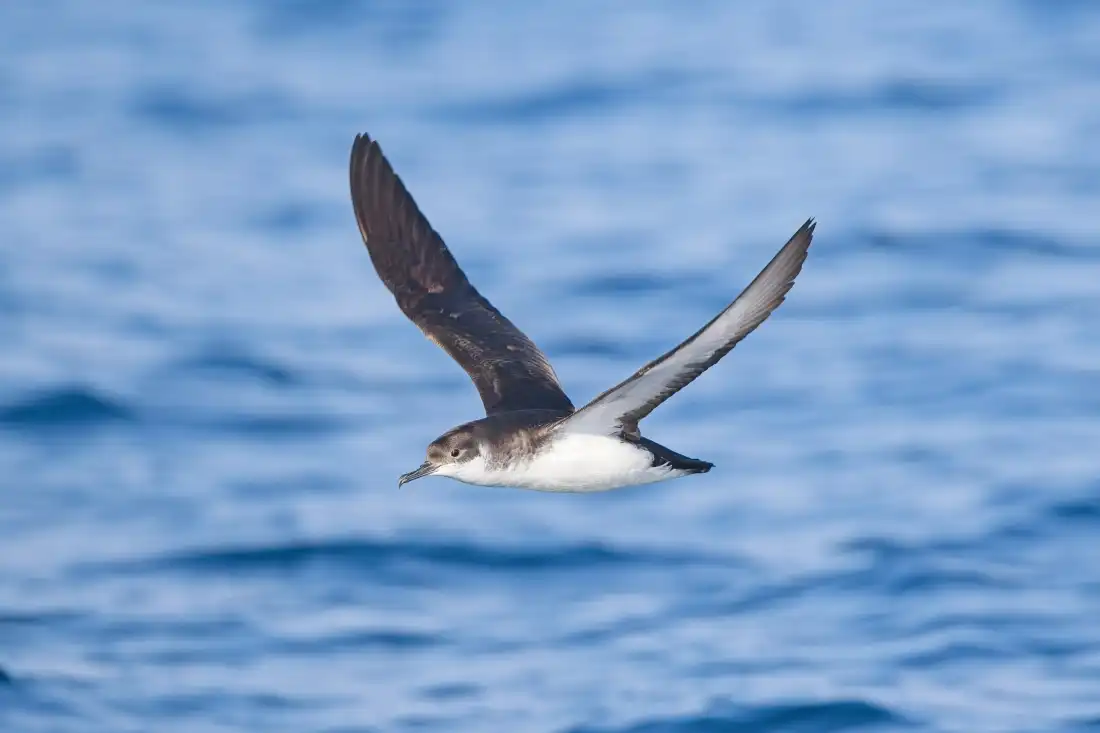
Manx shearwaters, a species of seabird known for their transatlantic journeys, race back to their nests after extended hunting trips at sea. Recent research highlights that, like humans, these birds experience jet lag on their return flights. The study published in Science reveals that Manx shearwaters become slightly disoriented during their lengthy flights across the Atlantic Ocean. This disorientation stems from their internal clock losing synchronization with the sun’s position.
Common in the British Isles, Manx shearwaters resemble seagulls but are closely related to albatrosses. Behavioral ecologist Patrick Lewin from the University of Oxford explains that these birds mate for life and lay a single egg each breeding season. Partners take turns incubating the egg, with one bird staying with the egg while the other forages at sea for up to two weeks.
During their hunts, they travel hundreds of miles across the North Atlantic for fish and squid. Once they have fed, these birds swiftly return to their colony, often making the return journey in just over a day. This raised an intriguing question: do Manx shearwaters experience the equivalent of jet lag, termed ‘flap lag’ for these birds?
Lewin utilized a tool developed by his colleagues over 20 years to explore this: GPS trackers that monitored the birds’ flights. These trackers provided data on their journeys to the Atlantic and back, allowing researchers to detect any signs of disorientation akin to jet lag.
“To use the sun as a compass, you have to know what time of day it is,” Lewin explained. In the morning, the sun rises in the east, reaches the south at midday, and sets in the west. If the internal clock is off, birds risk veering off their intended path.
The research showed that as shearwaters returned to their nests, they sometimes strayed off course by a slight seven-degree error. This deviation caused them to travel around three extra miles on a 600-mile journey.
Alice Boyle, a biologist at the Centre for Animals on the Move at Western University in Ontario, endorsed the study’s significance. She noted the extraordinary nature of observing navigation decisions in the wild. This study, she said, is invaluable for understanding how birds navigate remote places using GPS technology.