Future of Healthcare: The Role of AI in Medicine
Laura Ingraham explores the impact of artificial intelligence on healthcare, questioning the potential of AI to replace doctors. Some hospital systems, like a major public hospital CEO’s plan, aim to incorporate AI to replace radiologists for tasks such as breast cancer screening for cost savings. However, there is a debate about AI’s role in healthcare.
Dr. Marc Siegel, Fox News Senior Medical Analyst, emphasizes that AI should be used as a tool to enhance doctors, not replace them. Personal interaction and physician oversight remain crucial for accurate diagnoses.
Microsoft’s AI Diagnostic System
Microsoft claims its AI system can tackle challenging diagnostic puzzles. A study published in the journal Science noted that Microsoft’s AI correctly identified complex medical cases 83% of the time, compared to 36% for generalist physicians.
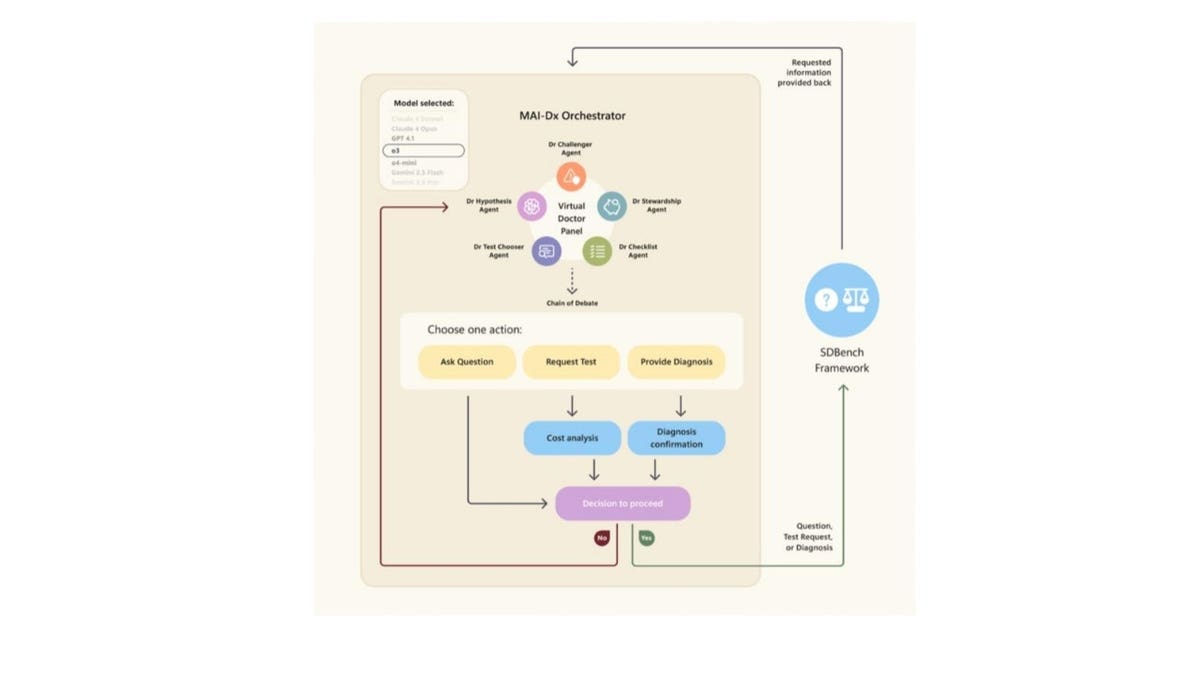
However, these findings were based on simulations with non-specialist doctors. The results indicate AI’s potential impact during doctor visits. Microsoft’s technology, known as MAI-DxO, employs multiple AI agents that work collaboratively, mimicking a team of doctors tackling complex cases. They begin with limited data, probing further inquiries and evaluating possible tests.
For instance, in a scenario involving unexplained fatigue and abnormal lab results, Microsoft’s system considers multiple explanations and updates its assessment as more information becomes available.
The study involved evaluating 304 complex cases from The New England Journal of Medicine. Microsoft’s system achieved 83% accuracy while generalist physicians reached 36% accuracy with reference materials, and 22% without.
AI vs. Doctors: A Closer Look
It’s important to note that the study compared generalist doctors individually against Microsoft’s system. Specialists typically handle complex diagnoses, often working in teams to reach conclusions. No direct comparison was made between Microsoft’s system and specialist teams.
Also, physicians evaluated 56 cases not used in the development of Microsoft’s AI, whereas Microsoft’s system tackled 304 cases. As a result, the percentages do not represent both groups completing the same number of cases.
The research focused on pre-existing medical cases rather than real-time treatment scenarios. Simulations often don’t account for the unpredictable nature of actual patient care. Reaching the correct diagnosis involves more than accuracy; treatment decisions are also crucial.
The study’s authors were affiliated with Microsoft, highlighting the need for independent verification before hospitals contemplate relying on AI for patient care.
AI’s Role in Medical Costs
Microsoft aims to help doctors make informed decisions about necessary diagnostic tests. During the study, estimated costs were applied to procedures, measuring AI’s efficacy in accurate conclusions and avoiding unnecessary tests.
Microsoft’s AI achieved approximately 81% accuracy with estimated diagnostic costs of $2,241 per case, whereas physicians averaged around $4,725 in estimated costs.
Other configurations designed for maximum accuracy resulted in higher testing costs, illustrating how savings depend on system adjustments. These estimates aren’t actual patient bills or operating costs for AI, but they’re promising for reducing unnecessary tests.
Real-World Testing and Future Prospects
Microsoft plans to test its technology in collaboration with Beth Israel Deaconess Medical Center in Boston. Patients will receive standard care alongside interacting with Microsoft’s AI. The goal is to compare AI recommendations with human assessments while maintaining physician responsibility for treatments.
Such evaluations aim to understand AI’s real-world performance in busy hospital environments. Other companies like Google are pursuing similar objectives. Google’s research on its conversational AI system showed promise as an aid to doctors.
Microsoft focuses on creating superintelligent medical AI systems capable of clinical reasoning and coordination, which could surpass the capabilities of current medical teams. Collaboration with the Mayo Clinic seeks to foresee patient condition developments through AI technology.
Implications for Patients
Microsoft’s AI system is currently a research tool, not a replacement for medical appointments. Improving AI systems may eventually provide doctors with powerful digital assistants to review complex cases and suggest alternatives.
AI’s contribution includes efficient evaluation of test results, potentially reducing unnecessary procedures. Understanding AI’s limitations, especially regarding potential errors and data use, is necessary.
AI’s role should complement physician decisions, not substitute them. Patients should remain active participants in their care.
For individuals exploring AI for health advice, the technology should prompt questions for doctors rather than serving as a definitive diagnosis. Reviewing data handling policies is crucial before sharing sensitive information.
AI could offer physicians another perspective, which may speed up the diagnostic process while safeguarding patient confidentiality.
Questions remain about whether AI systems should be trusted over human judgment. The technology is promising, but careful integration with existing medical practices is essential.