Leadership Insights from the Marine Corps: A Conversation with Retired Leaders
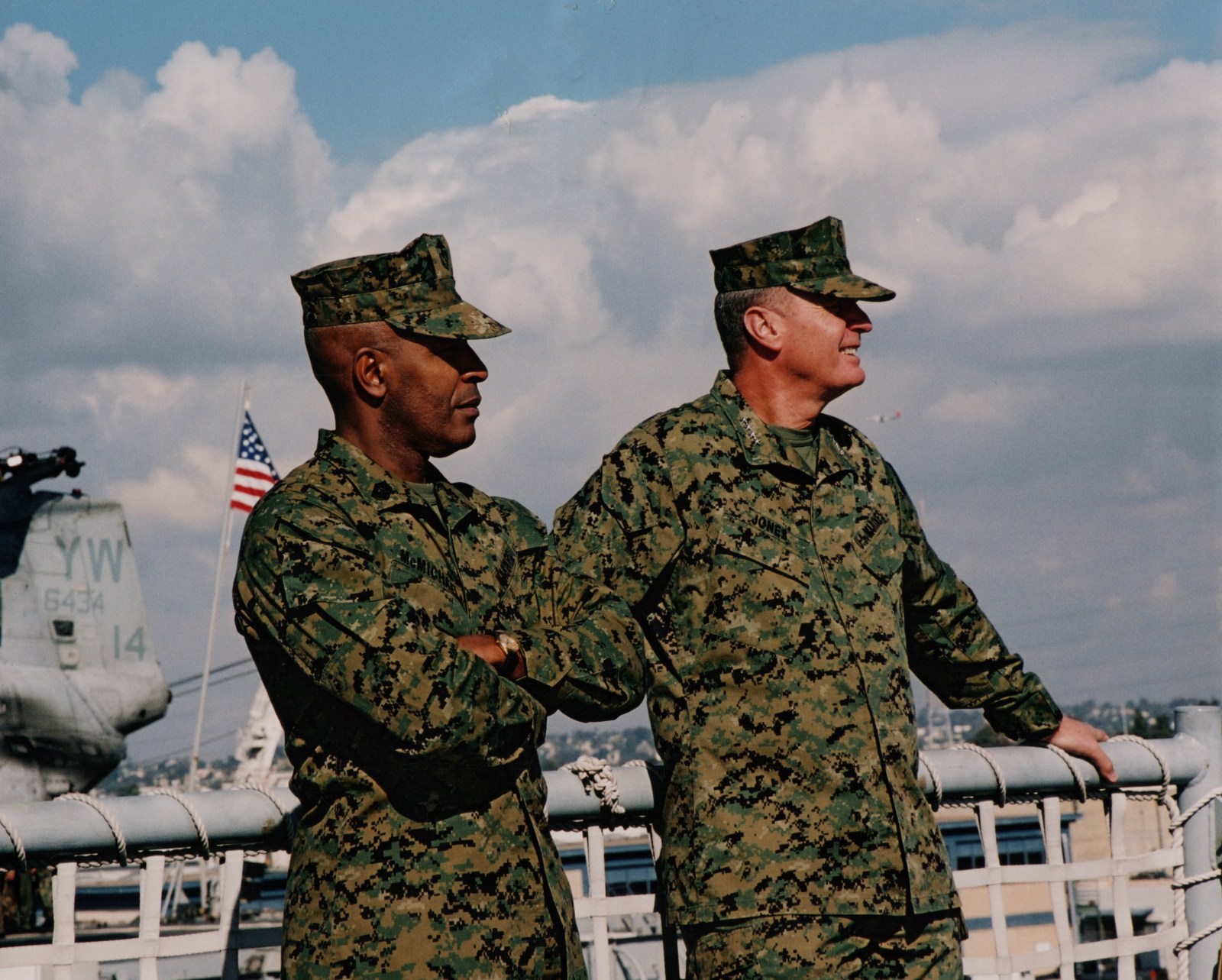
When Sergeant Major Alford L. McMichael finished his morning run in 1999, his boss, a three-star general, gave him an important message. He told McMichael that General Jim Jones would be calling him and advised him to wait in the office for the call. Instead, McMichael took a shower and missed the call. His boss sent him back, stressing that he stay put. When the phone rang again, General Jones asked McMichael if he wanted to become the 14th sergeant major of the Marine Corps. McMichael eagerly accepted, stating that reaching this role is a dream for every enlisted Marine.
General James L. Jones, recently nominated as the 32nd commandant of the Marine Corps, had interviewed several candidates before selecting McMichael. He later described this decision as one of his best. Speaking to Newsweek alongside McMichael on the Marine Corps’ 251st birthday, Jones highlighted their efforts to engage with younger noncommissioned officers (NCOs) during their tenure.
Bringing these younger NCOs to Washington enabled them to voice concerns and suggest changes that could outlive any commandant’s term. Jones, who learned early from enlisted Marines while taking over a platoon in Vietnam, emphasized the significant role they play. “Enlisted Marines train all the officers,” he noted, adding that leaders might mislead superiors but not the troops.
McMichael viewed his responsibilities as bridging the communication gap between the lowest and highest ranks. Through symposiums for younger NCOs, supported by the commandant, he encouraged them to express issues. Once the Marines realized their leaders’ sincerity, they identified more problems than expected, problems that could have been addressed earlier.
Among the issues McMichael presented to Jones were programs like the Exceptional Family Member Program, better housing, affordable uniforms, and educational opportunities for Marines. These are not traditionally military concerns, but addressing them keeps the force running smoothly, McMichael believed.
Jones recognized the necessity of listening to subordinates, pointing out that while a commandant can order changes, unsupported ideas fade once the commandant leaves. Thus, gathering big ideas from others helps create lasting change.
The camaraderie between officers and enlisted Marines, as seen at Camp Lejeune, is what Jones praised. The gap there was minimal, and honest communication was possible.
Jones and McMichael also discussed Veteran Strong, a program developed with NewDay USA, aiming to support veterans throughout their post-service lives. Understanding that different needs arise at different life stages, the program focuses on providing veterans with tools to build financial stability and pursue education.
In their partnership, both within and outside the Marine Corps, Jones and McMichael have continued to support each other. In 2003, Jones, having transitioned to NATO’s supreme allied commander, requested McMichael to join him in Belgium to establish a network of senior enlisted leaders. McMichael willingly accepted, recognizing the transformative impact of their joint efforts.
Two calls from Jones significantly influenced McMichael’s life, teaching him the balance of following and leading. He feels fortunate for the leadership guidance he received, understanding that learning to follow is essential to leading effectively.