Global and U.S. Religious Shifts: A Detailed Overview
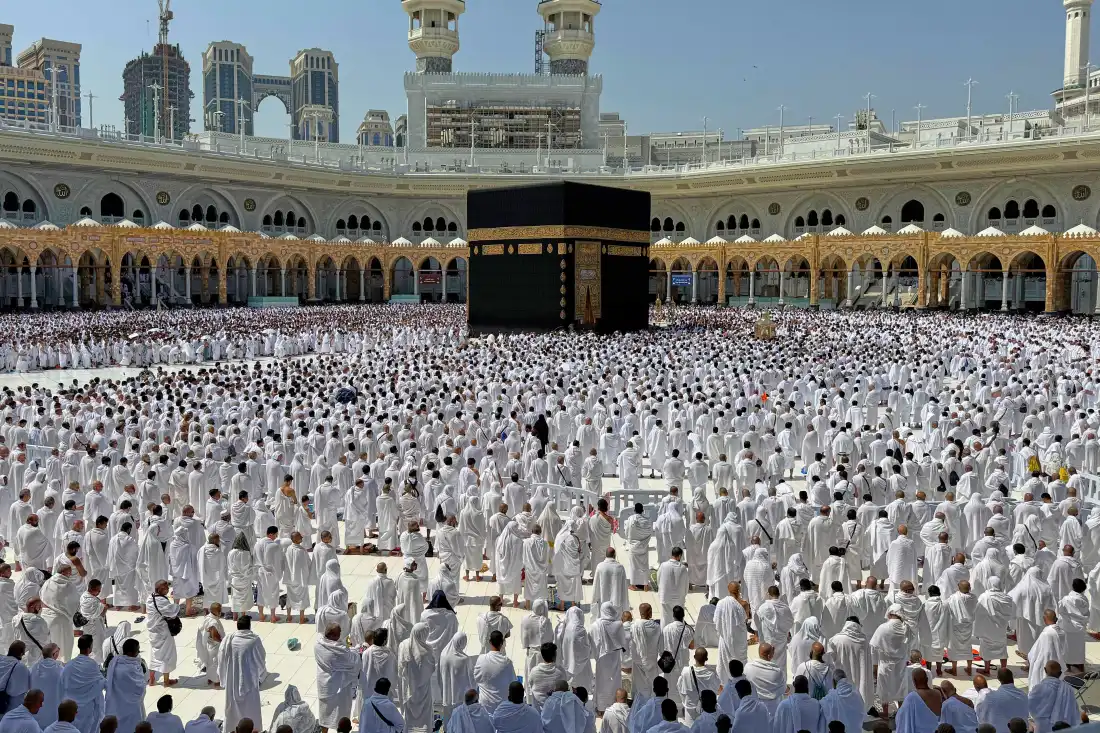
Pilgrims gather to pray in front of the Kaaba, Islam’s holiest shrine, located at the Grand Mosque in Mecca, Saudi Arabia. A new report by the Pew Research Center indicates a significant shift in global religious demographics. Muslims are projected to surpass Christians as the largest religious group by 2035. While both groups are anticipated to grow, Muslims are expected to increase at a faster rate.
If current demographic trends persist, by 2070, the global Muslim population is expected to reach 3.6 billion, while the Christian population will be slightly under 3 billion. These projections are based on a combination of national census data, fertility rates, and religious switching patterns. The report also considers findings from United Nations reports and global migration estimates in conjunction with previous Pew studies on religious migration.
While Hindus and Jews are expected to grow in absolute numbers, they may decline as a portion of the world population. In contrast, Buddhists are expected to decrease both in absolute numbers and in global population share in the coming decades. Pew explains some of these trends as linked to population growth patterns. A significant amount of 21st-century population growth is anticipated in Africa, with more than a quarter of the global population living in sub-Saharan Africa by 2070. Here, the vast majority either are Christian or Muslim. Due to high fertility rates and increasing lifespans, both religious populations are expected to grow, with Islam growing more rapidly.
Pew predicts that by 2070, the Democratic Republic of the Congo will surpass the United States in having the largest number of Christians. Alan Cooperman, Pew Center’s religion research director, describes this as a shift in Christianity’s global center of gravity.
“Birth rates drive religious shifts,” notes Pew. Muslims typically have higher fertility rates, with an average of 3.1 children per woman, compared to an average of 2 children per woman among non-Muslims.
Additional religious trends anticipated by 2070 include shrinking populations in China, Japan, and South Korea, alongside a decline in Buddhist followers by half. Concurrently, a growing percentage of the global Jewish population is expected to reside in Israel, increasing from 46% in 2020 to 62% by 2070.
An intriguing aspect of the report is the expectation that although the percentage of religiously unaffiliated people will rise in many countries, their global population is anticipated to fall. This drop is attributed to significant population decreases expected in China, where many religiously unaffiliated individuals live.
U.S. Religious Trends Reflect Global Patterns
The Pew report also addresses the implications for religious demographics in the United States. By 2070, the U.S. may no longer have a Christian majority; however, Christians will still represent the largest single religious group. Christians are anticipated to decline from 62% to just under 48% of the U.S. population. During the same period, the percentage of religiously unaffiliated individuals is projected to rise to 41%.
This change in the U.S. is primarily driven by religious switching rather than birth rates. Christians, particularly, tend to lose more followers through switching, with most becoming religious “nones” instead of converting to another faith. The U.S. is expected to become more religiously diverse, with an increase in the Muslim and Hindu populations, potentially outnumbering Jews by 2070 if current trends continue.