Anthropic’s AI Tool Claude Solves Riemann Hypothesis: A Milestone in Mathematics
In a remarkable development, Levent Alpöge, a member of the technical staff at Anthropic, announced that he has solved the Riemann Hypothesis with the help of the company’s AI tool, Claude. This marks the second recent instance where AI technology has been credited with resolving a longstanding mathematical enigma.
Alpöge made the announcement through a detailed four-page explanation on his website. According to him, by collaborating with Claude, he has developed a proof for the Riemann Hypothesis, a problem first formulated in 1859 concerning the distribution of prime numbers as they extend towards infinity.
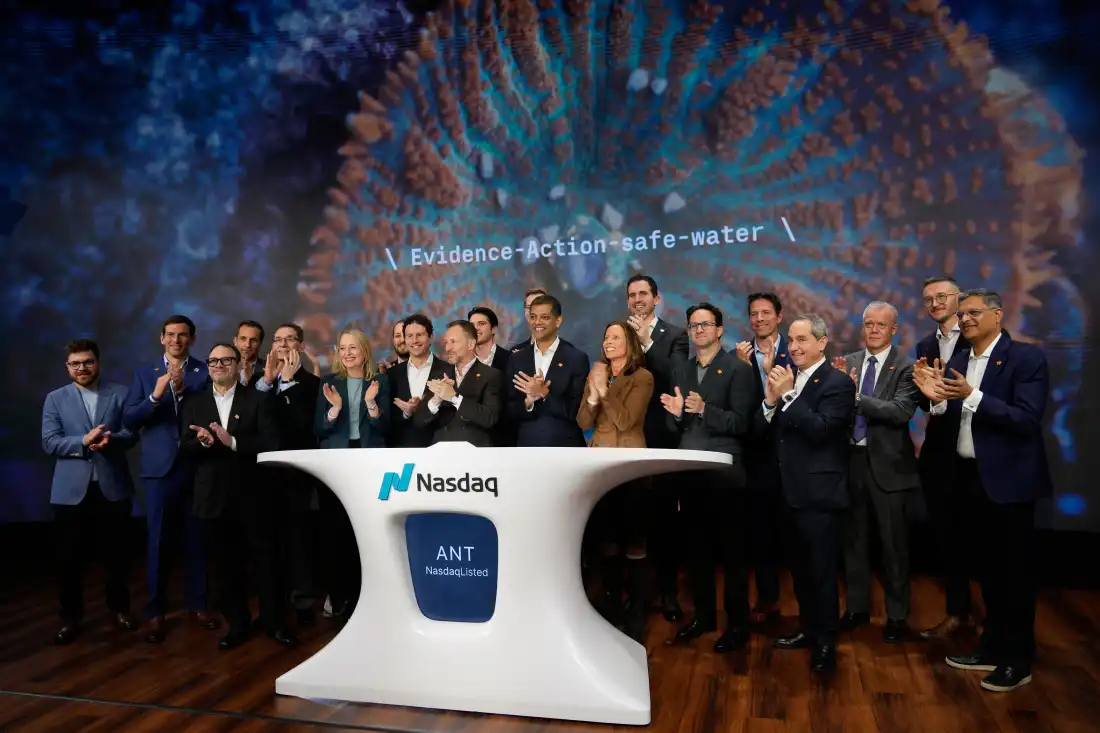
The breakthrough emerged late on a Sunday night, as Alpöge contacted Anthropic’s CEO, Dario Amodei, about sharing the discovery. This came on the heels of Anthropic’s successful IPO, which was the most valuable in history. Shortly after the IPO, Alpöge disclosed his achievement, which defies a challenge mathematicians have grappled with for over 150 years.
Anthropic did not respond to inquiries from the Associated Press seeking comment. Alpöge shared his and Claude’s proof in Lean code, totaling 17 million lines. Lean is a programming language used to construct mathematical proofs. Typically, such findings are reviewed and published in academic papers, a process that allows others to verify each step of the proof.
“Usually when someone provides a paper, it’s a code for a proof, and you need to follow each line to comprehend and acknowledge the truth,” stated Alex Kontorovich, professor at Rutgers University.
Kontorovich noted that while Claude has validated the proof, human understanding could take more time. Despite the announcement, the Riemann Hypothesis remained listed as unsolved on the Clay Mathematics Institute’s website. The institute designated the hypothesis as one of the seven Millennium Prize Problems in 2000, with a $1 million prize for a proven solution.
Martin Bridson, president of the institute, conveyed that verifying such a claim is rigorous. “This is a historic announcement, potentially reshaping our approach to advancing human knowledge in mathematics,” he said. Bridson noted that while the announcement is promising, reaching a complete understanding will be a lengthy journey.
Alpöge admitted that presenting the argument means entering unexplored territory in mathematics. His collaboration with AI produced over 250,000 pages of material. Recently, OpenAI also attributed its technology to a breakthrough in solving Navier-Stokes equations regarding fluid dynamics. The Navier-Stokes equations, like the Riemann Hypothesis, had long eluded mathematicians.
“Navier-Stokes fell, and now the Riemann Hypothesis,” Kontorovich reflected. Expressing disbelief, he recounted trying to fathom the profound impact of these words.
Anthropic’s stock market entry was historic, achieving a record $81 billion in funds raised and a valuation of $1.5 trillion. CEO Amodei projects that AI will fuel significant advances in math and science, while acknowledging the inherent risks.