AI Company Cognisee and Genesis AI’s Role in Training Future Workers
Cognisee’s CEO, Ahmer Inam, shares how the company leverages artificial intelligence to address the skilled labor gap in the U.S. Cognisee uses this technology to digitally preserve the experience of retiring workers. These digital mentors empower the next generation in sectors like manufacturing, aviation, and healthcare. AI assists in enhancing workforce efficiency while supplementing human roles.
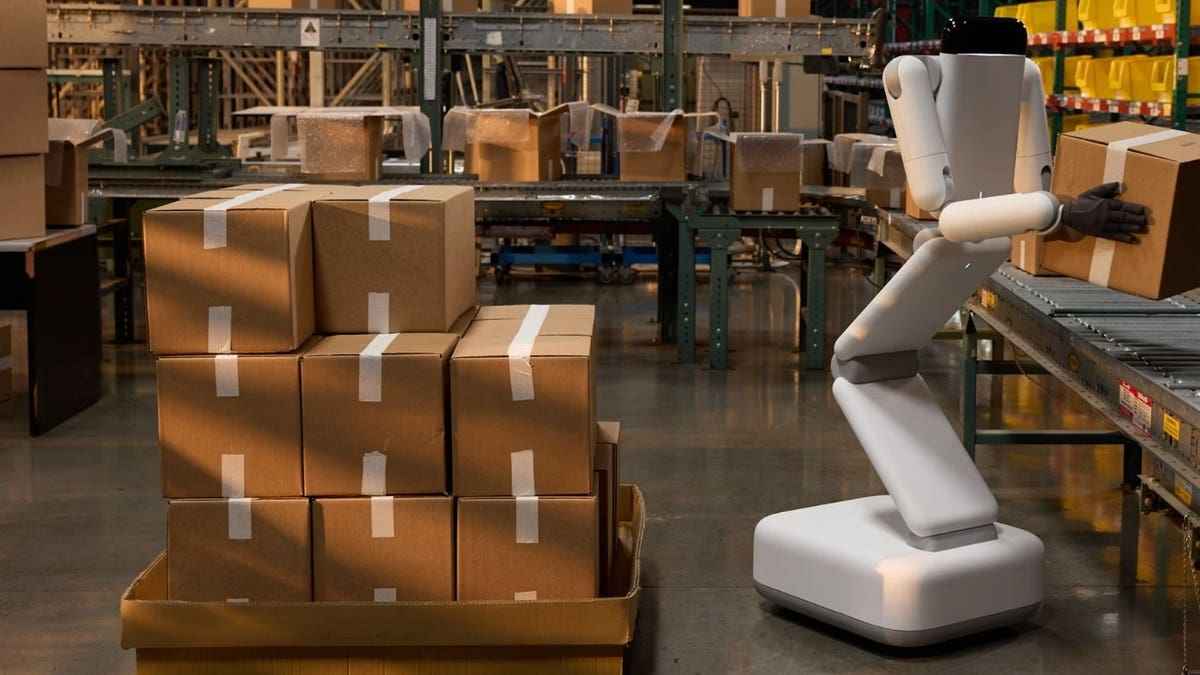
Meanwhile, Genesis AI is pushing boundaries with its general-purpose robot, Eno. The company has secured $500 million, boosting Genesis’s valuation to $3.5 billion. Notable investors include Premji Invest, NVIDIA, AMD Ventures, and others. Genesis is developing an innovative approach where robots learn by watching humans. Workers wear electronic gloves that record motion, turning that data into training information for robots. This allows robots to master tasks without programming each movement.
Zhou Xian, co-founder and CEO of Genesis, states the mission is to remove physical limitations on human ambition. They aim to create robots that adapt to varying conditions and manage entire workflows. Genesis AI’s technology diverges from humanoid appearances, focusing instead on practical capabilities. Equipped with dexterous hands and AI, Eno can perform tasks needing precise control. The AI, known as GENE, interprets surroundings and refines movements, with advances transitioning to Eno’s commercial use.
Training involves Genesis World, a simulation where robots practice tasks repeatedly, accelerating learning without relying on costly physical sessions. As Gervet, co-founder, highlights, the simulation allows faster mastery of complex tasks like playing the piano.
Today, Genesis AI’s robots demonstrate skills such as meal preparation, lab operations, and assembly tasks, currently performed by a test robot. Vedant Agrawal from Premji Invest noted the technology’s capacity to autonomously complete tasks with human-like speed and fluidity.
Genesis entered pilot phases in 2026, planning to commence Eno’s initial deployments in 2027 across manufacturing, logistics, and labs. Their partnership with LG CNS focuses on assessing robotics applications in U.S. manufacturing and logistics. Progress in further industries like hospitality and healthcare is part of Genesis’s strategy.
Participation in Genesis’s training program is voluntary. Employees agree to data collection, with Genesis owning the captured data. While participants understand the process and consent are clarified, there’s a broader discussion on how automation might affect long-term employment.
Key challenges for Genesis AI include ensuring robots can function reliably amid changing industrial environments. Continuous equipment relocation and maintaining safety when things go wrong are significant concerns Genesis plans to address through its robotics and AI development.
Although a full rollout isn’t immediate, Genesis AI’s approach to automation indicates a shift in physical job landscapes. Especially in sectors like manufacturing, where repetitive tasks could be automated, it raises questions on future workforce dynamics. For those exploring these implications, Kurt Knutsson encourages discourse on how such technologies might reshape workplaces.