A Complex Conflict: The U.S. and Iran’s Prolonged Engagement
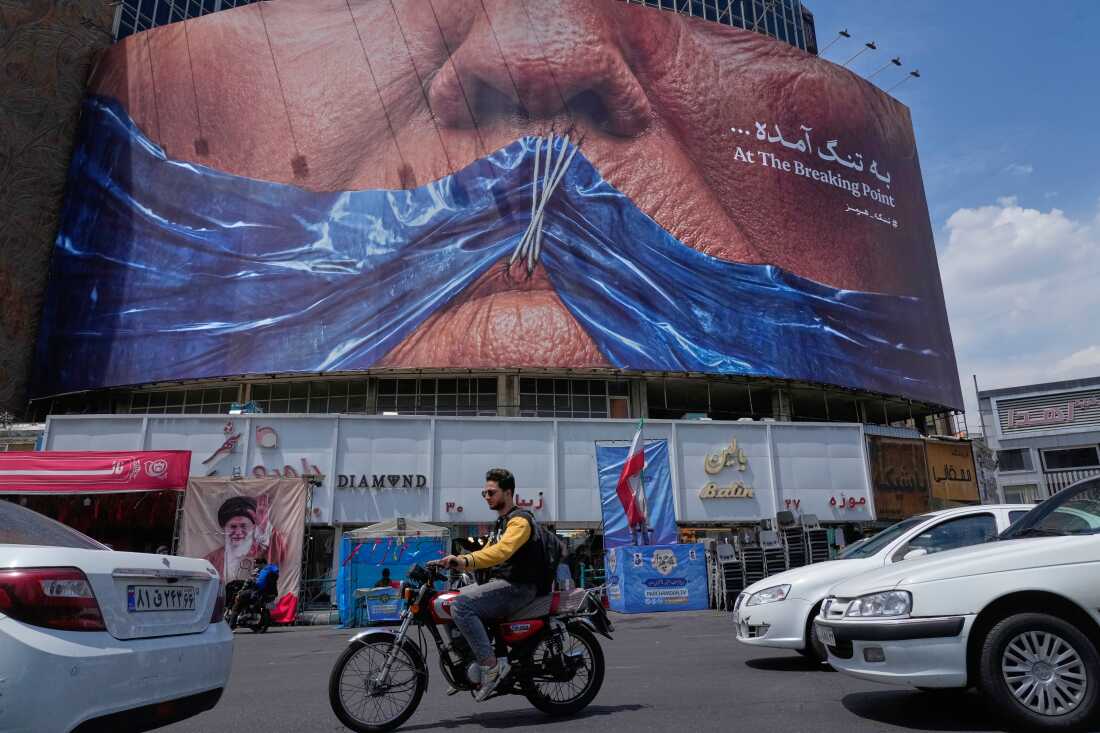
Vehicles drive past a billboard depicting the Strait of Hormuz and an image of President Trump with sewn lips in a square in downtown Tehran, Iran, on May 2. Vahid Salemi/AP
The war involving the U.S. and Iran, initiated in February by the U.S. and Israel, has stretched beyond initial expectations. Almost six months into the conflict, the U.S. finds itself in a lengthy struggle, complicated by a failed ceasefire attempt. This ongoing war has strained the global economy, unsettled Gulf allies, and drained U.S. resources. President Trump, who initially aimed to curb Iran’s nuclear aims, now focuses on altering control over the Strait of Hormuz.
U.S. Treasury Secretary Scott Bessent recently announced a new sanctions campaign intended to cut off Iran’s economic resources. Bessent warned countries continuing trade with Iran, stating they risk joining its isolation. Previous administrations, including Trump’s first term, have also pursued sanctions to pressure Iran economically.
“One thing that we’ve seen over the years is that maximum pressure tends to generate maximum resistance from Iran’s side,” says Esfandyar Batmanghelidj, CEO of the Bourse & Bazaar Foundation.
Following the initial military actions, the Islamic Revolutionary Guard Corps responded by launching missiles at U.S. Gulf allies. This has begun to impact Iran financially. The United Arab Emirates, a major importer of Iranian goods, recently halted all trade and financial transactions with Iran. Miad Maleki, a former senior U.S. Treasury official, notes that regional countries are restricting Iran’s ability to evade sanctions.
The effectiveness of the U.S. strategy depends on international cooperation, particularly from China, which opposes unilateral sanctions. Last year, China purchased substantial amounts of Iranian crude oil, vital for Iran’s economy. Following the U.S. naval blockade, Secretary Bessent reported a significant drop in Chinese oil imports from Iran, although it is uncertain if further U.S. actions will influence China.
“The U.S. is going to be forced to impose sanctions on substantial Chinese entities to make this work,” states Richard Nephew, a former sanctions expert.
In Tehran, ordinary citizens face extreme economic pressure due to the blockade. Healthcare and daily living costs are crippling for many. A Tehran resident shared her struggles with NPR, revealing blocked bank accounts and soaring grocery costs.
Majid-Reza Hariri from the Iran-China Chamber of Commerce highlighted the devastating impact of the U.S. blockade on maritime trade. Shipping costs have quadrupled post-blockade.
Iranian officials express defiance. Security chief Mohsen Rezaei threatened retaliation against countries siding with Trump’s economic maneuvers, aiming to disrupt oil flow through alternative routes.
Analysts like Foad Izadi argue that Iran feels emboldened and believes it holds leverage to halt the economic struggles it has endured.
The conflict has transitioned into an economic war of attrition, with both nations attempting to outlast the other.