Spokane Faces Long Recovery After Destructive Wildfires
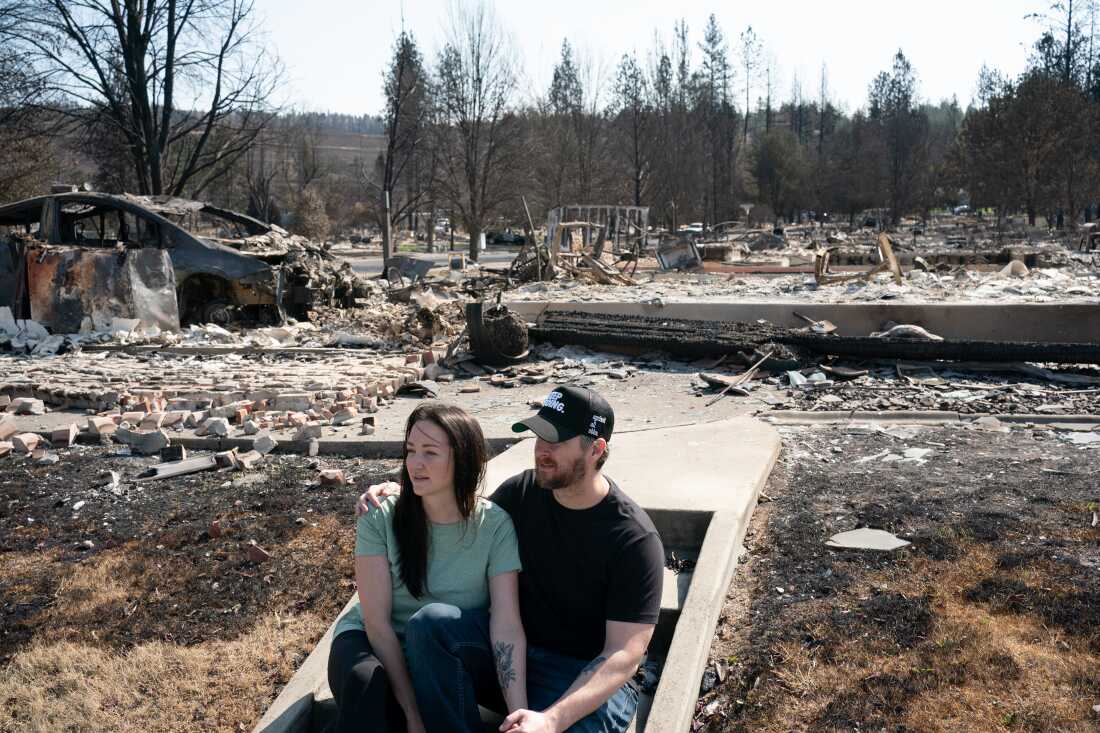
Melissa and Christopher Matthews stand before the remains of their home in Spokane on August 14, 2026. The Spokane Complex fires destroyed over 900 structures. Just weeks after these wildfires caused massive damage in Washington state, many evacuees in Spokane are returning to the affected areas. The safety of these zones remains a concern.
“It’s a very challenging situation,” states Sarah Nuss, the city’s director of emergency management. She notes that while people are allowed to return, hazards persist due to burned houses and toxic materials, such as lithium-ion batteries and hazardous chemicals.
The lengthy recovery process involves clearing toxic debris, which includes lead paint siding and exploded propane tanks. The Environmental Protection Agency is commencing debris removal, a phase that may take months or even years. Nuss emphasizes the importance of educating residents about the risks. “We can’t prevent people from returning,” she explains. “Our focus is on understanding and documenting risks in these households.”
Survivors’ Experiences
The Old Trails Fire, one of three wildfires that erupted during an extreme heat wave in August, devastated entire neighborhoods when it jumped the Spokane River. Melissa and Chris Matthews are grappling with the destruction of their property. “It looked like a bomb went off,” Melissa remarks, with Chris agreeing. Their Prius remains as a twisted metal shell, and their decades-old home is now rubble. They are awaiting insurance claims and hope to rebuild eventually, though they anticipate a long wait. “It might take three or four years,” Chris estimates.
Historically, rebuilding after urban wildfires is slow. A year after similar fires in Colorado and Hawaii, no homes had been fully rebuilt. In Paradise, California, only 14% of the burned zone was rebuilt three years after the Camp Fire. Health risks became apparent as people returned and cleanup activities began.
A few lots away from the Matthews’ property, someone in a Hazmat suit examines the debris. The Matthews haven’t begun searching for salvageable items. Nearby, a box contains a wood and mesh sifter, masks, gloves, and other personal protective equipment, donated by community members. “The air quality is bad,” Chris comments, noting that he developed a sore throat after visiting.
Recovery Playbooks and Lessons
Close to the devastated neighborhoods, some homes remain intact. A memory care center nearby is reopening, welcoming patients back with a sign that reads, “welcome home, we missed you.” City officials have posted signs in these areas, advising residents to wear protective gear, inspect their properties, and flush their water pipes.
Disaster recovery experts warn about potential contamination of water sources and underground lines after wildfires. Nuss mentions that the city’s tests on Spokane’s water have not revealed problems so far, but the evaluation continues. “We should have a manual on this by now,” Nuss reflects, drawing from experiences in California and elsewhere.
Andrew Whelton, an environmental engineer at Purdue University, advocates for strict soil testing for toxins after debris removal. He has assisted water managers in Paradise and Los Angeles in their recovery efforts. “If you don’t test, you won’t know about hazards,” he advises.
The initial recovery timeline feels overwhelming for many fire survivors. With affordable hotels booked and federal aid pending, some residents have no option but to return to intact homes. “Everything I love about this place is gone,” says Don Simpson, as he witnesses a fire crew removing a charred tree. He’s processing the tragedy and hasn’t decided if he’ll stay.
Simpson recounts aiding in the evacuation of a memory care center’s patients during the fire, noting the dire circumstances as he escaped. While he hopes to see community rebuilding and acknowledges the resilient spirit he’s observed, he and others recognize that full recovery will likely take years.