A Decade of Growing Concern: Candida Auris and Other Fungal Diseases
The Rise of Candida Auris
In 2015, Dr. Tom Chiller received an urgent call from public-health officials in Britain. A new fungus was wreaking havoc at a large London hospital. Known as Candida auris, the yeast was spreading from patient to patient, leading officials to consider shutting down parts of the hospital to control the infection. This was unprecedented, as no Candida species—or even any life-threatening fungus—had shown such ease in transmission among people.
“I’ll never forget that call,” Chiller recalls. “Suddenly we have a yeast acting like a bacteria? It was weird.”
First identified in 2009 in Japan, Candida auris stands out because it survives in higher temperatures and saltier environments. It is highly resistant to antifungal drugs and adept at clinging to surfaces and human skin, making it hard to eliminate with standard disinfectants.
The Global Impact
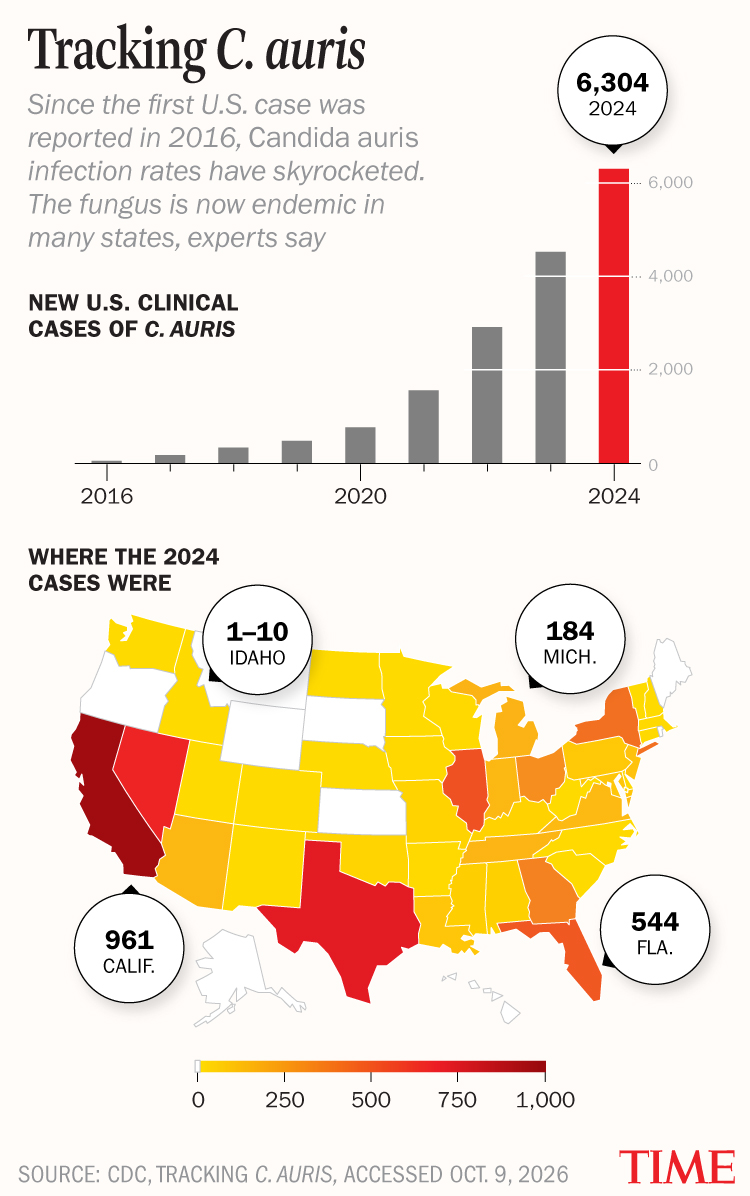
Since then, Candida auris has emerged as a major public health concern. The World Health Organization has ranked it as a high-priority fungal threat. The CDC listed it as a top-priority drug-resistant pathogen requiring urgent action. Cases have been reported in over 80 countries. In the U.S., it has infected thousands, with a fatality rate of up to 60%.
Chiller notes that in some U.S. states, Candida auris has become endemic.
The Connection to Climate Change
Experts suggest that human activities are facilitating the rise of dangerous fungi like Candida auris. Rising global temperatures may have contributed to the yeast’s evolution, allowing it to thrive as a pathogen. Moreover, the overuse of antifungal medications in medicine, agriculture, and livestock farming promotes drug resistance among fungi.
“We are creating an environment that favors pathogenic fungi and drug resistance,” says Dr. Andrej Spec.
Fungi are omnipresent, with millions of species existing globally, though only about 300 cause diseases in humans.
Emerging Threats
Candida auris is not the only fungus finding new avenues for infection. In South America, molds and fungi previously affecting plants are now infecting people. Researchers document cases where molds once isolated to flora now threaten humans.
The CDC reported a significant increase in cases of brain-affecting molds, known for high fatality rates.
Responses and Challenges
To counteract these threats, public-health professionals, researchers, and drug developers are increasing surveillance and awareness while developing new treatments and tests. However, as medical treatments evolve to help those with autoimmune disorders, more individuals become vulnerable to fungal infections.
The Personal Story
Ryan Zwick, a healthy young nurse, faced severe complications from Candida auris after COVID damaged his heart. The yeast entered his bloodstream, exacerbating his health conditions. Zwick’s experience exemplifies how fungi are impacting a broader demographic than just immunocompromised patients.
Dr. Spec recounts treating newer types of infections caused by Candida auris, including urinary tract infections and vaginal yeast infections previously unseen.
Looking Ahead
Researchers continue to study Candida auris, as its simultaneous emergence in varied global locations suggests climate change played a role in its evolution as a pathogen. As fungi steadily adapt to changing climates, new monitoring and diagnostic approaches are essential.
The sustained increase in fungal infections underscores the need for heightened awareness and proactive measures in public health to address fungi’s growing threat.