A Mother’s Struggle in Kakuma
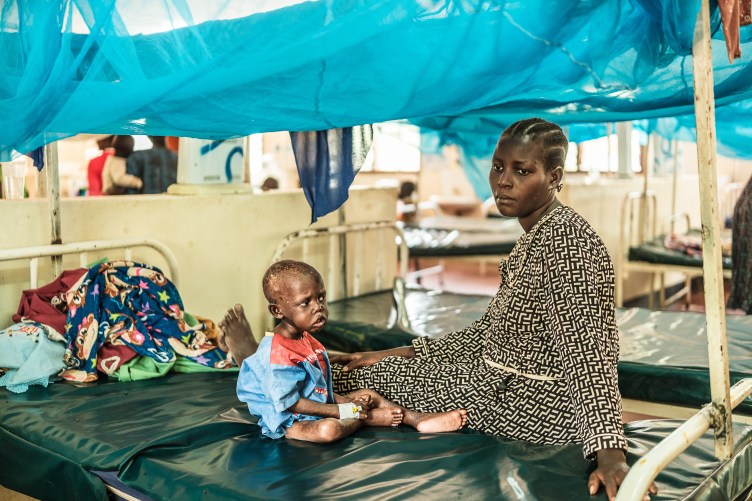
Rose Natabo faced an unbearable choice at dawn. She had to leave one of her starving sons behind. As she hugged her firstborn goodbye, Rose wrapped her youngest child, Santo, around her back. She took James, her middle child, by the hand and hurried away in her pink sandals over dry dirt.
Hours later, they traveled in an ambulance through Kakuma, a sprawling refugee camp in Kenya’s northern desert. This camp, which is the third-largest globally, became their home after fleeing wars and natural disasters. With no other option, Rose joined a group of mothers entering the pediatric malnutrition ward on July 8.
Less than three weeks prior, Rose had run out of food because the World Food Program (WFP) cut rations. The reason was the loss of funding from the United States. Aid workers and government officials from the U.S. and Kenya had warned that families, like Rose’s, relied on the aid for survival. Despite the warnings, the situation remained unchanged.
According to a senior official at the State Department, the funding cuts aimed to reform foreign aid. This disruption meant that 300,000 refugees in Kakuma would receive minimal rations in August. The rest would receive nothing. Rose didn’t know which group she belonged to or if her sons would survive until then.
In the malnutrition ward, nurses struggled to find a vein in Santo’s swollen body due to severe protein deficiency. They fed him milk because his body had adapted to starvation, a nurse explained. The nurses considered his recovery remarkable, but Santo remained far from healthy.
By July 16, the hospital discharged James, her 5-year-old, who had overcome malaria. Despite knowing that her eldest son, Lino, and James had little to eat, Rose decided to stay at the hospital for Santo’s sake.
As July turned to August, Rose became a familiar presence at the clinic. She witnessed other mothers bringing sick children, often seeing them leave alone after losing their children. To keep busy, she did laundry, bathed Santo, and tidied their space while worrying about who was taking care of her other kids and what they were eating.
On August 4, Nurse Mark Kipsang visited Rose and expressed concern that Santo’s condition might worsen at home. Despite his worries, Santo showed little sign of improvement and cried when Rose attempted to make him walk.
Kipsang made a startling discovery: Rose was pregnant. She had not visited the prenatal office in months, making her high-risk for fainting, strokes, and preterm birth due to anemia.
The hospital staff advised Rose, but she felt discouraged about food availability. She lied about her nutrition to end the conversation, knowing her situation wouldn’t change.
On August 7, after nearly a month at the hospital, Rose decided to leave. She feared for her children’s wellbeing at home and dismayed staff who reluctantly signed Santo’s discharge papers. Worried about Santos’ possible tuberculosis, the doctor agreed, considering it better than Rose leaving without medical advice.
Rose packed their belongings and prepared to return home. She wondered who was caring for Lino and James, praying that she wouldn’t regret her decision.
Upon returning, her children greeted her warmly despite their hunger. Lino licked the wrapper of a nutritional supplement his brother had eaten. Their fragile states worried Rose, but she was relieved to be together.
Rose considered returning to South Sudan, which she had fled years before. Kakuma, once her only hope for a future, now seemed inadequate. Though she aspired to start a business and send her boys to the U.S. for education, these plans now seemed unattainable.
On August 11, Rose joined a crowd of other refugees at a makeshift clinic. Her sons, Santo and James, both needed therapeutic food due to their malnutrition.
Despite receiving minimal supplements, their health showed little improvement. Funding cuts disrupted the global supply chain, leaving nutritional supplies stranded. Unable to access full treatment for her children, Rose returned home.
Rose later gave birth to a daughter, named Sunday, on October 5. Her family still struggled with food scarcity, even though recent grants had improved rations.
By November, Santo’s health deteriorated further, prompting Rose to bring him back to the hospital. Santo died two weeks later on November 26, a devastating loss for Rose.