AccuWeather Adjusts 2026 Atlantic Hurricane Season Forecast
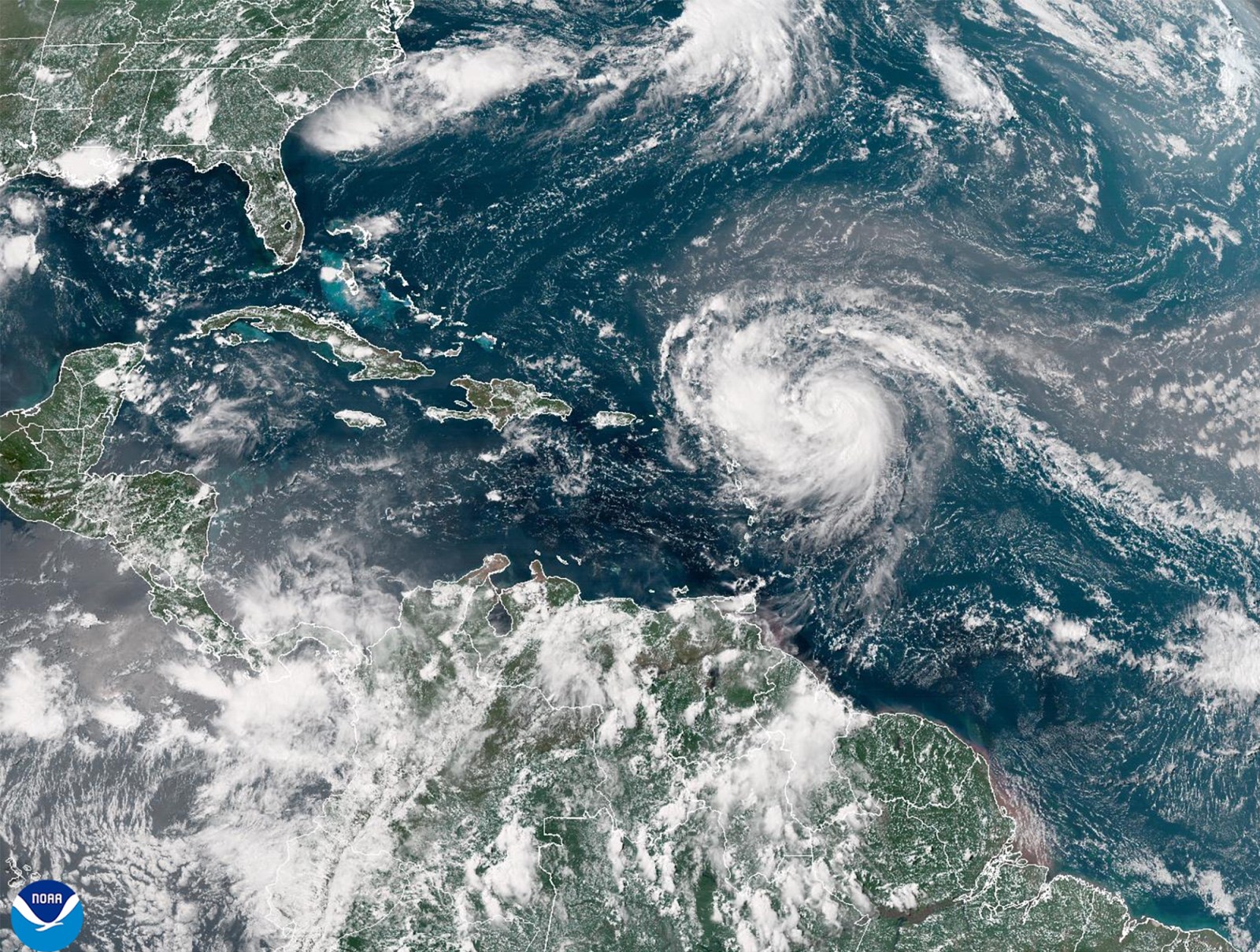
AccuWeather has adjusted its expectations for the 2026 Atlantic hurricane season. The change is due to the earlier-than-anticipated onset of El Niño and growing confidence that the climate pattern will strengthen significantly. The private forecasting company now predicts between eight and 14 named storms this season, down from its March forecast of 11 to 16.
El Niño conditions, emerging in June, prompted the revision. Alex DaSilva, AccuWeather’s lead hurricane expert, notes that El Niño is the main reason for expecting a quieter-than-average season. He explained, “The stronger the El Niño gets, the fewer named storms we’re likely to get.” The 2015 Atlantic season, which saw a strong El Niño, had 11 named storms, echoing DaSilva’s expectations for this year.
Despite the reduced number of expected storms, AccuWeather maintains several other key elements of its seasonal outlook. It forecasts four to seven hurricanes, including two to four major hurricanes. Additionally, three to five storms are likely to have direct impacts on the U.S.
The regions facing the greatest risk remain the northern and eastern Gulf Coast, the southeastern U.S. coastline, and parts of the Caribbean. DaSilva emphasizes the challenges posed by storms forming near the coast, where warning times can be significantly shorter than those forming far over the Atlantic.
“The lower storm forecast reflects El Niño’s early arrival and the increasing chance of it intensifying to ‘Super’ El Niño status,” AccuWeather stated.
The company estimates a 70 percent probability that a Super El Niño will emerge later this season and continue into early 2027. Typically, El Niño suppresses Atlantic hurricane activity by enhancing wind shear across the basin. This increased shear disrupts tropical systems, making it harder for them to organize into named storms and hurricanes.
AccuWeather also predicts that weather patterns during summer and fall will lessen the risk of major tropical impacts along the central and lower Texas coastline.
Understanding El Niño
El Niño represents the warm phase of the El Niño-Southern Oscillation (ENSO), a natural climate pattern in the Pacific. The National Oceanic and Atmospheric Administration (NOAA) explains that ENSO involves shifts between warm and cool waters in the central and eastern equatorial Pacific. These shifts affect how ocean heat is released into the atmosphere, influencing circulation, temperatures, precipitation, and other weather events.
NOAA states that El Niño generally occurs every two to seven years, lasting nine to 12 months. It is the opposite of La Niña, the cool phase, while neutral conditions lie between the two. The formation of El Niño requires a warming of at least 0.5 degrees Celsius in the central and eastern tropical Pacific’s sea surface temperatures, alongside atmospheric changes like weakened trade winds and altered tropical rainfall patterns.
2026 Atlantic Hurricane Season Storm Names
The Atlantic hurricane season continues through November. It has already seen its first named storm, Tropical Storm Arthur, which formed in June. The complete list of storm names for the season is as follows:
- Arthur
- Bertha
- Cristobal
- Dolly
- Edouard
- Fay
- Gonzalo
- Hanna
- Isaias
- Josephine
- Kyle
- Leah
- Marco
- Nana
- Omar
- Paulette
- Rene
- Sally
- Teddy
- Vicky
- Wilfred