Addressing Data Security Risks in Connected Vehicles
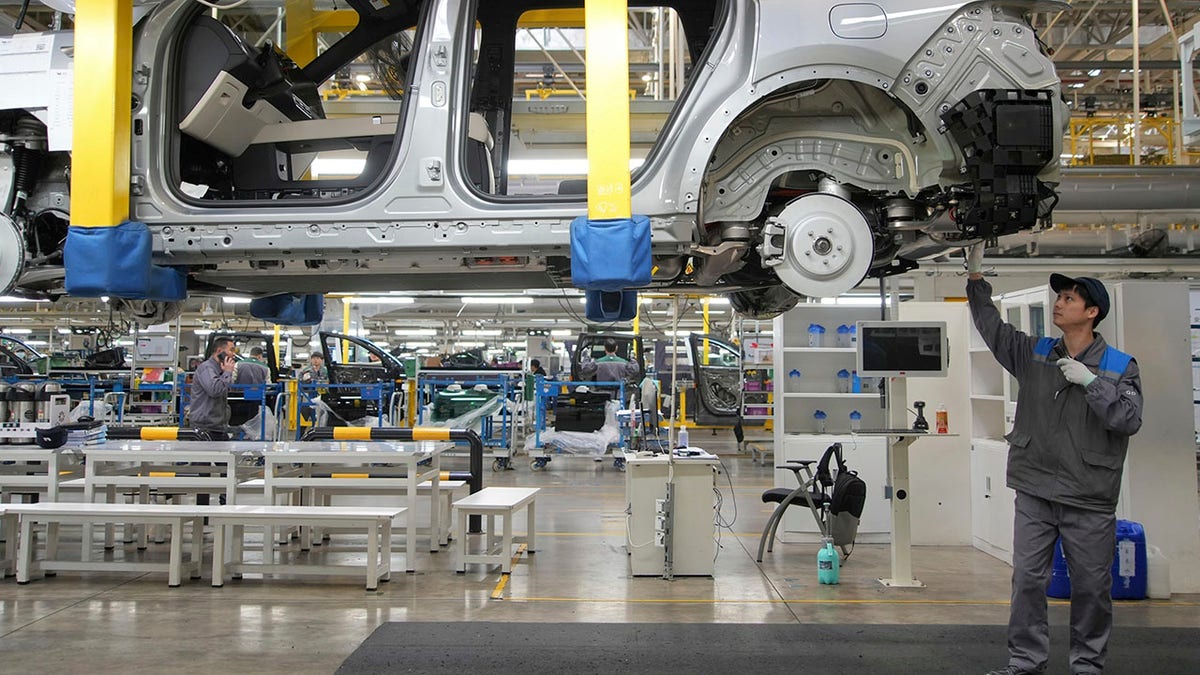
Revelations about a British naval drone unintentionally sending data to China highlight an urgent concern for U.S. policymakers. During a cybersecurity review, the U.K. Ministry of Defence found that a component in its naval drones was covertly transmitting information to China. The drone itself was British, but the vulnerability was not hidden.
Understanding the Threat
This incident is part of China’s strategy, which involves intellectual-property theft, cyberespionage, and industrial policy. The aim is to integrate into Western supply chains and exploit this access to gather intelligence and create weaknesses against adversaries.
Historically, the standard response involves restricting Chinese technology only after risks escalate, often requiring substantial investments to remove the embedded equipment from American infrastructure.
China’s Automotive Ambitions
Recently, China has advanced its focus on the automotive sector, presenting the U.S. with a proactive opportunity. China leads as the world’s top vehicle exporter, with significant roles in electric vehicles, battery technology, software, and connected car technologies.
Chinese automakers employ various tactics to penetrate U.S. markets. The rise of Chinese presence as an automotive powerhouse challenges American manufacturers. The increasing connectivity of cars escalates national security risks.
Modern vehicles operate as “computing devices,” fully equipped with cameras, microphones, sensors, GPS systems, and internet-connected hardware. These vehicles capture vast data concerning drivers and their environment. Software now controls vital functionalities like steering, braking, and acceleration.
Potential Risks
In unauthorized hands, this access could become a tool for surveillance, espionage, or manipulating vehicles remotely. Chinese cars on American roads are the clearest threat. However, Chinese firms don’t need to sell extensively in the U.S. to secure a foothold; they can infiltrate via Chinese-made components in American, European, Japanese, or South Korean vehicles.
On a large scale, this technology allows China significant intelligence capability. Tracking where Americans reside and travel, and which vehicles frequent sensitive locales is possible.
Addressing the Challenge
Congress has an opportunity to preemptively tackle this threat by supporting the Connected Vehicle Security Act, championed by Sen. Bernie Moreno and Sen. Elissa Slotkin. This legislation extends the Commerce Department’s connected-vehicle rule, aiming to restrict foreign-influenced vehicles, software, and connectivity hardware.
The legislative move targets preventing adversaries from collecting sensitive data or manipulating vehicles remotely. Congress can solidify national security protections.
Moving Forward
The Connected Vehicle Security Act seeks to establish permanent protections across the supply chain, impacting not only finished Chinese autos but also the integrated technologies such as software and electronics within batteries.
Having advanced unanimously in the Senate Commerce Committee, the legislation’s passage is vital. U.S. reliance on Chinese technology has previously led to costly dependencies. Addressing connected vehicles now offers a timely intervention to avoid entrenched vulnerabilities.
Chad F. Wolf served as acting Secretary of the U.S. Department of Homeland Security under President Trump.