Adoption Surprise: Puppy Turns Out Different Than Expected
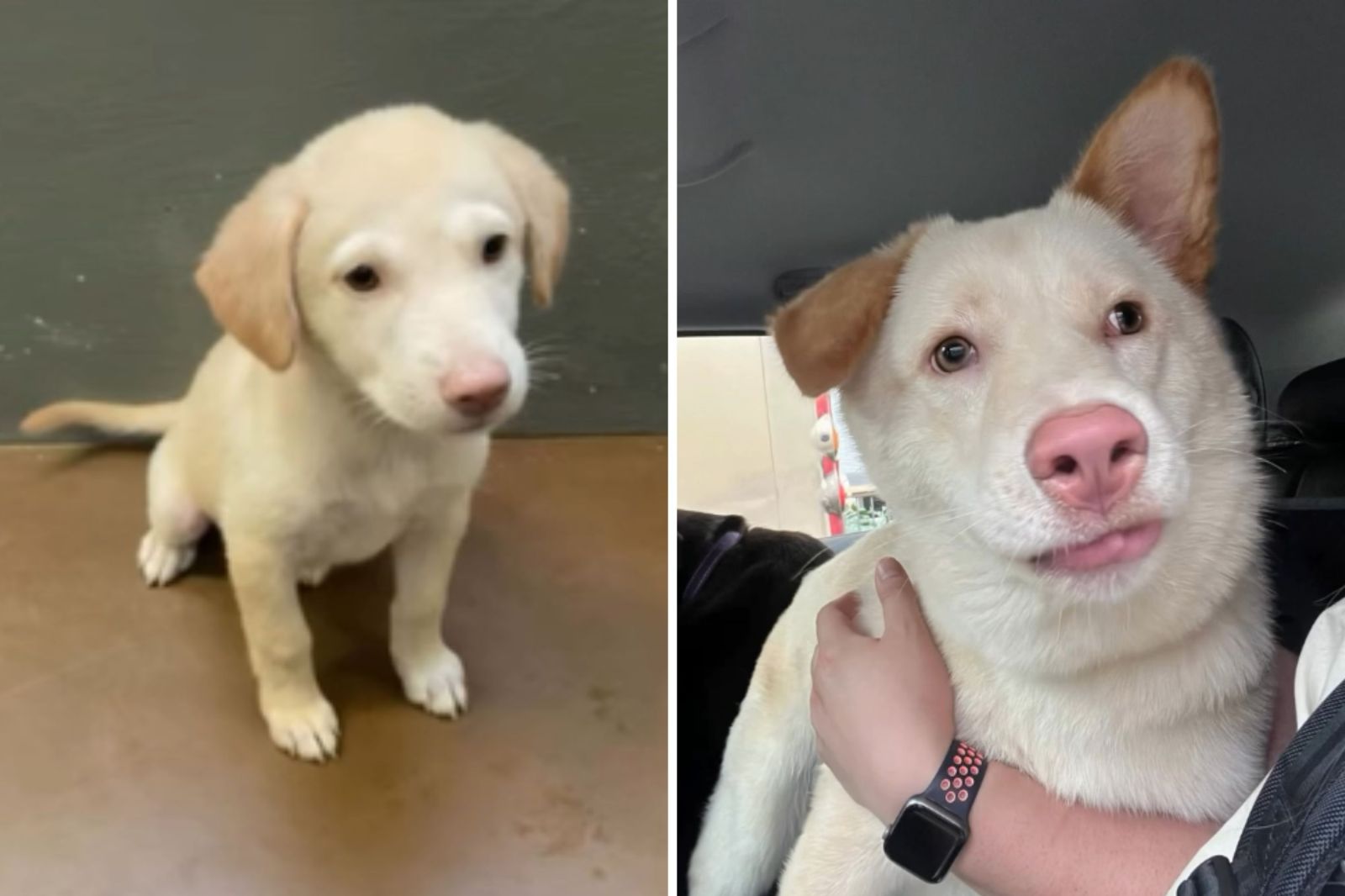
A couple adopted a rescue puppy, influenced by its appearance, initially assuming it resembled a Labrador. As their pet grew, it became clear their new family member did not fit the breed they anticipated.
In a June 5 Instagram post on the account @buffy.the.egg.slayer, the owners shared the dog’s original animal shelter listing and their immediate reaction to her puppy photo. They were captivated by her appearance and chose to adopt the pup, named Buffy, believing she looked like a Labrador with a short, light brown coat. However, as Buffy matured, her looks began to change. Her ears, once floppy, evolved. Photos show at least one consistently standing upright, a feature unexpected for the breed she was thought to resemble. Her pink nose also emerged as a surprising attribute. Although nose pigmentation varies in dogs due to genetics, Labrador retrievers are usually described by the United Kennel Club as having black or brown noses.
The caption comments: “Safe to say she wasn’t a Lab…”
Now fully grown, Buffy’s owners realize she is different from the popular breed they once expected. Reflecting on the adoption, the shelter listing might have provided an early hint. Beside Buffy’s picture, the shelter described her breed as “mongrel,” a term often used for dogs of mixed or unknown ancestry. Given the limited data in the listing, the owners likely based their initial belief purely on her appearance.
Despite Buffy’s unexpected transformation, her owners clearly express they have no regrets about bringing her home. The text on their clip reads: “Wouldn’t change a thing.” Newsweek contacted @buffy.the.egg.slayer on Instagram for further comment.
Why Shelter Puppies Can Be Difficult to Identify
Identifying a puppy’s breed based on appearance alone can be challenging. Physical traits like coat texture, ear shape, body structure, and size can significantly change during a puppy’s first year, as stated by the American Kennel Club. Many breed-specific features do not fully develop until a dog reaches adolescence or adulthood, complicating breed identification for shelter staff, vets, or prospective adopters.
Research indicates visual breed identification is often unreliable, especially in shelter settings where genetic histories are unknown. A 2018 study in PLOS ONE, analyzing over 900 shelter dogs in Arizona and California, showed that many animals had mixed ancestries not fitting neatly into one breed. Researchers compared shelter staff’s visual assessments with genetic test results and found common discrepancies. Although staff occasionally identified parts of a dog’s ancestry correctly, the accuracy significantly diminished when multiple breeds were involved. Often, visual assessments only partly aligned with genetic results, or did not match them at all.
The study concluded that shelter dogs frequently have diverse and overlapping breed origins, making visual identifications an imperfect method for determining breed composition. Consequently, the authors noted that breed labeling based on appearance should be considered an estimate, rather than a definite classification, especially for mixed-breed dogs like Buffy.