Alabama Voters Face Changes Amid Congressional Redistricting
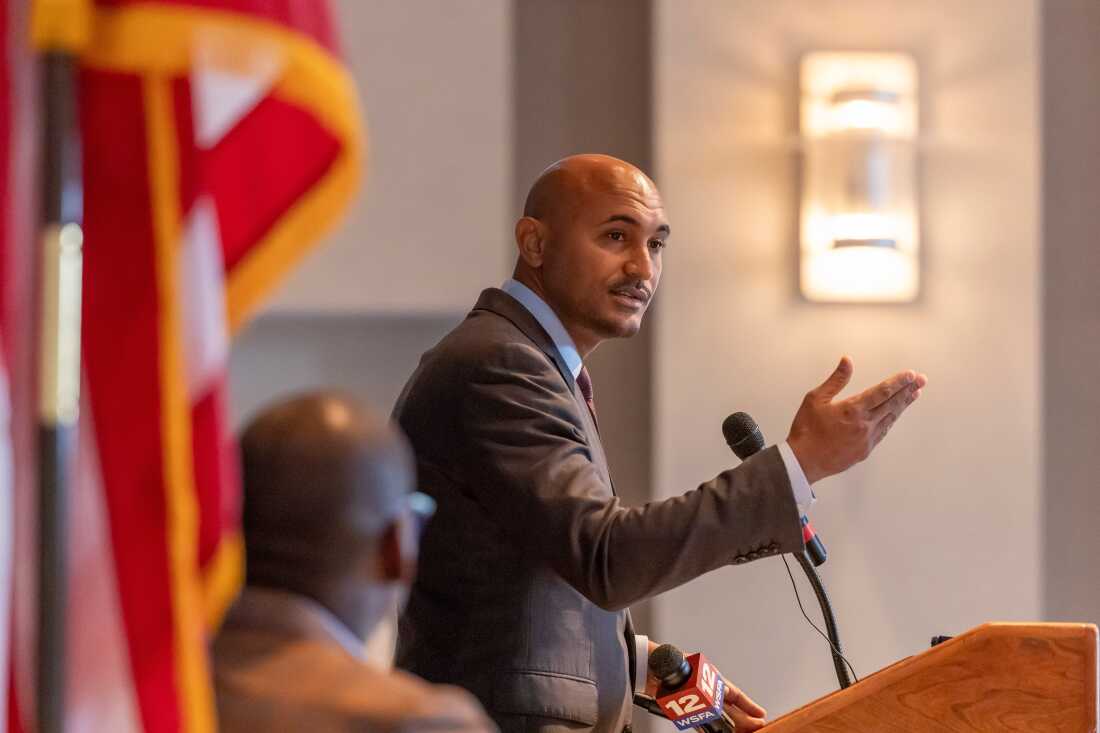
Rep. Shomari Figures recently addressed an event organized by the Montgomery Regional Chamber of Commerce. Meanwhile, residents like Willie Dixon and Mary Gatson gathered in the fellowship hall of Beulah Primitive Baptist Church in Lowndes County. They awaited a Congressional town hall to discuss Alabama’s ever-shifting voting landscape.
“Create enough chaos, and people will give up and go home,” noted Dixon. Voters in various parts of Alabama are heading to the polls for a second time this primary season. This follows the U.S. Supreme Court’s decision to dismantle a key element of the 1965 Voting Rights Act. The court ruled that drawing district lines based on race is unconstitutional. Consequently, Alabama moved swiftly to redistrict ahead of the mid-term elections, aiming to consolidate Republican influence. Just under two weeks before the May primary, the state’s GOP-led legislature reshaped four of its seven districts. They redefined a predominantly Black district formed after a court ruling highlighted discriminatory practices.
Confusion arose when Dixon realized her district had changed after Gatson informed her. Votes cast in the initial primary were nullified. “With these two primaries so close together, some won’t show up, thinking they’ve already voted,” Dixon explained. Lowndes County, situated in Alabama’s rural Black Belt, has a predominantly African-American population and rich black soil. Dixon and Gatson fear these changes will scatter and discourage Black voters, who typically lean Democratic. “I think it’s very inappropriate,” Gatson commented.
Democrats in the state remain determined. Rep. Terri Sewell emphasized, “This is about fair representation.” She is one of two Black Democrats in Alabama’s congressional delegation. The other seats are held by white Republicans, despite Black residents making up over a quarter of the population. “It’s unacceptable that a state can redraw a map for partisan reasons, even if it discriminates against minorities,” Sewell stated.
The redrawn map places Rep. Shomari Figures in a challenging position for reelection. He entered office in 2024 after Black voters successfully challenged the previous congressional map. However, the new district excludes Mobile, his hometown. “This district isn’t a lost cause,” Figures assured, adding that the seat was never majority Black, though currently about 47% Black. The new district reduces that to around 40%. “We represent everybody,” he affirmed. Figures remains unopposed for the Democratic nomination and isn’t on the upcoming special primary ballot.
Republicans, sensing potential gains, have six candidates competing for the nomination. Initially, only Hampton Harris entered the race. “The frequent changes have confused voters,” Harris admitted. “Being told ‘it’s now, it’s then, it’s here, it’s there’ will affect turnout.” Heat could also deter voters, as seen at a Republican event in Barbour County.
Candidate Joshua McKee is satisfied with the new maps: “Now, they reflect the people.” Barbour County’s Commission President Jerry McGilvray echoed this sentiment, noting that before redistricting, their district bizarrely included coastal Mobile.
Meanwhile, the local Republican party works to combat voter apathy. Isolated Republican efforts include state Rep. Rhett Marques, the frontrunner in the 2nd Congressional District race, who switched districts post-redistricting. Garnering endorsements from President Trump and state Senators, Marques is optimistic about reclaiming control for Republicans, emphasizing the broader impact on Congress.