Alan Greenspan: A Legacy of Economic Influence and Controversy
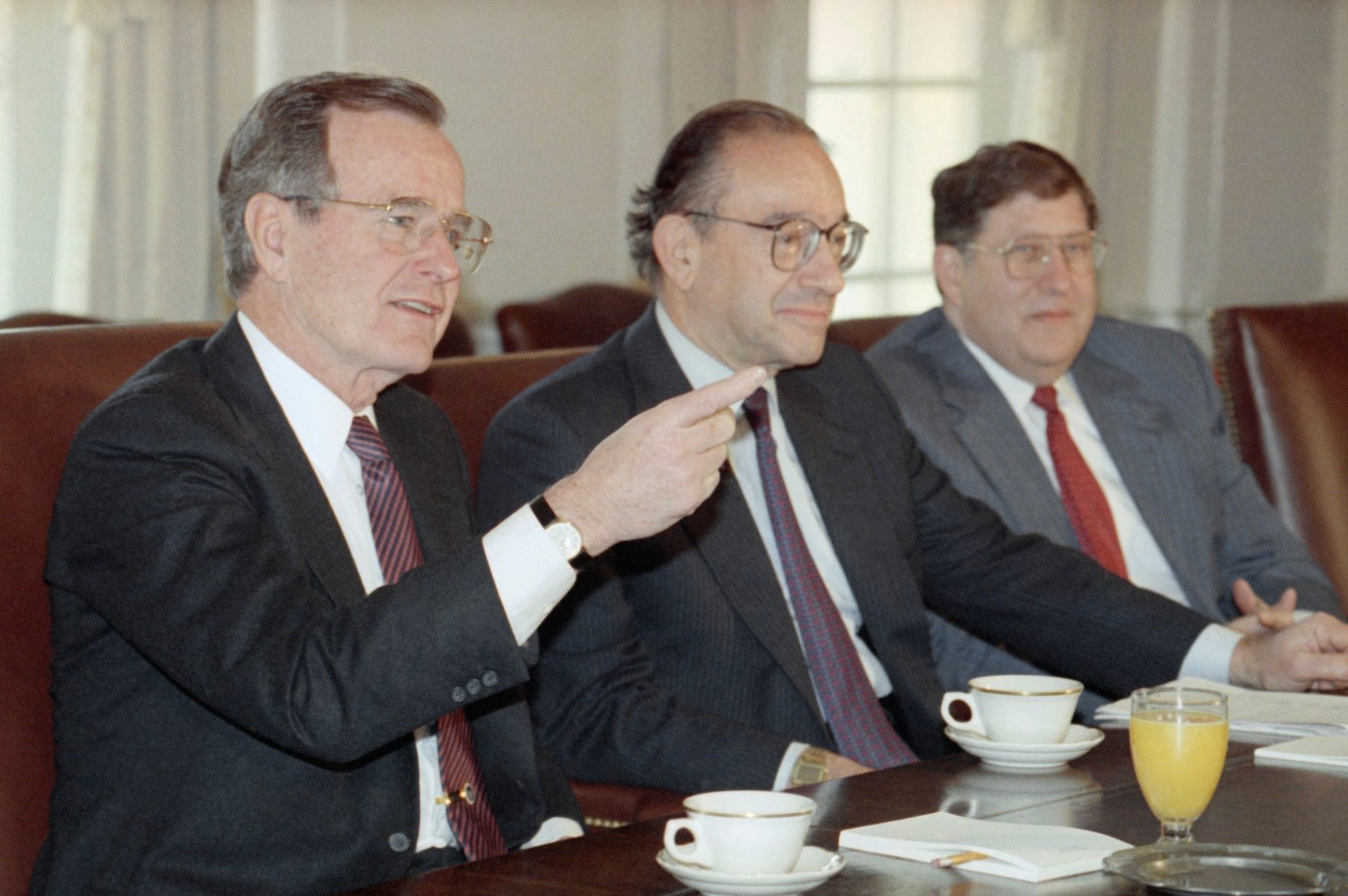
Alan Greenspan, former Chair of the U.S. Federal Reserve, passed away at 100 years old from complications of Parkinson’s disease, according to his wife, NBC News correspondent Andrea Mitchell. As Greenspan’s partner, Mitchell described how he profoundly impacted her life, along with sharing his enthusiasm for baseball, the Washington Commanders, tennis, golf, and jazz.
Greenspan’s Economic Influence
Greenspan’s tenure at the Federal Reserve lasted 18½ years. During his time, the U.S. economy experienced significant growth and prosperity. Upon his departure in 2006, Greenspan was highly regarded and celebrated as the “Oracle” and “Maestro.” This period saw a notable increase in stock prices and a decade-long economic boom beginning in March 1991. Economist and market analysts closely analyzed his statements for future insights on interest rates and economic conditions.
The Federal Reserve, acknowledging his contributions, stated that under Greenspan’s leadership, the institution achieved a sustained era of price stability. These efforts helped bolster public trust in the Federal Reserve.
Challenges and Criticisms
Greenspan faced criticism after his tenure ended in 2006. The American housing market collapse triggered a global financial crisis, and Greenspan’s policies were scrutinized. Critics pointed to his easy-money approach and faith in lightly regulated financial markets as factors contributing to the crisis. Greenspan himself admitted to overestimating banks’ ability to self-regulate.
The housing market collapse resulted in massive home foreclosures and the Great Recession from 2007 to 2009. The repercussions were felt worldwide, leading to economic turmoil across Europe and necessitating substantial stimulus efforts in China.
Global Reverence
Despite challenges, Greenspan held international respect. He was perceived as an economic authority. Investors and economists closely followed his public addresses. His “irrational exuberance” remark in 1996 influenced financial markets, highlighting his power to sway market sentiment.
Early Life and Education
Alan Greenspan’s early years unfolded in the Washington Heights neighborhood of Manhattan. A math prodigy, his journey in economics began at New York University, where he earned a doctorate. Before dedicating himself to economics, Greenspan attended the Julliard School and performed as a professional musician.
In the 1950s, Greenspan embraced the libertarian philosophy of Ayn Rand, acquiring the nickname “Undertaker” for his somber demeanor. When appointed as President Gerald Ford’s chief economic adviser in 1974, Rand was present.
Federal Reserve Challenges
Appointed by President Ronald Reagan in 1987, Greenspan quickly faced turbulence with the “Black Monday” stock market crash that same year. He worked effectively to stabilize markets, assuring financial institutions of adequate liquidity.
Greenspan’s management skills were further tested during the Asian financial crisis of the late 1990s. He facilitated emergency financial solutions to combat potential global economic fallout.
Economic Theories and Policies
Throughout his time at the Federal Reserve, Greenspan was recognized for steering the economy through the longest expansion in U.S. history up to that point. Unemployment rates dipped under 4%, and inflation remained at bay. Greenspan believed technological efficiency facilitated economic growth with minimal inflation, allowing for lower interest rates during times of economic expansion.
A Life Beyond Economics
Outside his professional endeavors, Greenspan was passionate about data analysis, examining various economic indicators, and engaging in discussions with economists. Despite his focus on economics, Greenspan captured attention with high-profile relationships, eventually marrying Andrea Mitchell after a lengthy relationship.
The Debate on Market Regulation
Greenspan staunchly believed in self-regulating financial markets, advocating against federal control over derivatives. However, the financial crisis highlighted the risk of insufficient oversight. The crisis damaged financial stability and required taxpayer bailouts, challenging his regulatory framework.
Career Post-Fed
After leaving his role at the Federal Reserve, Greenspan continued contributing to economic discussions through his consulting firm and public commentary. His writings and interviews examined risk-taking behaviors contributing to economic bubbles.
Greenspan maintained a voice in debates over the Federal Reserve’s political independence, criticizing government influences and supporting institutional autonomy in monetary policy matters.