Allegations and Parliamentary Procedures on Capitol Hill
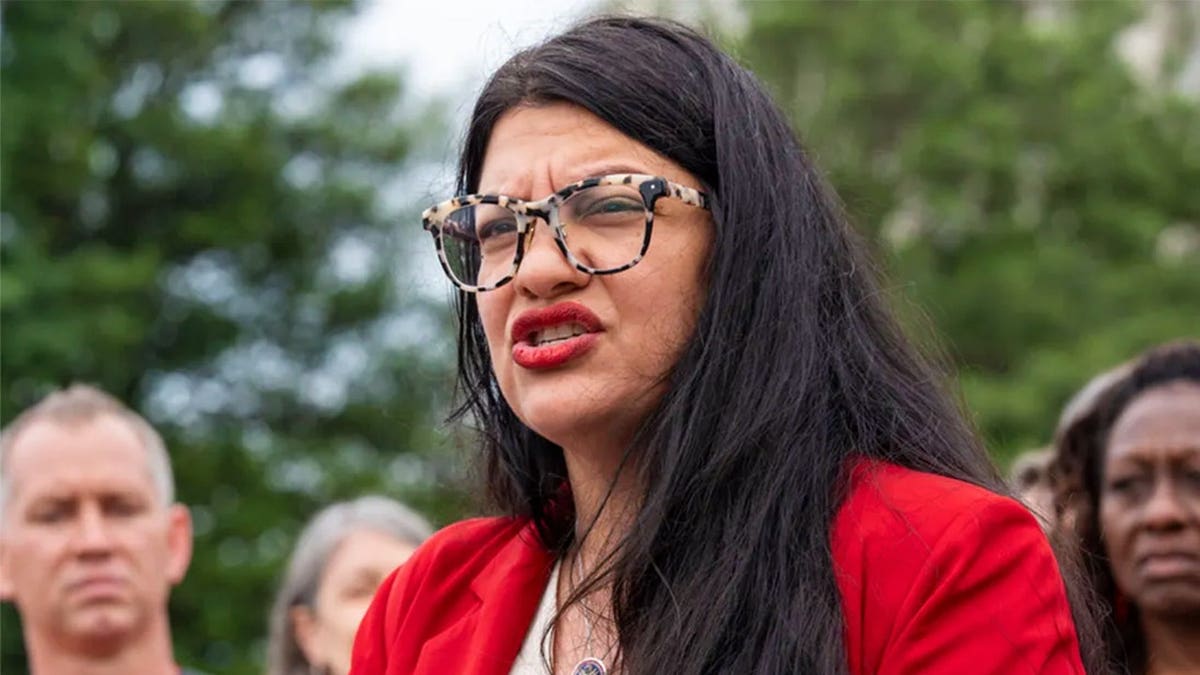
“Words taken down.” This term may not resonate with those outside Capitol Hill, but within the House of Representatives, it signals turmoil. A recent debate regarding a war powers resolution for Lebanon exemplified this chaos. Representative Rashida Tlaib, D-Mich., proposed measures aimed at restricting President Donald Trump’s hostilities in Iran, highlighting regional tensions.
Rep. Rashida Tlaib is a Palestinian-American and one of two Muslim women in Congress, making her a notable and often contentious figure. Her outspoken stance against Israel was underscored in her comments: “We must end U.S. participation in the Israeli apartheid regime’s invasion of Lebanon. The Israeli military continues to target journalists like Amal Khalil and use our tax dollars to commit war crimes.”
RASHIDA TLAIB HIT WITH HOUSE CENSURE THREAT, ACCUSED OF ‘CELEBRATING TERRORISM’ IN PRO-PALESTINIAN SPEECH
During the debate, Rep. Max Miller, R-Ohio, took aim at Tlaib, personally attacking her and drawing connections to Hezbollah. “Its members are butchers that you like to hang out with to a certain extent,” Miller stated, himself Jewish. He accused her of advocating for terrorists.
Tlaib responded vocally from across the chamber, though her words went unrecorded due to the lack of a microphone. Miller dismissed her reaction, commenting, “Oh, I’m sorry. Are we getting a little emotional?” This incited a louder response from Tlaib.
Rep. Jay Obernolte, R-Calif., steered the debate from the dais, seeking order amidst the discord. “Colleagues, this is a serious topic. We will debate it respectfully and deliberately,” Obernolte insisted. “Is the gentlewoman from Michigan making a motion?” Tlaib approached a microphone, asserting, “Yes, Mr. Speaker, I am. That is a direct attack on my character. I please request to strike the words down.”
Her motion halted all proceedings, akin to a law enforcement stop for speeding, requiring investigation of potential rule violations, where no legislative activity can proceed. The term “words taken down” involves House institutional staff documenting language by members that might breach rules. Personal attacks, impugning motives, or engaging in personalities are prohibited.
Tlaib perceived Miller’s actions as breaching House decorum, particularly his comments about terrorists and her emotional response. When rules appear breached, leadership or key staff can request an offending member withdraw remarks and apologize. Otherwise, the House may deem the member out of order, expunging the speech and barring them from speaking further that day. An appeal can occur, leading to a roll call vote or motion to table the appeal.
After an hour of impasse, Miller refused to apologize or retract his statements. Obernolte announced, “The words of the gentleman from Ohio contain an allegation that the gentlewoman from Michigan is a ‘butcher’ and affiliated with a terrorist organization.” He declared the remarks impugned loyalty and patriotism, adding “Without objection, the offending words are stricken from the record.” Thus, Miller faced sanctions, unable to speak further that day.
House Foreign Affairs Committee Chairman Brian Mast, R-Fla., continued the Lebanon debate, representing Miller post-silencing. Mast quoted Miller, “‘Yes, I said it. I own it. And I stand by it.’” He sought to submit articles implicating Tlaib but faced objections from her.
Such parliamentary disputes aren’t uncommon. In 1994, Rep. Maxine Waters, D-Calif., clashed with then-Rep. Pete King, R-N.Y., resulting in Speaker Tom Foley intervening. The day following the Tlaib-Miller event, Obernolte proposed bipartisan AI guidelines for order in proceedings. “AI is suited for rule compliance,” Obernolte stated, suggesting AI could handle similar disputes.
The concept of AI refereeing parliamentary sessions raises questions regarding future proceedings. Taking down words, ruling members out of order, and suspending speeches might evolve with AI involvement.
Chad Pergram serves as Chief Congressional Correspondent for FOX News Channel and has been part of the network since September 2007, based in Washington, D.C.