American Arrested in China Amid Tensions Over Myanmar Interests
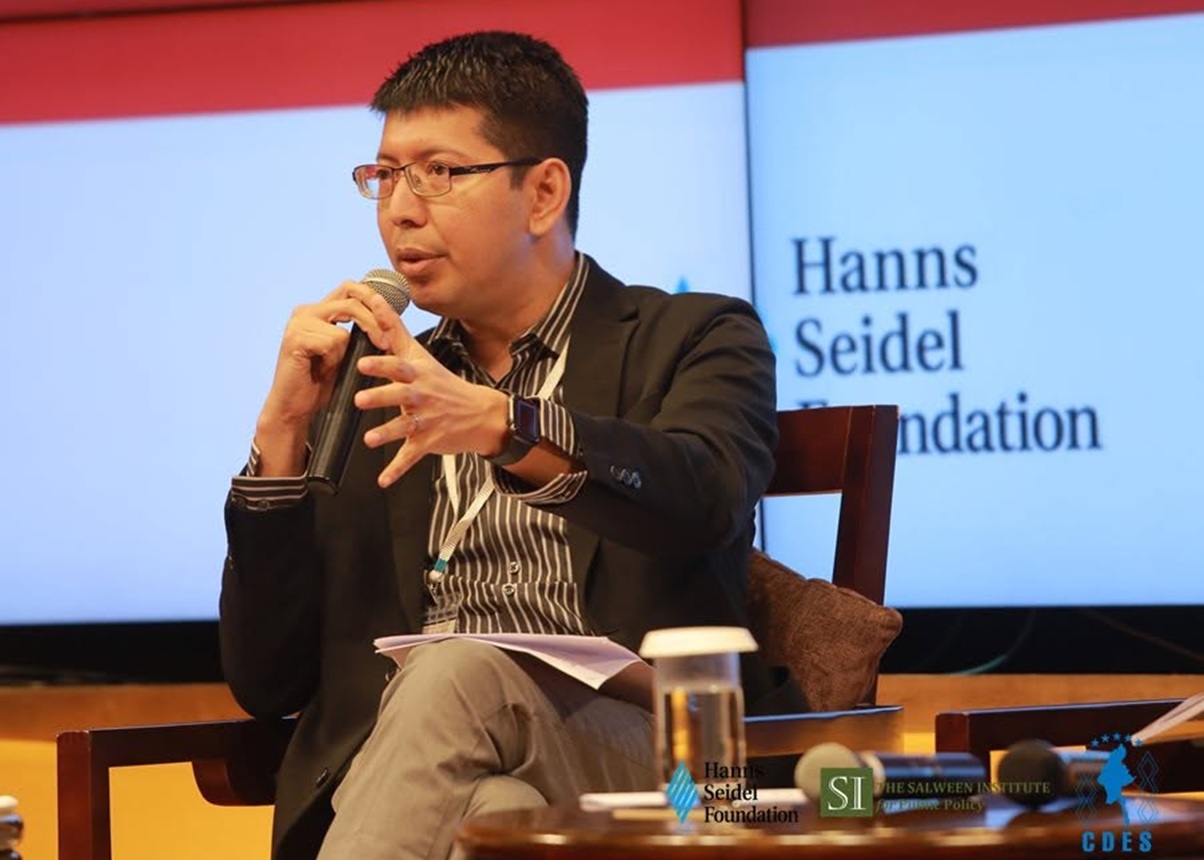
An American citizen arrested by Chinese authorities in June on suspicion of espionage has been linked to revealing China’s expanding interests in Myanmar. Individuals with inside knowledge informed Newsweek that the arrest aimed to stop the person’s effective exposure of China’s growing influence and potential interference in the conflict-laden Myanmar.
Min Zin’s sudden disappearance on June 3, after being invited to speak at a China-sponsored conference in Kunming, raised concerns regarding the safety of foreign scholars traveling to China for work. Calls for the U.S. State Department to seek Min Zin’s release intensified, given his role as the Executive Director of the Institute for Strategy and Policy-Myanmar (ISP-Myanmar). The institute analyzes geopolitical dynamics in Myanmar, often likened to Syria for its tumult and military complexity.
The 30-day mark since Min Zin’s detention suggests potential formal charges under Chinese law, though specifics remain unclear. Efforts to obtain comment from the Chinese embassy in Washington D.C. were unsuccessful.
“The question everybody should be asking is why him, why now?” voiced Laura Harth from human rights group Safeguard Defenders, advocating for the scholar’s release.
Another source, opting for anonymity, remarked that Min Zin was hindering China’s strategic maneuvers in Myanmar and that his arrest served China’s interests strategically.
The timing of Min Zin’s arrest intersects with Myanmar President Min Aung Hlaing’s state visit to Beijing on June 15; his first since the 2021 coup. This visit followed a trip to India, highlighting Myanmar’s strategic significance for bordering nations.
An ISP analysis compared these visits, noting Myanmar’s growing reliance on New Delhi for political leverage while remaining under Beijing’s influence. It highlighted numerous agreements during the visit, with Beijing emphasizing cooperation aligned with its global initiatives.
Joshua Kurlantzick, Senior Fellow for Southeast Asia at the Council on Foreign Relations, reinforced China’s dominant role in Myanmar, stressing Min Zin’s arrest aimed to halt his work and challenge U.S. responsiveness. He criticized the U.S. response as insufficient, with a prioritization on maintaining Beijing relations.
Min Zin had extensively documented China’s economic activities in Myanmar, including unregulated rare earth mining, where Chinese firms play a significant role.
There are calls from figures such as Randall G. Schriver, Chair of the Institute for Indo-Pacific Security, for Min Zin’s designation as “wrongfully detained”. Schriver urged China to release Min Zin and the U.S. to push for his freedom, deeming espionage allegations unfounded as Min Zin’s research focused on governance and human rights.
The arrest contradicts a prior agreement between U.S. and China during President Trump’s visit to Beijing in May. Schriver described China’s actions as contrary to the agreed strategic stability relationship.
The State Department conveyed its commitment to American safety, with consular officials visiting Min Zin and offering assistance.
Kurlantzick criticized the U.S. lack of action amidst relationships with Myanmar and Beijing despite Myanmar’s isolation post-coup, though that isolation has diminished with visits to India and China.
Experts noted China’s grip over Southeast Asia, including Thailand, amid weakening U.S. influence in the region.
The China-Myanmar Economic Corridor is a crucial part of China’s Belt and Road Initiative, featuring significant investments for strategic access to Myanmar’s Kyaukpyu port, aiming to circumvent the U.S.-monitored Strait of Malacca.
Local threats like advances by the Arakan Army have complicated China’s ambitions, posing risks to its interests.
Divergent opinions exist about Min Zin’s arrest. Yun Sun of the Stimson Center suggested it reflects U.S.-China tensions, with Myanmar playing a secondary role. She speculated retaliation could stem from U.S. restrictions on Chinese scholars or undisclosed acts.
Newsweek editors involved in this story: Frances Mao, Cristina Diciu, and John Feng.