Analysis of Violent Protest and Political Extremism in Belfast
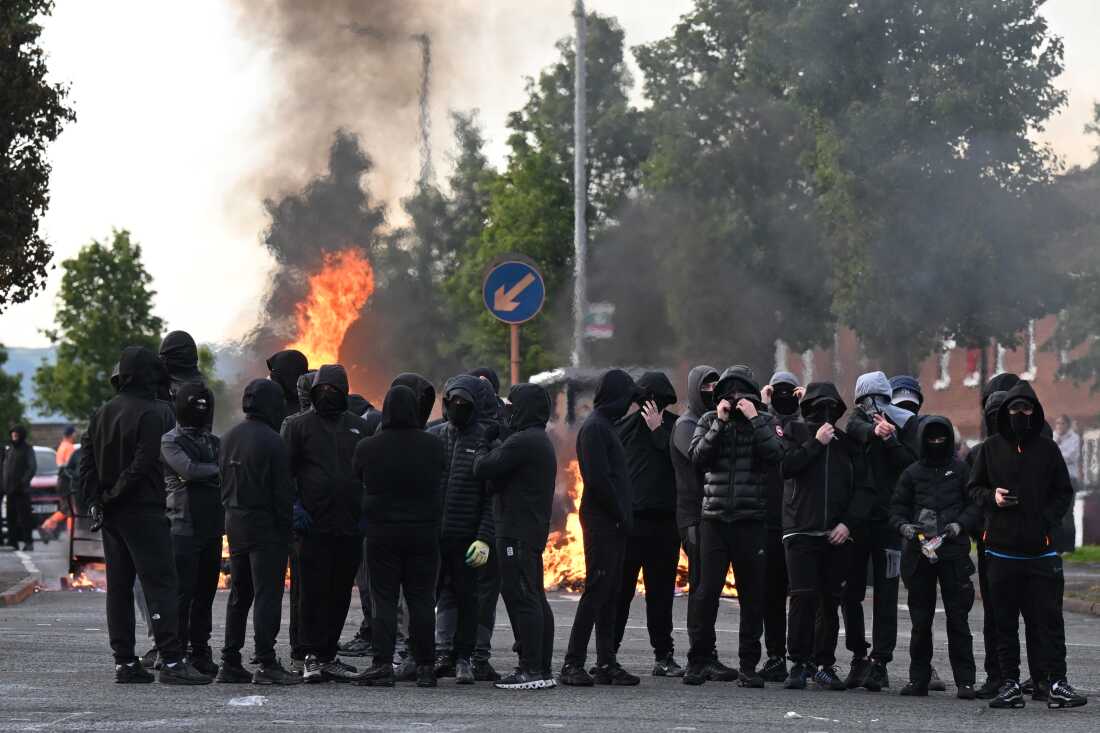
Youths congregated in front of a burning barricade on Duncairn Gardens, Belfast, Northern Ireland, on June 9. The violence displaced ethnic minorities from their homes in Belfast, drawing attention from experts studying violent extremism in the U.S. The unrest began after the stabbing of Stephen Ogilvie by a 30-year-old Sudanese asylum seeker in the UK. Despite serious injuries, Ogilvie survived, and the alleged perpetrator faced charges of attempted murder.
The incident incited protests where masked, anti-immigrant mobs ignited vehicles and homes in minority neighborhoods. There are inquiries into how protestors rapidly organized and whether “active clubs” played a part. Michael Colborne, a journalist with Bellingcat, noted these clubs observed a model of masked youth engaging in political violence that they wish to emulate.
These active clubs have risen across Western Europe and the U.S., frequently connecting via digital platforms. Their activities revolve around interests in mixed martial arts, emphasizing combat sports not just as fitness but as preparation for political violence.
A buzz of social media activity on active club accounts before and after the Belfast unrest led to reports in Wired questioning if such groups orchestrated the violence. However, observers question these claims, referencing Northern Ireland’s political history and rising anti-immigrant sentiment in the UK. Sid Venkataramakrishnan from the Institute for Strategic Dialogue sees the UK as a tinderbox, implying that even without active club promotion, violence in Belfast was likely.
The Telegram account of the Ulster Youth Club suggested active clubs might have mobilized the protests. Posts before the riots advocated for white men to act against non-whites, emphasizing creating fear. Instructions were shared to avoid identifiable features, like smartphones or tattoos, to maintain anonymity.
Post-riot analyses highlighted operational security tactics, such as preventing citizen journalists from capturing incriminating footage, leading to speculation about the involvement of active clubs. Still, clear identification of neo-Nazi group affiliates among rioters remains absent. Experts note the rapid street mobilization reflects a long-developing environment rather than instant causation by active clubs.
Venkataramakrishnan highlighted Northern Ireland’s history of sectarian violence and Loyalist groups. These historically divided factions complicate attributing the violence directly to active clubs.
Anti-immigrant violence has recurred annually in Northern Ireland, following crimes against white UK residents. Far-right figures in the UK and abroad have utilized these instances to promote expulsion rhetoric via social media and mobilize street actions.
The Accountability Project, a volunteer group, monitors anti-immigrant networks that could involve former Loyalist paramilitary members. However, communication among younger rioters likely occurred through encrypted apps like Signal and WhatsApp. Questions will persist on connections between paramilitary legacies and new extremist mobilization as investigations continue.