Ancient Ring Linked to Pontius Pilate: New Research Offers Fresh Clues
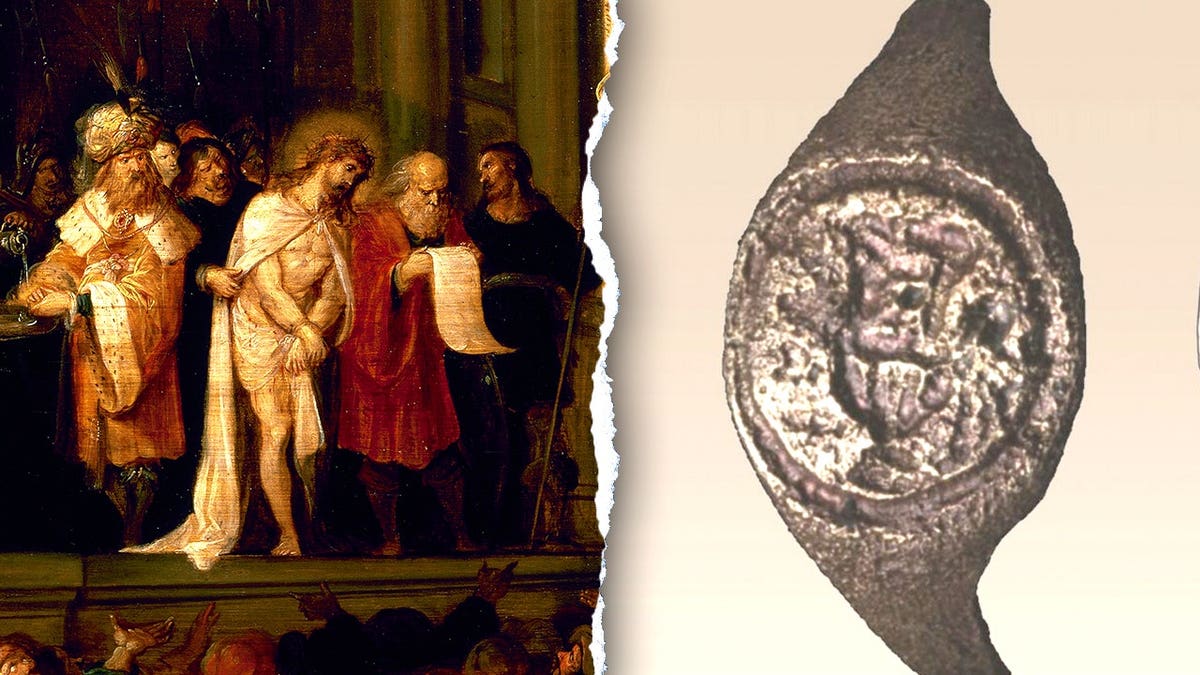
Recent research has brought new understanding about an ancient ring bearing an inscription connected to Pontius Pilate. This development offers insights into how the Roman governor exerted authority nearly 2,000 years after he sentenced Jesus Christ to death.
Discovery and Initial Interpretations
The ring was found at Herodium, a mountaintop fortress in the Judean desert, during the 1960s. For over five decades, it remained in storage before researchers released findings about it in 2018, according to the University of California, Los Angeles (UCLA).
Debate Over Connection to Pilate
A later study questioned its link to Pilate, spurring scholarly debate. Catherine Bonesho, a UCLA professor of ancient Judaism, addressed this debate in a new study published in the Palestine Exploration Quarterly. Bonesho’s study suggested the ring’s inscription was a transliteration of the Latin PILATO into Greek letters, meaning “for Pilate” or “to Pilate.” This theory provides a stronger explanation than the earlier view that it was a misspelled or abbreviated form meaning “belonging to Pilate.”
Bonesho argued the ring likely did not belong to Pilate himself. It may have been worn by a lower-status worker conducting administrative duties related to him.
Insights into Roman Administration
“Understanding the ring gives us more insight into what the Roman administration of early Roman Judea looked like, in terms of how authority was distributed into the lower echelons of the political structure,” Bonesho stated.
She noted the ring’s poor quality and Greek transliteration, suggesting those who used seal rings, like secretaries, were more likely enslaved or formerly enslaved workers.
Historical Context and Implications
Candida Moss, a historian of early Christianity, praised the new interpretation. She highlighted the puzzle if the inscription refers to Pilate, why is the ring so cheaply made? “This isn’t an expensive ring, the kind of thing that you would expect the person who is the governor of the whole area to have,” Moss explained.
Moss agreed the ring may have been used by someone working under Pilate and acting with his authority. These workers used Pilate’s ring to set a seal, showing they had Pilate and the Roman bureaucracy’s backing in their decisions.
Beyond archaeological importance, Moss noted the ring may offer insights into the biblical account of Jesus’ crucifixion, especially an element in the Gospel of John. John’s account mentions Pilate wrote the inscription identifying Jesus as “King of the Jews.”
Moss emphasized the ring might explain how a subordinate act under Pilate’s authority could be attributed to Pilate himself. “He delegated that work to someone else,” she said.