Arsenal’s Comeback Victory Against Chelsea
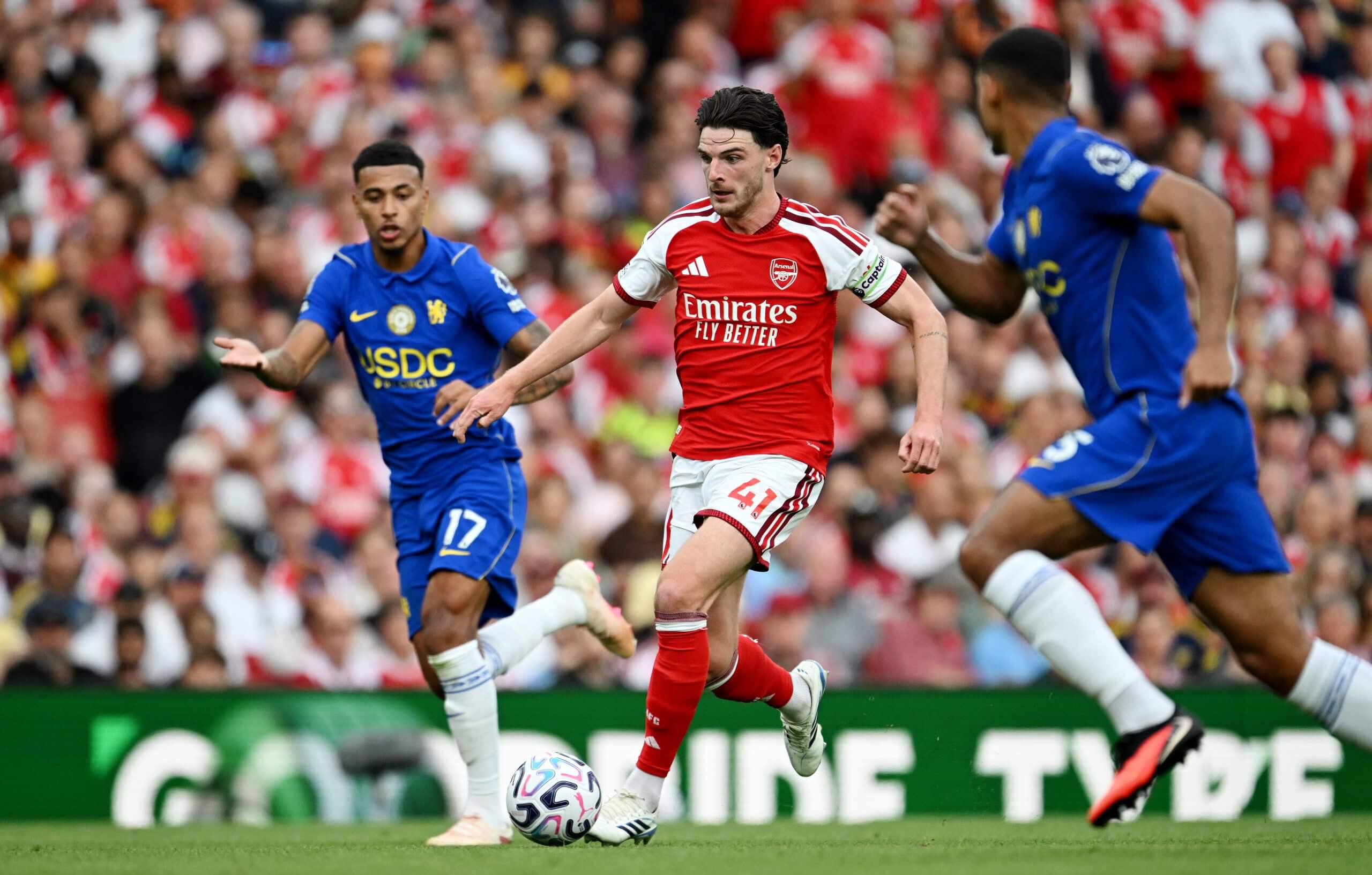
Arsenal faced a challenging summer, ending up with fewer attackers. Yet they demonstrated their capability in a comeback victory against Chelsea. The team initially targeted Morgan Rogers, who instead went to Chelsea, opening the scoring within two minutes.
Former Chelsea player Kai Havertz shone for Arsenal, equalizing with a goal Emi Martinez couldn’t stop. Pedro Neto almost scored with a post hit before halftime. The second half saw a similar pace, with both teams threatening, particularly on the counter. Martin Odegaard put Arsenal ahead with a goal reminiscent of their Community Shield performance against Manchester City. David Raya secured the win with a key late save.
Arsenal’s desire last season was control, but this match was open and entertaining. Controversy arose with incidents like Gabriel’s kick at Martinez and Declan Rice’s trip on Rogers. Chelsea, though defeated, showed promise by creating chances throughout.
Liam Twomey, Jack Lang, and Conor O’Neill analyze the match’s intricacies.
Entertaining Match Analysis
The Premier League season started quietly, with many teams looking unsteady despite active transfer markets. Arsenal, contrasting this trend with their stability, dampened hopes for an exciting title race. This match, however, was an energetic battle that set high expectations for future games.
Arsenal earned their win, playing with skill and determination. Chelsea’s performance hinted that the champions wouldn’t have an easy path. In the first half, Chelsea applied pressure and could have capitalized on their early goal. Their challenge to Arsenal highlighted the significance of Arsenal’s comeback, making the victory satisfying for both fans and neutrals.
Havertz’s Impact
In a data-driven era, not all creative brilliance can be measured. Havertz’s intelligent dummy for Odegaard’s goal exemplified this, illustrating his role in Arsenal’s success. He demanded the ball, only to let it pass to Odegaard, who calmly scored. This was a decisive moment and capped Havertz’s exceptional performance against his former club, showcasing his creativity and goal-scoring ability.
Chelsea’s Front Three
Arsenal didn’t match Chelsea’s offer for Rogers, making his early volley at Emirates Stadium symbolic. Chelsea’s frontline needed to breach Arsenal’s defense, dominant in the early season. Rogers, known for taking risks, aimed to create opportunities, even at the cost of potential turnovers.
His willingness to attempt challenging shots showcased his potential. Along with Cole Palmer and Joao Pedro, Rogers added a new, direct dynamic to Chelsea’s attack. Despite an aggressive slide-tackle from Ezri Konsa, Rogers forced Arsenal’s defense to adapt, proving valuable for Chelsea’s continuous growth.
Arsenal’s Attacking Strategy
Conceding an early goal pushed Arsenal to play aggressively. Their attack, led by Bukayo Saka, Odegaard, and Ben White, tested Chelsea effectively. Arsenal diversified their attack strategy beyond the right wing, exploiting Tzolis’s direct approach to maintain constant pressure.
Their strategic rotations and precise passing, especially triggered by Havertz and Rice, were pivotal. The synergy between Tzolis and Odegaard mirrored their prior successes, setting a consistent pattern for Arsenal’s future matches.
Chelsea’s Midfield Challenges
Despite missing Moises Caicedo, Chelsea’s midfield, led by Romeo Lavia and Reece James, held up for much of the first half. Lavia excelled defensively, while James added composure. The limitations in midfield depth became apparent later as Arsenal gained control, emphasizing Chelsea’s need for enhanced strategies against top-tier opponents.
Set-Piece Tactics
With renowned set-piece coaches on both sides, these scenarios played notable roles. Rogers scored from a series of headers, while Arsenal’s set-piece strategy saw low, unexpected deliveries from Odegaard that disrupted Chelsea’s defense.
Chelsea countered by positioning attackers to force Arsenal into a more defensive stance, recalling past strategies but ultimately falling short against Arsenal’s innovative tactics.
Arsenal’s Disallowed Goal
Early in the game, a potential equalizer by Arsenal was disallowed due to an offside decision involving Ezri Konsa, following a chaotic series of plays. The VAR’s intervention was crucial, and Arsenal had to strive further to find the actual equalizer.
Manager Reactions
Mikel Arteta praised his team’s quality and energy, specifically highlighting Martin Odegaard’s outstanding performance. Arteta emphasized the importance of enjoying the game and noted the crowd’s reaction to aggressive plays like Konsa’s tackle.
Updates from Alonso’s post-match statements are awaited for further insights on Chelsea’s perspective.
Upcoming Matches
- Arsenal faces Napoli on September 9, in the Champions League.
- Chelsea will meet Leeds on September 9 in the Carabao Cup, followed by a Premier League match against Hull on September 12.