Ashaninka Indigenous People Face Threats from Criminal Networks
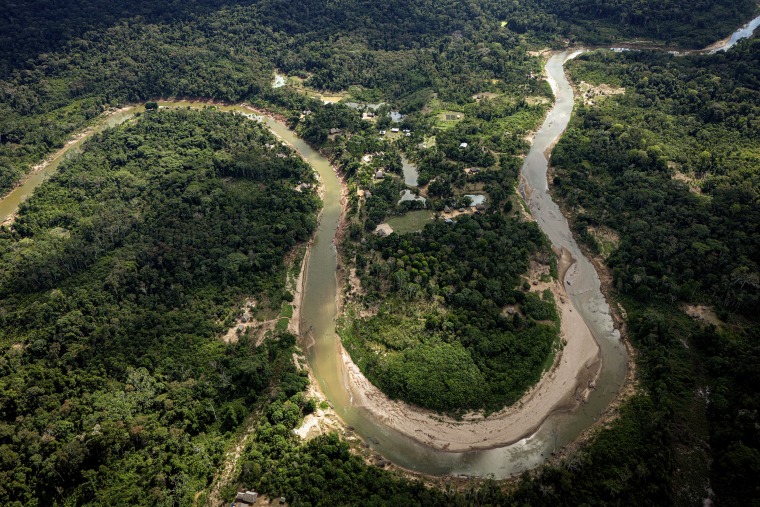
The Ashaninka Indigenous people of Brazil, residing on the border with Peru, are renowned for reclaiming their territory from settlers decades ago. They have successfully established their own governance, practiced sustainable agriculture, and protected the forest. However, their way of life is now threatened by gangs and drug traffickers.
These criminal groups are increasingly encroaching on Ashaninka land, utilizing the Amazon rivers and adjacent areas for drug trafficking routes. Ashaninka leaders have reported episodes of violence and have sought intervention, including a meeting with Brazilian officials in the capital. Despite the deployment of security forces, the presence of these forces is often temporary while the threats persist.
Experts indicate that the intrusion into Ashaninka territory is part of a broader transformation of the Amazon border, driven by the expansion of criminal routes through areas like the Solimoes River. Indigenous territories are crucial to this route. Protecting these lands is effective in curbing deforestation, a critical issue since the Amazon rainforest plays a significant role in regulating the global climate. Unfortunately, the forests that communities protect also make them vulnerable; dense tree cover in remote regions offers ideal hiding spots for drug traffickers.
Maj. Jonatas Soares, a police officer in the border city of Tabatinga, comments on the inadequacy of public security services for Indigenous peoples. The state recognizes their territories but fails to offer continuous, tailored protection. The Ashaninka territory along the Amonia River in Acre state exemplifies this issue.
The Solimoes River route has become a primary path over the past decade for transporting cocaine from Peru, Colombia, and Bolivia to Brazilian ports, from where it is distributed domestically and overseas, notably to Europe. This route is predominantly controlled by the Brazilian gang Red Command.
According to Col. César Mello, a retired Amazonas state police officer, several factors contribute to the vulnerabilities faced by Indigenous communities: remote locations, limited government oversight, language barriers, and cultural differences. Criminal organizations often recruit Indigenous youth by offering money and status, exploiting the scarcity of economic opportunities. When persuasion fails, these groups resort to violence.
The Ashaninka have historically resisted trafficking networks in both Peru and Brazil. Despite attempts by drug traffickers to establish a clandestine airstrip on their land, the Ashaninka refused. Francisco Piyãko, coordinator of the Organization of Indigenous Peoples of the Jurua River, highlights their longstanding opposition to illegal activities.
Local tensions intensified recently after armed men invaded the Kampa Indigenous territory along the Amonia River. A group of five men reportedly threatened families and searched for key leaders, prompting Piyãko to file a complaint with Acre state authorities and the Brazilian Army, leading to a security forces deployment.
Piyãko distinguishes typical resource theft from these armed invasions, emphasizing the intent to target leaders. Despite being shaken by recent threats, the community remains steadfast in its resistance. Piyãko insists that confronting armed criminal groups is the state’s responsibility, attributing the situation to governmental absence and accountability to both Brazil and Peru.