Ben Shelton’s Journey: From Wimbledon Loss to U.S. Open Final
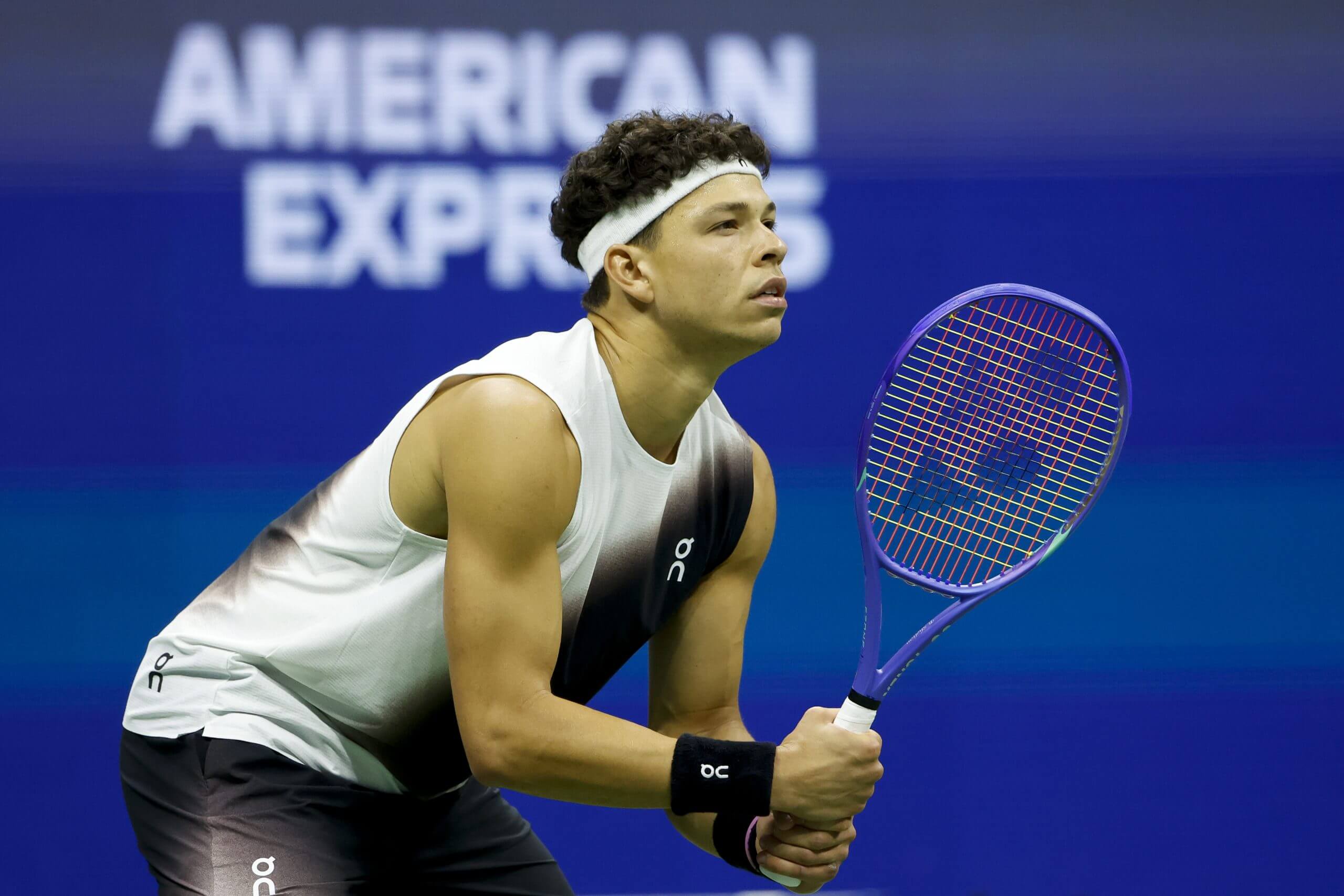
NEW YORK: Ben Shelton recalls a particular thought during his first-round match at Wimbledon this year. Facing Otto Virtanen from Finland, Shelton led 8-5 in the fifth-set tiebreak. He glanced at the scoreboard and wondered, “What is this bull———t?”
Shelton had lost a two-sets-to-one lead. A standard seven-point tiebreak would have secured his win already. Virtanen was ranked No. 140 globally, while Shelton was seeded No. 4 at the All England Club and hadn’t exited a Grand Slam’s first round in three years.
“I was a little bit shocked because, to be honest. When I look back at the match, I didn’t feel that there were many other first-round matches at Slams in the last two years where I’ve played much better,”
Shelton said in an interview this summer.
Shelton won just one more point after his moment of disbelief, losing the tiebreak 11-9. Reflecting on the match, he saw patterns: mental lapses, poor returning, and ineffective point construction. Though Shelton, 23, won four titles this year, he also faced early exits in major tournaments, including two Grand Slams.
Shelton’s father, Bryan, a former ATP Tour player and Shelton’s coach, helped him view his career with a long-term perspective. The loss to Virtanen highlighted that raw talent alone might not crown him a champion.
Despite setbacks, Shelton’s self-awareness has pushed him forward. He reached his first Grand Slam final by defeating Carlos Alcaraz in a five-set quarterfinal and then Frances Tiafoe in the semis, setting up a finals clash with Alexander Zverev.
In the third round against Denis Shapovalov, Shelton showcased familiar weaknesses. Their match started late due to a lengthy doubles game by Serena and Venus Williams, impacting preparation. Only in the third set did Shelton display more aggression and control.
The Wimbledon loss was a sequel to a straight-sets defeat to Raphaël Collignon at the French Open. Improving his performance at the U.S. Open mattered, especially against opponents like Tallon Griekspoor and Hubert Hurkacz, who are experienced and challenging.
“This is a great way to start the tournament in terms of variety. I’ve dealt with different playing styles,” Shelton stated. He realizes his return game needs to advance to the next level.
Between significant events, such as the Australian Open and Wimbledon, Shelton won three ATP titles but mostly struggled at major tournaments. Retreating home early from London, the Virtanen defeat motivated intense training. The match was a map, revealing mental issues and gaps in competitiveness against perceived lesser opponents.
His returning skill, a known vulnerability, came into sharper focus. Losing to underdog players showed he was being overwhelmed during games where he should have had the upper hand.
“That match helped me a lot. My mental space is better now,” Shelton expressed. “When confident, I more effectively counter aggressive players.”
Before the U.S. Open, he dominated the ATP Masters 1000 Canadian Open without losing a set. The slow hard courts favored his game style, enabling easy control. However, early exits in Cincinnati presented challenges, including Alcaraz waiting in the quarterfinals at the U.S. Open.
Shelton learned he can’t rely solely on talent and diligence. The Wimbledon loss could mark a turning point for his 2026 season, while a win at the U.S. Open final may redefine his career.