Biden’s Policies and the Conflict in Gaza: An Analysis by Akbar Shahid Ahmed
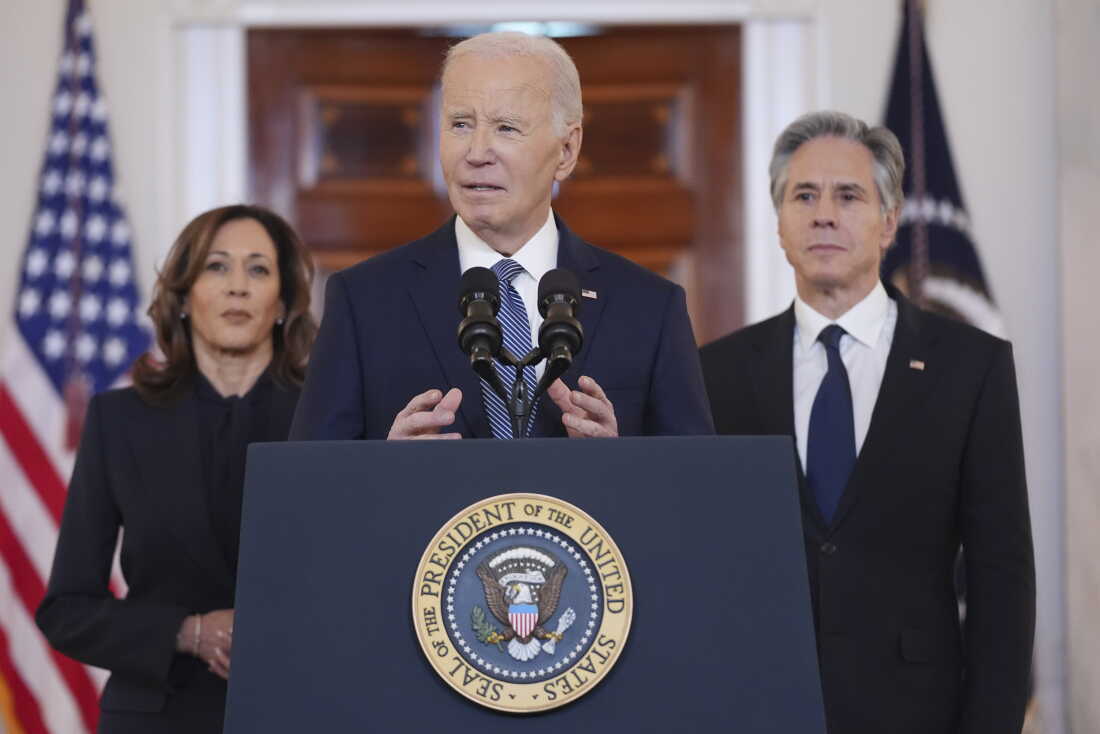
On January 15, 2025, President Joe Biden delivered remarks at the White House concerning a ceasefire agreement in Gaza, alongside Vice President Kamala Harris and Secretary of State Antony Blinken. This moment followed years of reporting by journalist Akbar Shahid Ahmed, whose work at publications like HuffPost covered Biden’s international promises and actions.
Ahmed’s exploration of U.S. policies led him to trace the effects of decisions made in Washington, particularly around the Israeli-Palestinian conflict. After the 2023 Hamas attack on Israel and Israel’s military response in Gaza, Ahmed examined how these events connected to U.S. politics. His research indicated a pattern of insularity within the Biden administration, which he believed needed deeper exploration in a book.
U.S. Policy and Gaza
Ahmed’s book, “Crossing the Red Line: Biden, His Advisors, and Israel’s War in Gaza,” is based on over 150 interviews with officials and policy influencers. It delves into the complexities behind the Biden administration’s support for Israel and its consequences.
One notable period covered in Ahmed’s book is post-2024 U.S. presidential election discussions, where U.S. involvement in potential Israeli war crimes was debated. High-level officials, including Biden, engaged in these talks, reflecting a broader issue of decision-making confined to a select group.
Ahmed describes how minor decisions often required approval at the highest levels of the White House, delaying actions and recommendations concerning Israel’s military approach in Gaza.
Even if relatively minor decisions often had to reach the highest levels of the White House, delaying action and missing opportunities to pressure Israel to scale back its campaign.– Akbar Shahid Ahmed
Continuity in U.S. Support
Despite changes in administration, U.S. military aid to Israel remains significant. During the Gaza conflict in 2023, the U.S. provided an additional $8.7 billion on top of an annual $3.8 billion in military support. The discussion of past and ongoing aid underscores a continuity in American foreign policy.
The Associated Press highlighted a planned $2.8 billion arms sale from previous administrations continuing into the present. Such continuity reflects on officials who shaped Biden’s foreign policy strategies and are now assessing their governmental roles.
Impacts and Accountability
Ahmed notes that many officials often sidestepped clear findings on potential Israeli war crimes, allowing a culture of “herd impunity” to persist without accountability.
After Biden left office, an independent UN commission concluded that Israel committed genocide against Palestinians in Gaza. Israel opposed these findings and denied any wrongdoing.
Despite these controversies, Ahmed argues the policies under the Biden administration permanently altered U.S. foreign relations, affecting America’s global stance and accountability.
He further discusses the need for transparency on doubts and challenges the U.S. faced internally during this period, suggesting that America’s strategic decisions could have significant repercussions on global safety and democratic values.