Shepherds in Lesotho: A Pursuit of Education Amidst Tradition
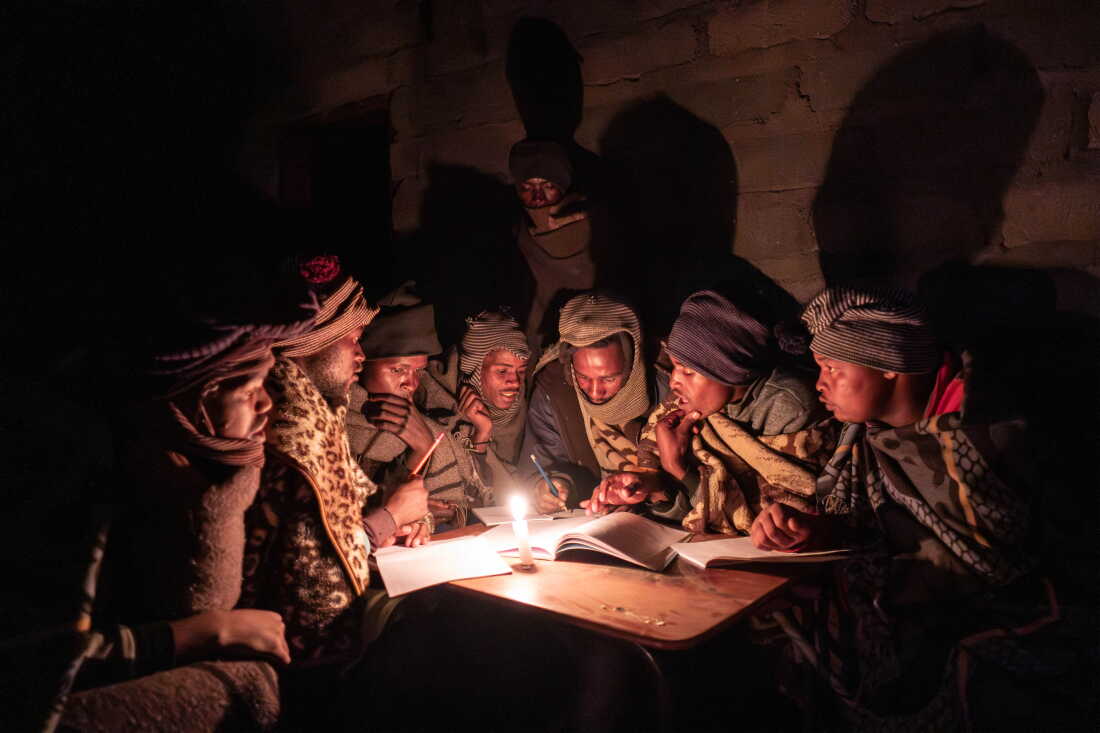
In Lesotho, shepherds attend night schools near Mokhotlong to access education. For many, these classes provide the only avenue for learning. As the sun sets over the mountainous terrain, Kabelo Mohai and Lepeli Maapesa initiate their journey to school, wrapped in wool blankets to combat the descending cold. They traverse the rugged paths, 8,000 feet above sea level, with the small villages below appearing as mere specks. The moon rises high as they sight the lights of Semonkong, where the Good Shepherd School offers night classes to over 40 herders.
Livestock is central to Lesotho’s economy, with wool and mohair accounting for 60% of agricultural exports. Boys often take on herding responsibilities, leading to isolation from society and impacting education. A World Bank study from 2018 highlighted that about half of Lesotho’s boys were involved in herding.
Mohai and Lepeli trek two hours to attend classes at the Good Shepherd Night School. Mohai began herding at nine, finishing only primary school. At 20, he continues to work among the mountains, embracing the freedom but acknowledging the isolation. He learned of the night school three years ago and sought to return to education.
‘I started with animals at 9, only finished primary school,’ says Mohai, under his patched ski mask.
Dozens of schools have emerged across Lesotho, providing basic education like reading, writing, and counting, mainly supported by volunteers on tight budgets. These schools face financial challenges yet offer herders a chance for a different future. Traveling to the Good Shepherd School, Mohai wishes to break from the sheep-pen routine by seeking knowledge and aiming to become a soldier.
Inside the dimly lit classroom, boys, clothed in traditional blankets and boots, read aloud as Sister Rosemary Mokebe teaches them. Founded in 2003 by the Good Shepherd Sisters, this night school aids in literacy, assisting shepherds integral to Lesotho’s economy.
‘Shepherds are central to our economy. Without this school, they may never learn to read and write,’ Sister Mokebe states, urging the importance of education.
The Ministry of Education has slowly assumed responsibility for the night schools, formalizing them despite delays. The convent helps sustain classes, providing a chance for these young men to socialize, reconnect, and learn about health issues like HIV and tuberculosis through programs conducted by social workers.
In Thaba-Tseka district, teacher Mampho Makha conducts classes on a volunteer basis. Earlier inspired by teaching her father to read, Makha now supports over 35 students across villages, ensuring they can count their money and animals, overcoming illiteracy.
‘My father refused to sign an affidavit he couldn’t read. I taught him to read, stirring my passion for teaching,’ Makha recalls, advocating for education.
Every night, teachers like Makha endure long commutes, ensuring education persists despite challenges. Night schools offer herders not just basic education but a chance for social growth and hope for dreams beyond herding.