Brazil Combats Illegal Gold Mining in the Amazon with Forensic Science
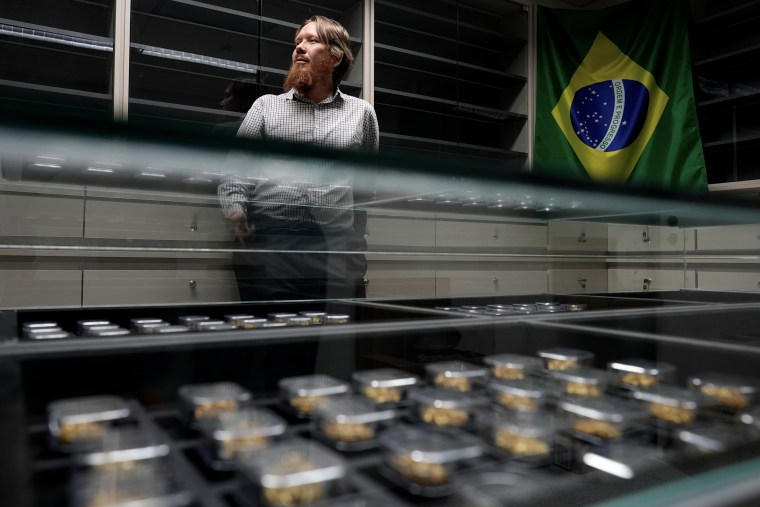
Brazil is deploying forensic science to address illegal gold mining in the Amazon. This illegal activity poses a major threat to the rainforest, Indigenous communities, and other local populations. It has accelerated deforestation and increased mercury contamination to hazardous levels.
At the National Institute of Criminalistics in Brasilia, capital of Brazil, federal police have established a dedicated lab known as the ‘gold lab.’ This facility gathers and examines gold samples from around the country. The goal is to ascertain whether a confiscated gold sample originates from a protected area, indicating it was mined illegally. This process, known as ‘gold fingerprinting,’ pinpoints the origin of gold samples with high accuracy.
Gold Fingerprinting: A Precise Process
Tracing gold is akin to analyzing a person’s DNA, according to experts. Each gold particle is unique. As gold forms in nature, it absorbs silver, copper, and other particles from its surroundings. This composition serves as a fingerprint, allowing investigators to verify if the gold was mined illegally from protected areas.
Gustavo Geiser, a federal police forensics expert, notes that this method has been refined since 2019 in collaboration with Brazilian universities. The lab uses tools like X-ray fluorescence spectrometry and laser ablation mass spectrometry. These enhanced forensic techniques help police build cases and advance investigations when illegal mining is confirmed.
Legal Market Infiltration
Illegal miners often commit fraud to integrate their goods into legal markets. This trend includes not only gold but also timber and cattle. Recently, rising gold prices have fueled more mining in the Amazon.
Amazon Mining Watch reports that around 496,000 hectares of rainforest have been destroyed for mining since 2023. This figure includes 223,000 hectares within the Brazilian Amazon.
Greenpeace has exposed scams where legal mine owners falsely claim extraction of gold while actual operations occur in Indigenous lands. A court in Para state has ordered strict oversight and accountability in gold markets. Prosecutors have also filed for improved mining permit controls.
Preventing Ecological Damage
Illegal gold mining is a significant concern, albeit a smaller driver than agriculture. Its use of mercury is particularly damaging. Mercury contamination in rivers affects the fish vital to Indigenous communities.
A study by Fiocruz shows that 21.3% of fish in Amazon markets contain mercury levels above WHO safety limits. The Brazilian government is part of the Minamata Convention, committing to phasing out mercury.
The Ministry of Mines and Energy plans to present a strategy for reducing mercury use. However, Indigenous groups have not yet been consulted. Federal police expert Geiser suggests a mercury ban would benefit forensic investigations, making illegal mining using mercury easier to identify.