Brazil’s Supreme Court Decision Affects Soy Moratorium
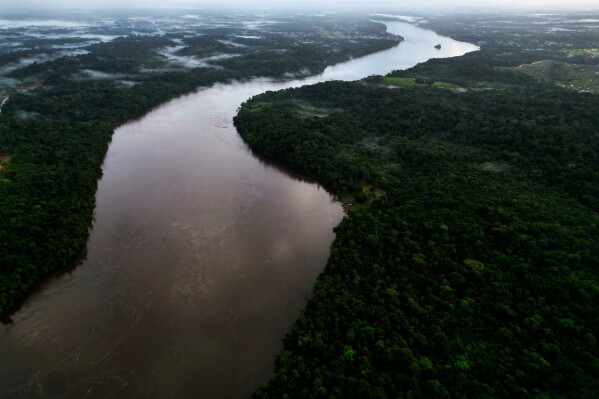
Brazil’s Supreme Court has significantly impacted the future of the country’s soy moratorium. The court upheld state laws that deny tax benefits to farmers adhering to the agreement that prohibits soy cultivation on deforested Amazon land. Simultaneously, the court confirmed the voluntary pact’s constitutionality.
In January, major grain traders left the soy moratorium. They did so after key soy-producing states passed laws removing tax incentives for companies involved. Brazil leads the world in soybean production, contributing about 40% of the global supply. Much of this crop is grown in the central and northern Amazon areas, including states like Mato Grosso, Para, and Rondonia.
The Amazon rainforest is vital for global climate regulation. Scientists state that forest loss could worsen global warming, affecting agriculture in places far from South America, including the U.S. Midwest and parts of Europe. According to the U.S. Department of Agriculture, Brazil produced 171.5 million metric tons of soybeans in the 2024-25 season. China was the primary export destination, according to Brazil’s trade data.
Launched in 2006, the soy moratorium was a response to environmental concerns and international pressure. It was a voluntary agreement, with major soy traders, backed by the Brazilian government, agreeing not to buy soy from Amazon areas cleared after July 2008. However, soy producers often criticized the moratorium for being stricter than Brazil’s environmental laws. Under national regulations, farmers in the Amazon can clear 20% of their land, but the moratorium banned all deforestation.
The moratorium effectively reduced deforestation in high-risk areas by 35% in its first decade without impacting productivity. A study in Science journal suggested that discontinuing the pact might result in 1.4 million hectares of deforestation over ten years, leaving a Portugal-sized area open to legal deforestation.
Deforestation rates had decreased after high levels in the 1990s and 2000s, until former President Jair Bolsonaro’s term, which faced criticism for weakening environmental protections. President Luiz Inácio Lula da Silva’s administration has reduced deforestation to its lowest in a decade.
Angela Barbarulo of Greenpeace Brazil called the court’s acknowledgment of the moratorium’s constitutionality crucial. Nonetheless, she noted that state laws penalizing those adopting higher environmental standards weaken the moratorium’s effectiveness. She emphasized the need to avoid state laws that undermine environmental efforts aimed at protecting the Amazon.
The Brazilian Association of Vegetable Oil Industries (ABIOVE) stated that the ruling resolves legal uncertainties. However, they referred to the moratorium as past, suggesting the decision might not restore the agreement. They advocated for a renewed dialogue focusing on legal certainty, competitiveness, and sustainability.
The Mato Grosso Soy Producers Association opposed the moratorium. In a statement, they said the ruling affirms state governments’ power to combat private-sector environmental measures exceeding legal requirements. They also committed to contesting future agreements that impose such restrictions.
The Associated Press’ climate coverage is funded by various private foundations, but AP maintains sole responsibility for its content. Details on AP’s relationships with philanthropies and funders are available at AP.org.