Byron Donalds Discusses Future GOP Strategies and 2028 Election Prospects
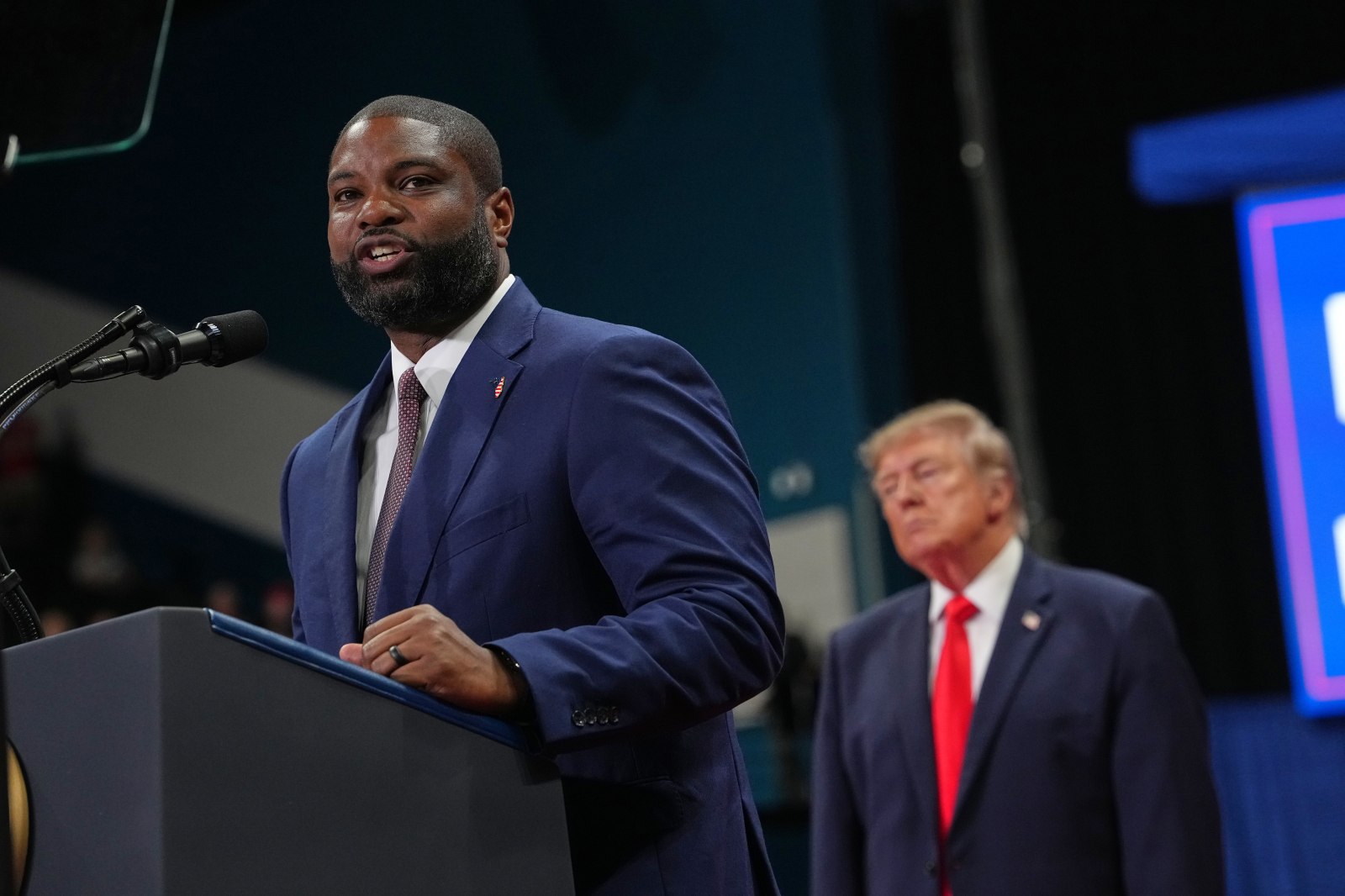
Byron Donalds, a Republican congressman and the incoming governor of Florida, emphasized that candidates for 2028 will need to establish their own voter coalitions. At the National Governors Association’s New Governors Leadership Forum, Donalds asserted, “To be blunt: What I’ve observed in politics, it’s very hard for somebody to try to recreate the previous person’s coalition.” His statement to Politico underscores the challenges in replicating the successes of earlier administrations.
Donalds has gained attention as Florida’s first Black governor. He received endorsements from President Donald Trump and Florida Governor Ron DeSantis after the primary. Recent Republican setbacks in midterm elections, which led to a loss of control in both the House and Senate, have prompted discussions about the next leader of the MAGA movement in a post-Trump era. DeSantis’ media appearances following the midterms suggest he may be contemplating a 2028 presidential run.
CNN’s Jake Tapper inquired about DeSantis’ plans for 2028, to which he replied that he has not planned anything yet. Several other Republicans, including Vice President JD Vance, Secretary of State Marco Rubio, Senator Ted Cruz, and former governor of Virginia, Glenn Youngkin, have also been questioned about their 2028 intentions. On the Democratic side, prominent figures like Alexandria Ocasio-Cortez, California Governor Gavin Newsom, and former Vice President Kamala Harris have been approached about their political aspirations.
“Whoever the next person is going to be, they’re going to have to redefine and reshape the electorate about what their supportive coalition is,” Donalds noted.
Donalds further advised that aspiring candidates must define themselves. “You have to be yourself. You can’t be a facsimile or a carbon copy or shades of gray of somebody else,” he told Politico. Echoing this sentiment, he expressed skepticism about running on someone else’s coalition, describing it as a strategy that “rarely works.”
After the Republicans’ disappointing midterm performance, Trump officials explored potential reasons. JD Vance cited four factors impacting election outcomes: ending conflicts overseas, addressing living costs and inflation, prioritizing America first, and reassessing the country’s relationship with Israel.
Vance mentioned receiving the president’s endorsement for a 2028 campaign, although they had not discussed it further. Trump responded to questions about Vance’s intentions, expressing uncertainty about who might enter the race.
Donalds firmly dismissed any speculation about his own 2028 candidacy, stating, “I am absolutely shutting the door on it. It is not happening. I take this job very seriously. I am not looking at another one.”
Political science professor Craig Agranoff highlighted the importance of personal coalitions. “Donalds is saying the obvious out loud. Trump’s coalition was unique to him. Obama’s was unique to him. Recreating someone else’s success is never advisable. The next Republican nominee must form a coalition relevant to their own strengths and the electorate of 2028.”
Prediction markets reflect varied probabilities for potential candidates. Kalshi, as of Thursday night, shows Vance with a 33 percent chance of winning the Republican nomination, Rubio at 22 percent, and DeSantis at 16 percent. On Polymarket, Vance leads with 33 percent, Rubio at 21 percent, and DeSantis at 15 percent, followed by other candidates like Cruz, Youngkin, and Congressman Thomas Massie, who hold single-digit probabilities.
Newsweek utilized Martyn, their AI assistant, to assemble this report.