California Voters Reject Billionaire Tax Proposal
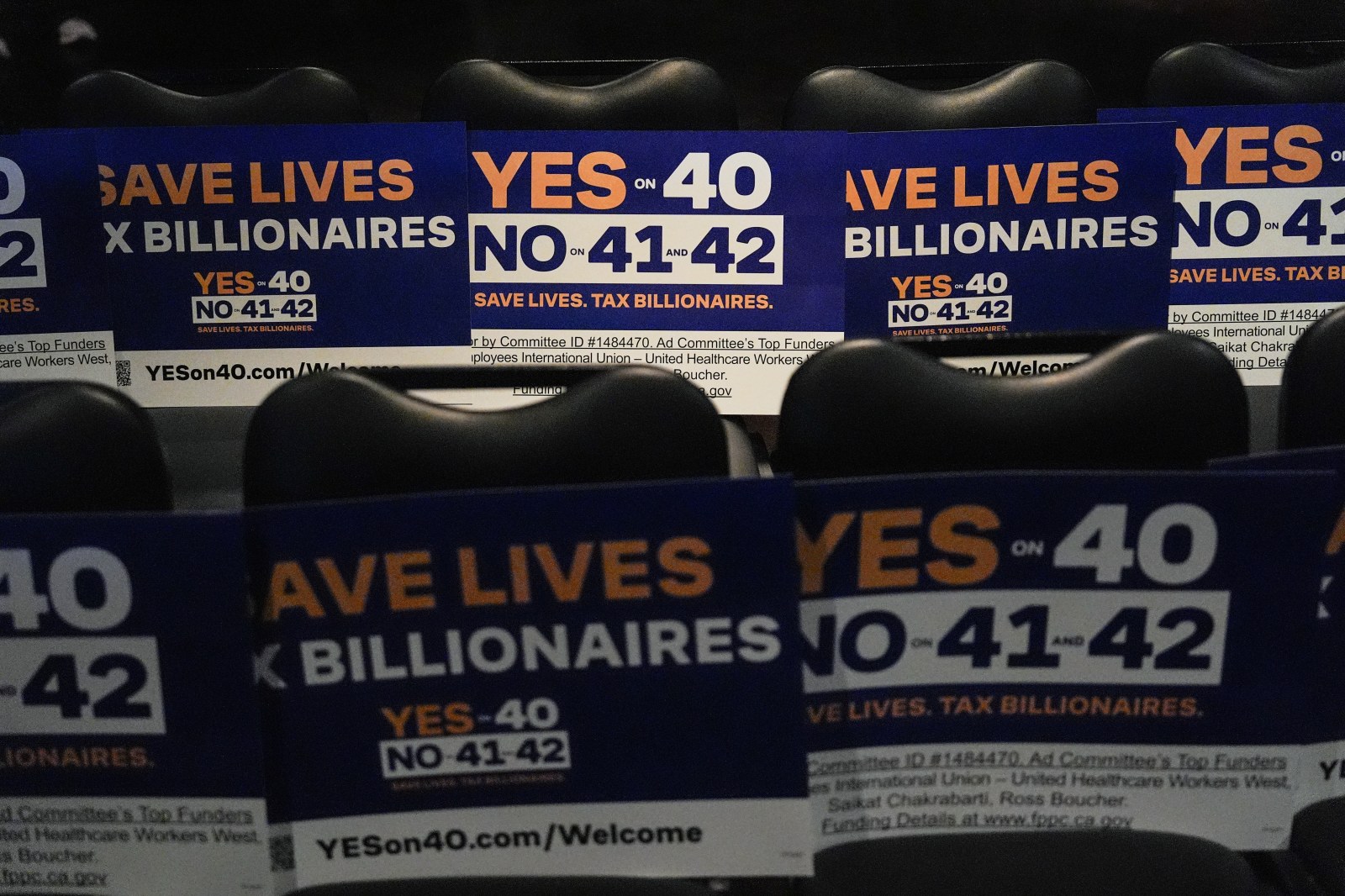
California voters have rejected Proposition 40, a measure proposed to tax billionaires based on their net worth. The Associated Press announced the outcome six days following Election Day. This defeat concluded a political struggle that divided Democrats at the highest levels.
Governor Gavin Newsom, who is considering a presidential run in 2028, opposed the tax. He argued that it would drive affluent residents out of California. On the other hand, Senator Bernie Sanders and Representative Ro Khanna, both prominent progressive figures, supported the proposal.
As of the semi-official count by the Secretary of State at 5:14 p.m. on Monday, 5,789,026 voters (52.9%) opposed the measure, while 5,159,356 voters (47.1%) supported it.
Campaign Funding
Opponents of the measure significantly out-fundraised its supporters. The committee leading the opposition, Building a Better California, raised over $333 million. Notably, Google co-founder Sergey Brin contributed more than $100 million to the effort against Proposition 40.
Details of Proposition 40
The measure would have imposed a one-time tax of 5% on billionaires living in California as of January 1, 2026, payable in 2027. Advocates planned to allocate 90% of the funds to health care, with the remainder directed to education, food assistance, and administrative costs. The SEIU-United Healthcare Workers West, which sponsored the measure, projected a revenue increase of about $100 billion. However, the Legislative Analyst’s Office estimated the revenue at “tens of billions of dollars,” with a possible ongoing reduction of less than $1 billion annually in state income tax from billionaires.
Economic Perspectives
Economists displayed contrasting views on the potential outcomes of the tax. A paper from the Hoover Institution suggested the tax might generate around $30 billion, less than a third of the union’s forecast. This estimate considered the departure of about 30% of the tax base and projected a net loss of $38.9 billion for the state. Conversely, a publication by the National Bureau of Economic Research estimated that the tax could raise approximately $100 billion, noting that California’s billionaires currently contribute around 0.2% of their wealth in state income tax.
Countermeasures
Building a Better California also supported Propositions 41 and 42, which conflicted with the wealth tax. The Legislative Analyst’s Office warned that if either received more “yes” votes than Proposition 40, courts might block the billionaire tax. Although countermeasures were unnecessary after the rejection of Proposition 40, Proposition 42 may still influence future policies. It aims to ban new taxes on financial assets and retroactive taxes in the state constitution. As of the Secretary of State’s count at 5:14 p.m. Monday, Proposition 42 led 51.7% to 48.3%, without an official call from the Associated Press.
The measure also faced challenges due to early departures of significant targets, with figures like Sergey Brin and Larry Page of Google leaving California prior to the January 1 residency cutoff. Meanwhile, Meta’s CEO Mark Zuckerberg agreed to remain in California for eight years in exchange for non-voting shares to manage tax expenses.
Political Divide
Sanders endorsed Proposition 40 in a December 2025 statement, emphasizing the concentration of wealth among a few. Ro Khanna labeled it “the most important ballot initiative in America” on social media. In contrast, Governor Newsom advocated for a federal minimum tax on high net worth individuals, starting at $100 million. While acknowledging the validity of concerns over inequality, he expressed disagreement with Sanders on this proposal.
Looking Forward
If Proposition 42 passes, it will necessitate another amendment to the state constitution for any future wealth tax. Labor leaders consider the campaign a foundational effort. During the vote count, Lorena Gonzalez, President of the California Federation of Labor Unions, urged other states to challenge wealth inequalities.
Vote counting continues, and official results are pending certification. Newsweek reached out to Building a Better California, SEIU-United Healthcare Workers West, and Newsom’s office for comments.