Candidates Make Final Push in Michigan Democratic Senate Primary
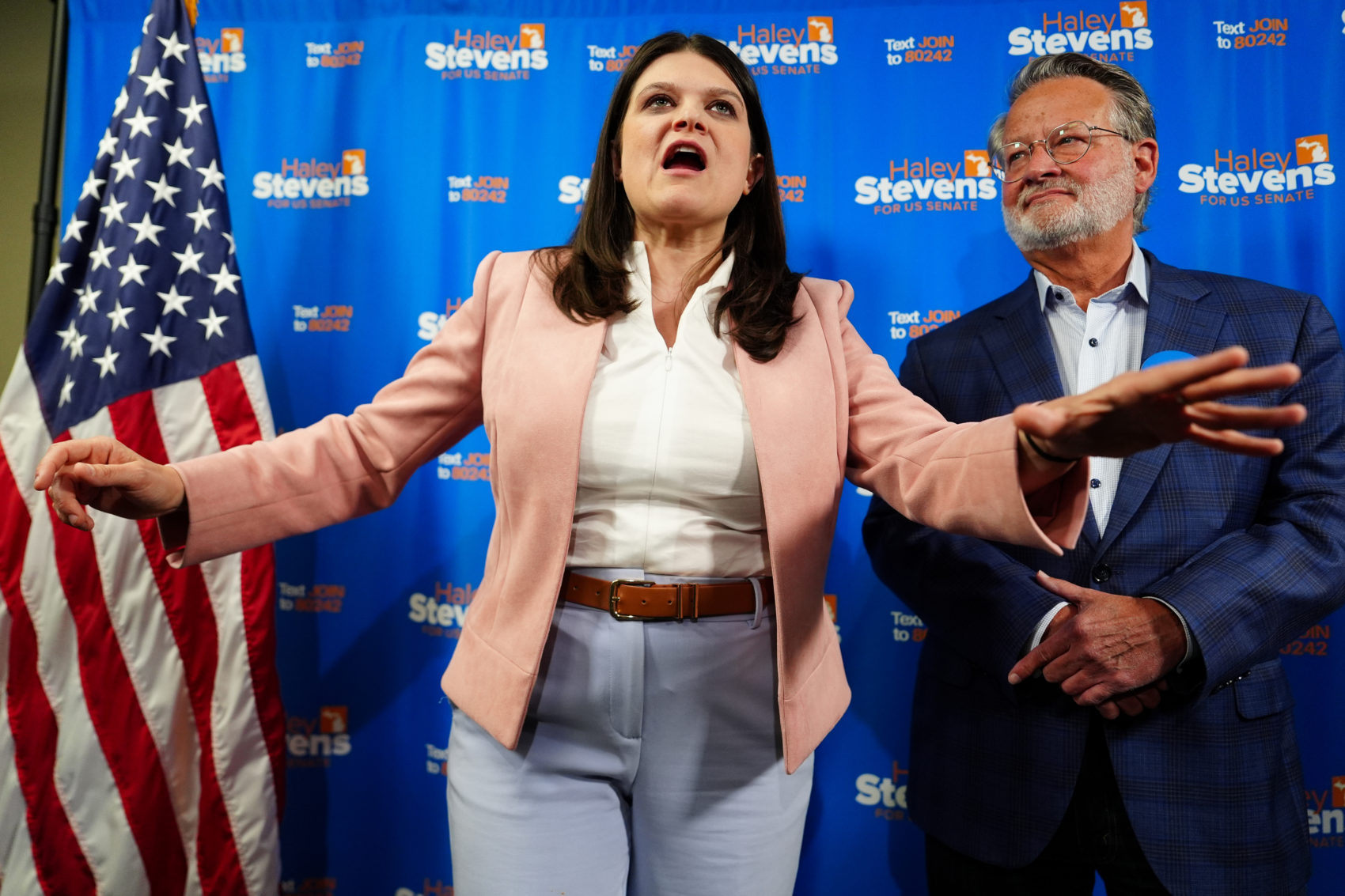
Abdul El-Sayed and U.S. Rep. Haley Stevens made crucial appeals to Michigan’s Democratic voters as the fiercely contested Senate primary nears its end. Less than 48 hours before election day, both candidates sought support in Detroit churches, which have historically played an essential role in galvanizing voter turnout, particularly among Black communities.
Both El-Sayed and Stevens aim to garner the support of Detroit’s Democratic coalition. El-Sayed emphasized economic opportunity and equality in his speeches, addressing voters at multiple church gatherings alongside notable Democratic figures like Reps. Summer Lee and Ayanna Pressley. “I believe in the kind of America where no matter where you grow up, the color of your skin, how you pray, you deserve equal rights,” El-Sayed stated to congregants.
Stevens focused on her deep-rooted connections with Detroit-area churches. At a Pontiac church, Stevens spoke with attendants, recounting her year-round involvement and highlighting community ties. Her campaign has deployed advertisements promoting her association with former President Barack Obama and spotlighting her prior role as chief of staff during his administration’s auto rescue.
With the primary becoming a defining test of the Democratic party’s future direction, El-Sayed represents progressive ideals supported by leaders such as Bernie Sanders, whereas Stevens stresses experience and electability, endorsed by prominent figures like Chuck Schumer.
As the final day of campaigning unfolds, El-Sayed plans to remain in Detroit, concentrating his efforts on mobilizing voters through canvassing. Stevens will traverse West Michigan, aiming to consolidate her base in Democratic strongholds such as Grand Rapids and Kalamazoo. Both candidates are focusing less on persuading undecided voters and more on ensuring their supporters cast their ballots.
Stevens relies on her endorsements from distinguished Michigan Democrats like Sen. Gary Peters and Gov. Gretchen Whitmer, while El-Sayed leverages his campaign’s grassroots volunteer operation. Stevens referred to the closing stage of the campaign as “the last word phenomenon,” emphasizing the urgency of reaching voters before ballots are cast.
With campaigning winding down, attention will turn to the counting of votes. The outcome may provide insight into the future trajectory of the Democratic party in Michigan.