Challenges and Developments in AI Agent Shopping
As personal AI agents such as Muse and Claude integrate into daily routines, their role in shopping tasks is under scrutiny. A study by Visa reveals these agents often struggle with shopping, demonstrating an average success rate of 57% when tasked to purchase everyday items like a TV, a laptop, and a hair appliance.
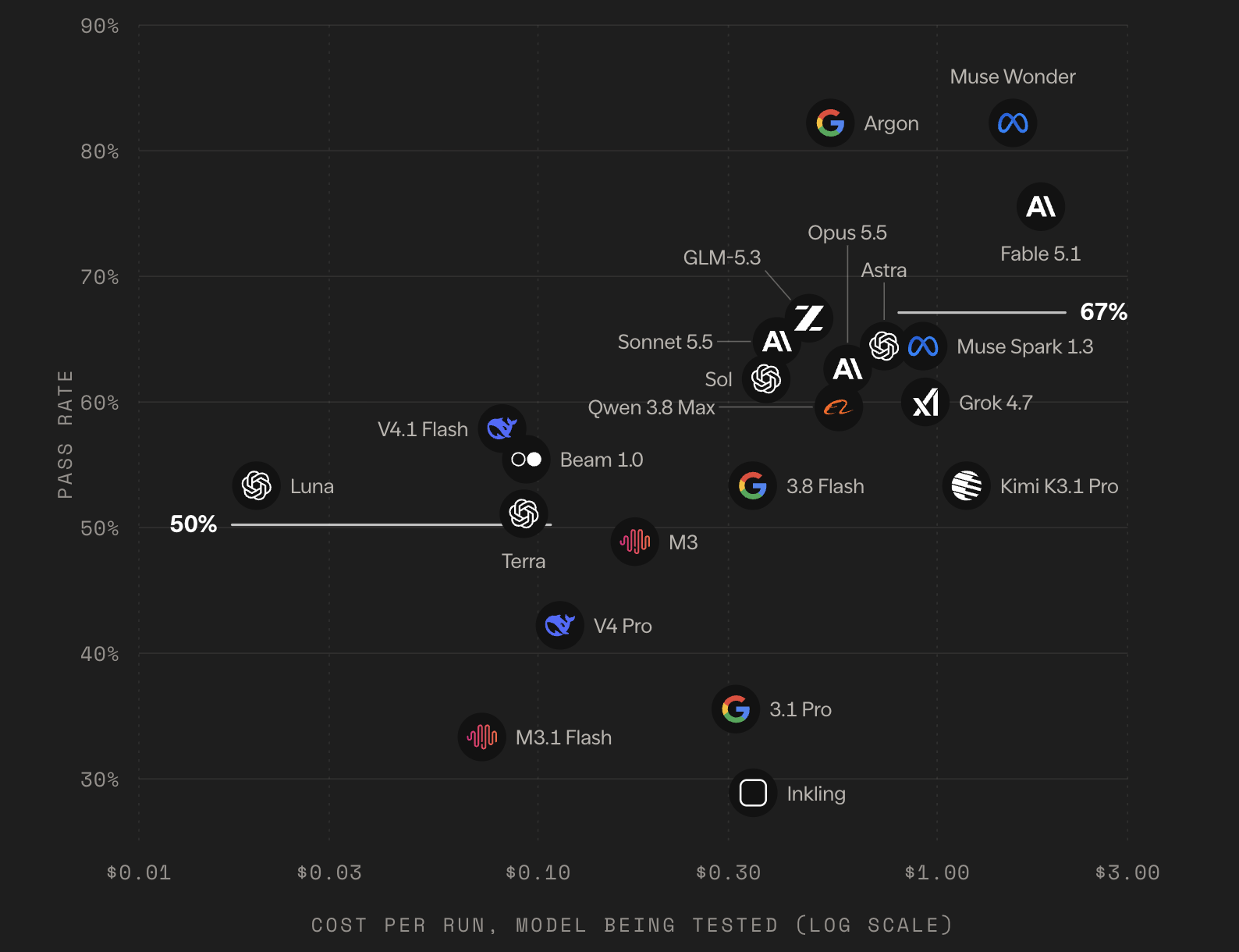
Visa’s study involved 22 different AI agents. The results, showcased on a dedicated Visa website, reveal the performance of 15 shopping tasks by each agent. Top performers include Google’s Gemini Aragon 4 and Meta’s Making Wonder, each achieving an 82% success rate. A Claude agent followed closely at 76%, while an OpenAI agent came in 6th with 64%.
According to a Visa diagram, the agents’ success rates vary on a vertical scale against the cost of each shopping transaction on the horizontal. Notably, the five most expensive models achieved a 67% success rate on average, whereas the five cheapest scored 50%.
The struggle of AI agents stems partly from the complexity of purchase motivations. Often, consumers are not clear about their needs and lack necessary information. Visa’s experiment attempted to mimic real-world shopping scenarios by assigning specific TV attributes necessary for purchase decisions, such as console compatibility and return policies. Despite having partial information, agents had to successfully elicit missing details from shoppers to make appropriate purchases.
Rubail Birwadker, Visa’s Global Head of Growth, acknowledges the current limitations in trust and technology but remains optimistic about future developments. He noted that AI-driven shopping is progressing quickly, focusing on product discovery, and that broader issues like secure payments and liability in rogue purchases require resolution. Visa and Mastercard are already working on tools for a smooth transition to agentic commerce, educating merchants in the process.
The legal landscape concerning AI agents is yet to be fully defined, particularly regarding responsibilities for unauthorized transactions. Birwadker compares this evolution to how consumers previously adapted to ecommerce, though he believes agent-based shopping will significantly differ from current online shopping experiences.
Accompanying the announcement of this study, Visa introduced a website enabling consumers to engage with the various agents involved in their analysis.