Challenges Faced by Hakeem Jeffries in Securing Support for House Speaker Role
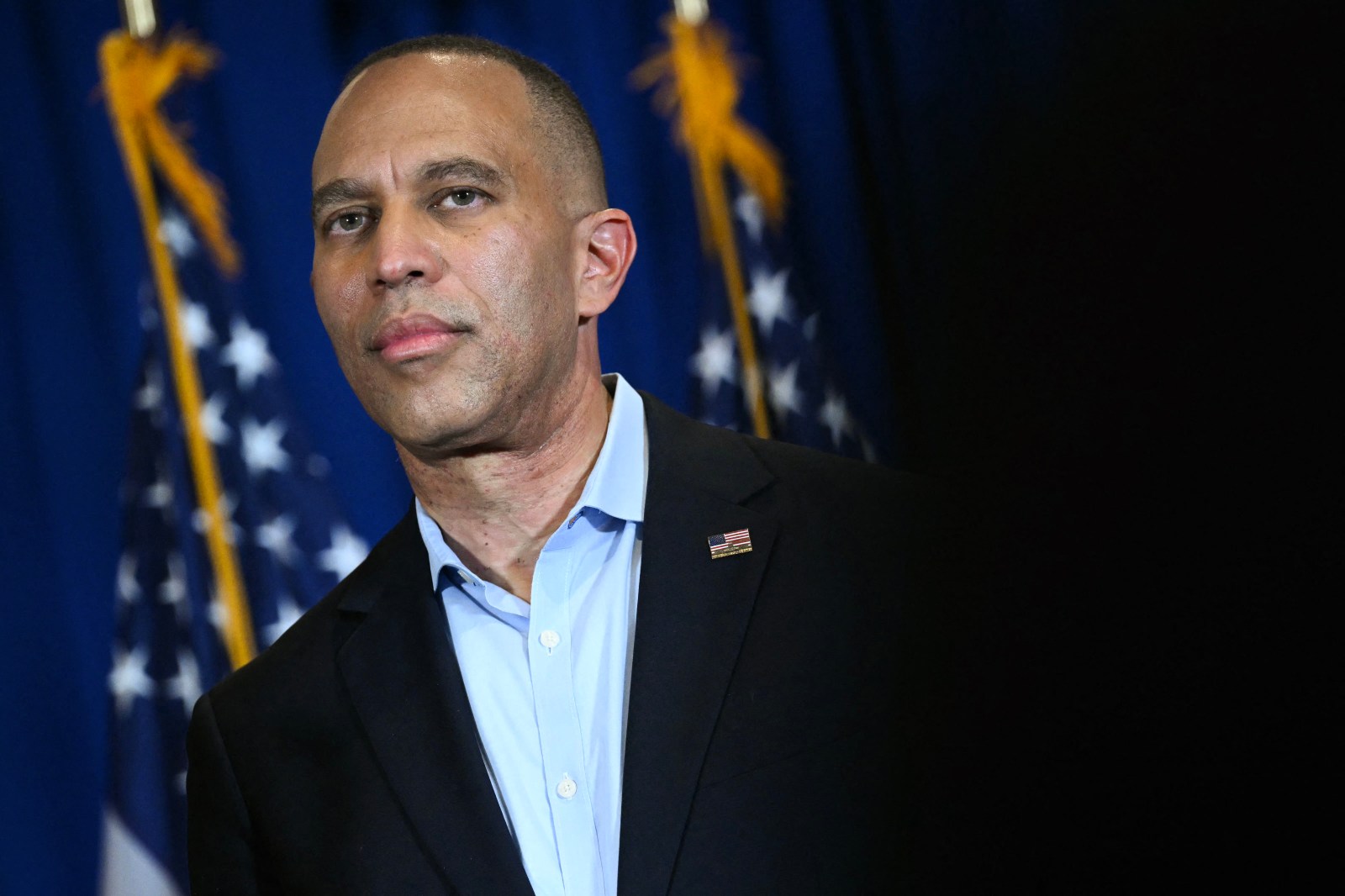
Hakeem Jeffries, the House Minority Leader from New York, is currently engaged in efforts to secure backing from the left-wing of his party as he seeks to become the first Black speaker of the House. Ahead of Wednesday’s confidential leadership vote, Jeffries remains the leading candidate. His policy endorsements include lowering the Medicare eligibility age, extending dental, vision, and hearing coverage, and reversing the Citizens United v. FEC Supreme Court decision of 2010, which allowed unlimited outside election spending. However, progressive members seek further actions.
On Monday, a petition on Change.org, calling for Massachusetts Representative Ayanna Pressley to run for speaker, attracted over 147,000 signatures. Despite mounting support for Pressley, Jeffries remains the favorite on Capitol Hill. There remains uncertainty about his ability to maintain progressive support after the Democrats’ midterm victories.
Efforts to reach Jeffries and Pressley for comments have not yielded responses. The Democratic Socialists of America have also not commented on the matter.
Progressive Demand for More from Jeffries
Prior to the midterms, Jeffries introduced an 84-page healthcare platform, which, notably, did not emphasize Medicare for All as a main goal. This commitment remains highly desired by many on the left, although Jeffries distanced himself from this approach in 2022 after becoming the minority leader. On ‘Meet the Press’ in August, he expressed opposition to Medicare for All as legislation, instead advocating for various paths to universal coverage. He emphasizes the importance of the caucus reaching consensus.
While the bill spearheaded by Washington Representative Pramila Jayapal and Michigan Representative Debbie Dingell has never been put to a vote, Jeffries has not been a sponsor. His August meeting with Jared Kushner and a proposed rule penalizing procedural vote defiance has also frustrated progressives.
Democratic Representative Ro Khanna from California intends to demand votes on issues like ending military aid to Israel, halting the war on Iran, and advancing Medicare for All. Jeffries’ stance on Israel is a significant point of contention with the left.
Jeffries is scheduled to address the Congressional Progressive Caucus (CPC) board, headed by Representative Greg Casar of Texas, who supports Jeffries. Casar praised Jeffries for his resolve in healthcare, ICE funding, and redistricting battles. In an interview with Axios, Casar anticipated significant progressive energy contributing to a future Democratic majority.
Representative Alexandria Ocasio-Cortez from New York, a onetime critic, endorsed Jeffries in October due to his support for public housing finance in New York.
Jim Kessler, co-founder of the centrist think tank Third Way, termed this Congress a “warmup test” for Jeffries. He anticipates more significant challenges when Democrats control the White House as well. Kessler explained that the caucus, presently focused on restoring Obamacare tax credits and reversing Medicaid cuts, sees Jeffries’ commitments as acceptable to moderates.
Current Opposition to Jeffries
No formal Democratic opposition to Jeffries exists, with online petitions being the main source of dissent, including one advocating for Pressley. Pressley, a member of the progressive ‘Squad,’ hasn’t indicated plans to run. She continues discussions with Jeffries on leveraging the party’s new majority.
In Ohio, Representative-elect Don Leonard, who turned a Republican seat, alleged threats from senior Democrats for not backing Jeffries. He insists he will not support Jeffries without addressing corporate political influence and U.S. military involvement.
Details on the Speaker Vote
The Democratic Party’s nomination process includes a secret ballot set for Wednesday, November 18, with the entire House voting on January 3 when the new Congress convenes. Jeffries needs a majority of votes to win. Recent counts show 49 Democrats pledged to Jeffries with 23 uncommitted. He requires support from all ideological caucuses to avoid pressures similar to those faced by Nancy Pelosi in past conflicts.
Jeffries must balance progressive demands if the Democrats wish to maintain unity and effectively govern. Newly elected members aligned with the Democratic Socialists of America may add to existing tensions with Jeffries in the Progressive Caucus.
Explaining Social Democrat and Democratic Socialist Labels
The terms “social democrats” and “democratic socialists” often confuse many. Social democrats advocate for a market economy with regulations, union support, and social safety nets within capitalism. Democratic socialists aim for more radical change by transforming capitalism and promoting public ownership in certain industries.
The Democratic Socialists of America, the largest socialist group in the U.S., serves as an advocacy organization whose candidates typically run as Democrats. Vermont Senator Bernie Sanders represents this ideology, despite being an independent who caucuses with the Democratic Party.
For further details, contact Newsweek editors Samantha Beech and Anthony Murray.