Challenges Facing U.S. Missile Defense Amid Conflict with Iran
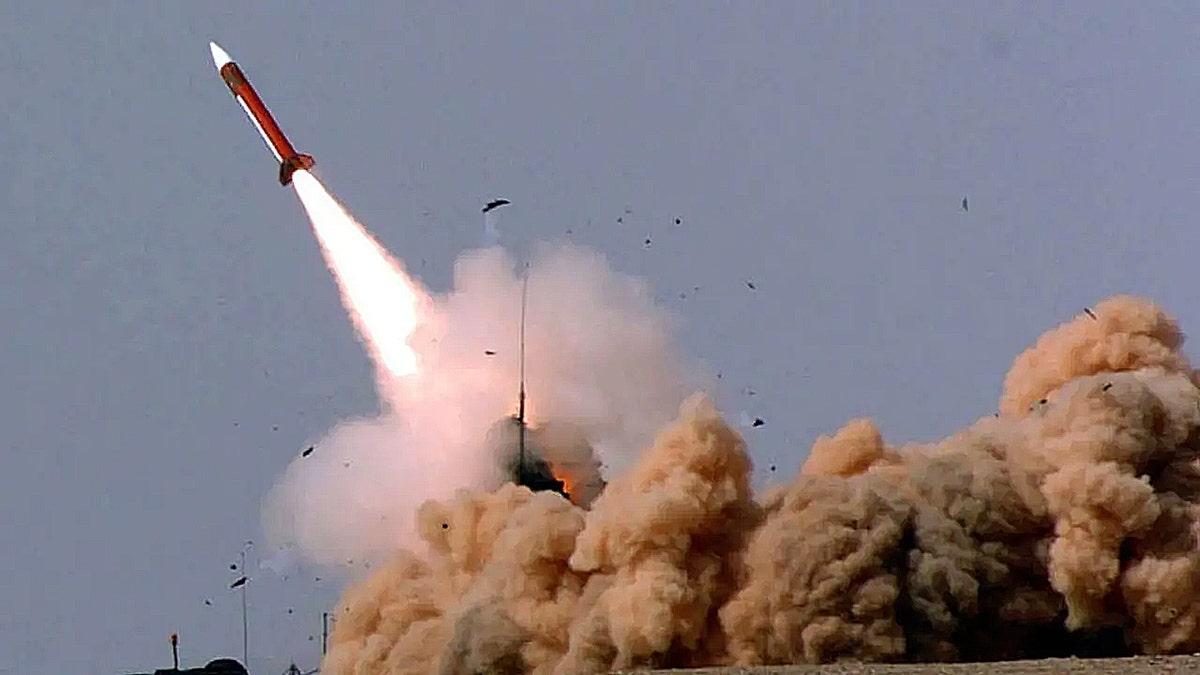
The Pentagon is facing a serious challenge as America’s missile defense resources dwindle during ongoing conflict with Iran. Military planners are now questioning the feasibility of continuing limited strikes due to a significant reduction in missile defense interceptors.
The Center for Strategic and International Studies reports that U.S. Patriot interceptor inventories have decreased from approximately 2,300 before the war to less than 827. THAAD inventories have similarly dropped from 452 to under 278.
“Rebuilding these stockpiles could take over three years,” warns CSIS, stressing the importance of maintaining protective measures for U.S. forces and bases globally if another conflict arises, particularly in the Pacific.
Kelly Grieco, a missile expert at the Stimson Center, noted, “Nearly half of the global Patriot inventory has been used in the Middle East, and THAAD interceptors are also running low. This limits U.S. capabilities, impacting forces in Europe and the Indo-Pacific over the coming years.”
The Pentagon’s fiscal year 2026 emergency funding request includes $67 billion, with $18.2 billion dedicated to replenishing advanced systems like the Patriot missile, Navy Tomahawks, and the Army’s THAAD high-altitude interceptor. A significant portion of these funds, $600,000 or less per unit, focuses on producing low-cost munitions—expected to make up 70% of the 2031 purchases.
Jerry McGinn from CSIS pointed out that while current munitions offer high effectiveness, models like Tomahawk and THAAD were not crafted to be scaled easily. They require years to produce due to complex designs and handmade elements.
Operation Midnight Hammer and Epic Fury consumed substantial missile resources, with concerns about stockpiles predating the most recent Middle East tensions. Pentagon meetings have involved Silicon Valley defense firms discussing urgent replenishment strategies. Brandon Tseng, founder of Shield AI, highlighted challenges faced by startups in partnering with the Pentagon.
Tseng’s AI-driven targeting system, V-BAT, is operational in Ukraine, offering a lower-cost alternative to predator and reaper drones. This system is capable of intelligence and targeting even under GPS or communications jammer conditions.
In Ukraine, the constant evolution of weapons underscores the importance of rapid advancements in war technology. Pentagon officials, including CENTCOM Commander Adm. Brad Cooper, indicate the necessity for an intensive campaign against Iranian missile capabilities.
Iran’s strategy, aiming at U.S. bases, pressures the U.S. to utilize its weakening missile resources. Grieco explained, “Iran views this conflict as existential, betting on increased costs, particularly human costs, to make the U.S. reconsider its engagement.”
Grieco’s insights reflect the wider strategic implications, hinting that Iran aims to use persistent pressure to exhaust U.S. military efforts, while the U.S. evaluates long-term engagements and potential costs.
Jennifer Griffin, serving as FOX News Channel’s national security correspondent, has been covering these developments from Washington D.C.