Challenges in Eastern Congo Amid Rising Ebola Outbreak
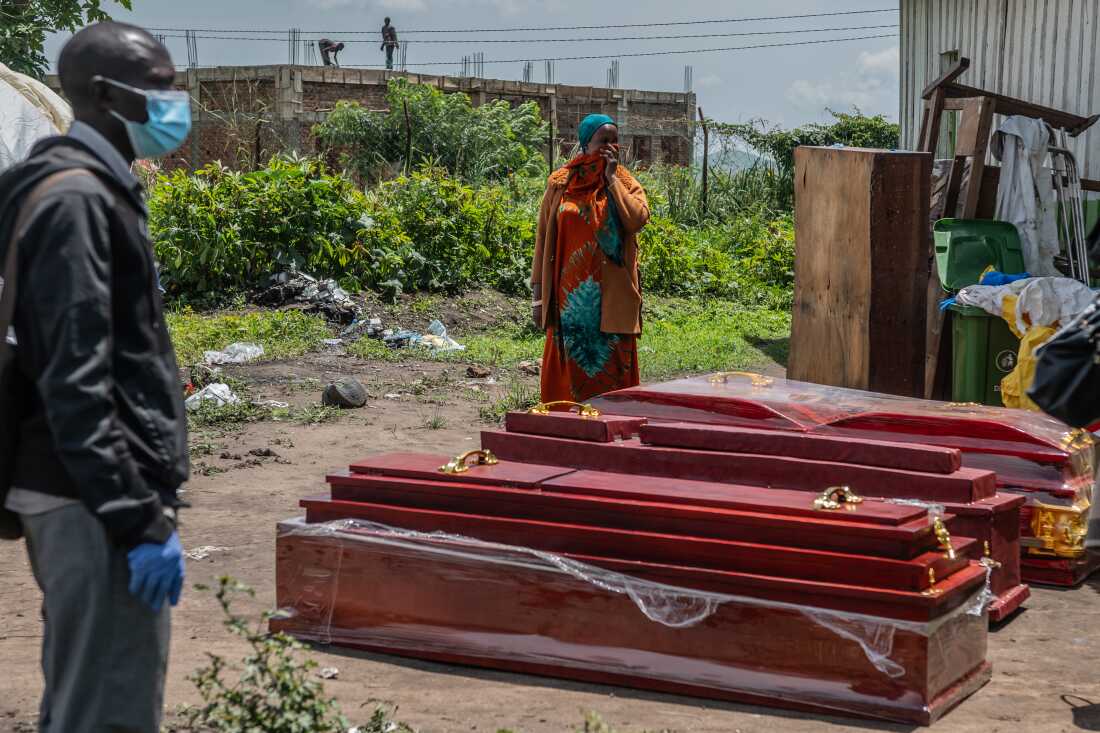
Anxious healthcare workers in eastern Congo express concerns over inadequate protection and training as they confront a rapidly spreading Ebola outbreak. The outbreak involves a rare type of the virus in a vulnerable and remote area. The region’s existing instability, marked by assaults from various armed groups, complicates the response efforts.
Local authorities reported that militants connected to the Islamic State group attacked Alima village in Ituri province, killing at least 17 individuals. Ituri has become the focal point of the outbreak. The World Health Organization (WHO), citing a low global risk, noted that ‘patient zero’ remains unidentified.
“It’s truly sad and painful because we’ve already been through a security crisis, and now Ebola is here too,”
said Justin Ndasi, a resident of Bunia. The initial death was reported in Bunia last week. Despite the airlift of medical supplies, locals find masks scarce, and the cost of disinfectants has increased, with some prices quadrupling.
Impact on Families and Healthcare Challenges
At Rwampara’s treatment center, families stand in grief as health workers in protective gear disinfect and bury the bodies of suspected Ebola victims. The virus struck unexpectedly, with symptoms often mistaken for other illnesses like malaria.
Botwine Swanze recounted her son’s rapid decline:
“He told me his heart was hurting. Then he started crying because of the pain. … Then he started bleeding and vomiting a lot.”
The Ebola virus spreads easily through contact with bodily fluids. Symptoms include fever, vomiting, diarrhea, muscle pain, and internal and external bleeding.
WHO’s Concerns on the Scale of the Outbreak
The WHO has declared the outbreak a public health emergency of international concern due to its rapid spread. The WHO chief in Congo suggests it may persist for two months. The uncommon Bundibugyo virus was not initially detected because tests targeted more common strains of Ebola.
WHO’s Anaïs Legand remarked:
“Given the scale, we are thinking that it has started probably a couple of months ago.”
Currently, 51 cases are confirmed in Congo’s Ituri and North Kivu provinces, and two in Uganda. WHO Director-General Tedros Adhanom Ghebreyesus stated there are 139 suspected deaths and close to 600 suspected cases. The London-based MRC Centre for Global Infectious Disease Analysis estimates the actual case number might already exceed 1,000.
Vaccination Efforts and International Involvement
Dr. Vasee Moorthy of WHO mentioned a vaccine for the Bundibugyo strain may take six to nine months to become available. Eastern Congo faces ongoing challenges with conflict and a strained healthcare system.
The outbreak has highlighted funding issues due to cuts in foreign aid, with U.S. Secretary of State Marco Rubio stating that constructing 50 emergency clinics is a priority. The U.S. has pledged $23 million in aid.
Situation in Affected Areas
In Bunia, daily life continues, with schools and churches open. However, residents report overcrowded healthcare facilities and insufficient isolation wards. Trish Newport of Doctors Without Borders emphasized:
“Every health facility they called said, ‘We’re full of suspect cases. We don’t have any space.'”
Mongbwalu continues normal activities, but public health awareness is growing amidst a lack of handwashing stations.
Dr. Didier Pay reported around 30 Ebola patients at Mongbwalu General Hospital, where a local medical student recently died.
Dr. Richard Lokudu, the medical director, underlined the need for triage and isolation facilities to avoid overwhelming the system. He added:
“We hope for the proper triage and isolation facilities to be installed today, and if that doesn’t happen, we will be completely overwhelmed.”
Understaffed and undertrained, the healthcare workers face immense challenges.
International Patients and Rapid Response
A U.S. citizen diagnosed with Ebola in Congo is now in an isolation unit in Berlin, undergoing thorough examination. German authorities will also accommodate the patient’s family upon a request from U.S. authorities.
The Czech Republic is prepared to assist an American doctor who worked with Ebola patients in Uganda.
Dr. Satish Pillai from the CDC explained that the patient’s transfer was a cooperative effort between the U.S. State Department and other agencies. The decision prioritized conditions on the ground and the urgent need for action.