Challenges in Reaching Consensus on AI-Powered Autonomous Weapons
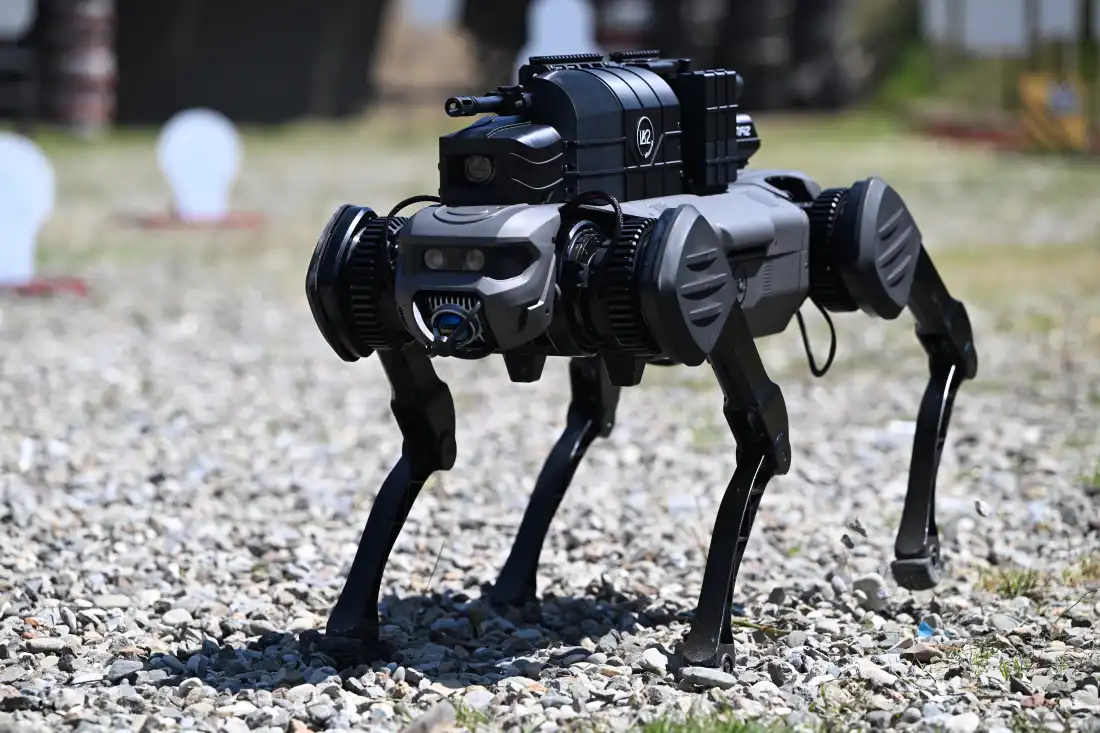
On April 29, Turkish defense companies showcased an armed robot at a Duzce facility, highlighting advances in autonomous military technology. However, setting concrete rules for the use of AI-powered killer robots and drones remains challenging. Recent UN-backed talks in Geneva did not result in binding commitments, opting instead for a two-year extension of discussions.
The conference concluded with an agreement to ‘elaborate’ on a potential accord concerning lethal autonomous weapons systems by 2028. Despite efforts by UN Secretary-General António Guterres and many nations to establish firm regulations, no binding rules were enacted. The outcome revealed difficulties in reaching diplomatic solutions amid global conflicts and military power struggles.
Izumi Nakamitsu, the UN’s top disarmament representative, acknowledged a ‘significant achievement’ yet referred to a ‘glass half full or half empty’ scenario. Guterres had hoped for a legally binding deal this year, which activists and some countries wanted. They criticized countries like Russia and the United States for diluting the agreement’s language.
Stop Killer Robots and Beatrice Fihn of Lex International expressed disappointment, describing the decision as a delay of progress. Despite their concerns, Max Tegmark from MIT noted that nations decided to continue discussions instead of taking decisive action.
Prior to the talks, seven countries, including Brazil, Austria, and Ireland, proposed negotiations to regulate machines’ ability to operate without human control. This initiative did not succeed. Ambassador Frederico Meyer of Brazil remarked, ‘Technology is moving faster than diplomacy,’ underscoring the slow pace of diplomatic efforts.
With decades of talks ongoing, advocacy groups highlighted obstructionism by nations like Russia, which, along with the US, seeks freedom in developing sophisticated AI weapons. Guterres aims to start negotiations on autonomous weapons agreements by 2026, yet hurdles exist.
Prominent figures and advocacy groups, including Pope Leo XIV, frame this issue as critical for existential risk management. Activists warn that armed drones capable of independent strikes have occurred, yet widespread usage is not yet prevalent.
This week’s talks focused on the Convention on Certain Conventional Weapons, endorsed by 128 countries. The requirement for consensus means any country could block an agreement. Thus, any consensus reached may result in minimal requirements.