Challenges of Cattle and Conservation in Brazil’s Bananal Island
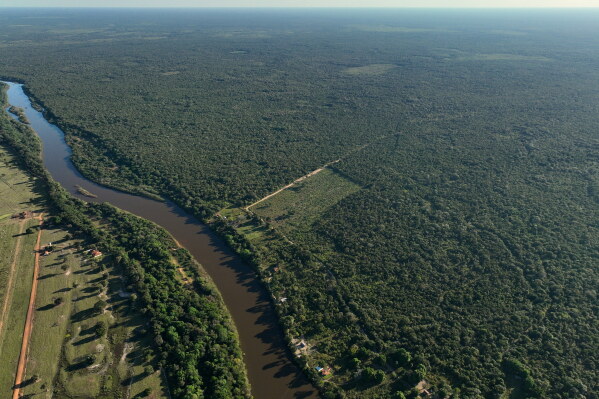
In Brazil’s northern region, a complex issue involving cattle and conservation has arisen on Bananal Island. This large island, home to protected Indigenous lands, has seen federal authorities mandating the removal of cattle herds. These herds, maintained by external ranchers, were deemed illegal and a threat to the environment. The order has led to the removal of over 100,000 cattle when the rivers allowed. Despite this, Indigenous communities face new challenges due to lost income from leasing land to ranchers.
Brazil, as the world’s largest beef producer, represents about 20% of global beef production. This sector contributes significantly to the country’s GDP. However, it also drives deforestation, particularly in the Amazon rainforest, crucial for global climate regulation. In 2025, Tocantins state, encompassing Bananal Island, ranked high in deforestation levels. Cattle grazing contributes to this issue, replacing biodiversity-rich forests with methane-emitting cattle.
Cattle on Indigenous Lands
Brazilian laws prohibit commercial activities in Indigenous territories, limiting cattle raising to subsistence purposes. However, parts of Bananal Island were leased informally for decades. Ranchers paid village chiefs a monthly fee of around 15 reais per head, much lower than areas beyond the island. When cattle numbered over 100,000, monthly earnings from these leases reached about 1.5 million reais.
Chief Cleiton Javae from Txuiri village explained that cattle had supported many community expenses, including schools and medicine. Yet, residents noted that wealth was concentrated among leaders, with minimal benefits for the broader community. Environmental agency chief Leandro Milhomem stated that this inequality persisted as children suffered malnutrition in the same communities that profited.
Additionally, residents reported that cowhands restricted access to communal farming areas, although agreement-supporting leaders argued these issues were isolated. Nevertheless, the system became unsustainable, leading to the inevitable removal of cattle. Despite these actions, 550 cattle remained on the island, later seized by authorities. Evidence shows Indigenous leaders may have falsely claimed cattle ownership to avoid penalties.
Environmental and Social Issues
Cattle ranching has environmental repercussions, like soil acidification and increased wildfires. These fires often start near grazing sites, as ranchers use them to manage land. The area, historically sparsely settled by European colonizers, became a protected zone in the 1950s. At that time, authorities began leasing agreements to promote non-Indigenous ranching.
Three Indigenous groups — Javae, Karaja, and Ava-Canoeiro — live on Bananal Island. The Javae, in particular, maintain connections with non-Indigenous ranchers. Many outsiders married Indigenous women, establishing economic activities on the island. This blend of cultures is evident, with traditional and modern practices co-existing.
Seeking New Economic Models
The Javae people are collaborating with The Nature Conservancy to devise a land management plan that fulfills their social, environmental, and economic goals. Recently, Javae leaders visited the Macuxi people in Roraima, known for using agriculture to generate income and reinforce land rights. The Macuxi began cattle ranching in the 1980s to reclaim territory, with official recognition arriving in 2005. They now collectively manage about 45,000 cattle.
These experiences illustrate the broader debate within Brazil’s Indigenous groups as they strive to balance economic interests with rights and environmental protection. Similar advancements are noted in mining, where Indigenous communities seek lawful recognition of their rights to natural resources.
Ivo Aureliano Macuxi, representing Indigenous rights, stressed the importance of legal frameworks that support unique territorial needs. Each Indigenous group’s circumstances should shape individual plans rather than a universal template.