Chicago Police Superintendent Larry Snelling to Retire
After nearly three years in charge of the nation’s second-largest police department, Chicago Police Superintendent Larry Snelling will retire on July 15. During his tenure, he led the department through significant events like the 2024 Democratic National Convention and achieved notable reductions in shootings, homicides, and violent crime. Snelling credited the hard work of the Chicago Police Department members for these accomplishments. He emphasized that, while proud of their achievements, further progress is necessary.
Snelling, 57, became superintendent in August 2023. He had been with the department for nearly three decades, primarily as an instructor at the police academy. His leadership saw a decline in citywide gun violence and increased compliance with a federal consent decree. Challenges arose, such as managing the department during a federal immigration crackdown and gaining national attention during the 2024 Democratic National Convention.
Mayor Brandon Johnson stated his gratitude for Snelling’s leadership in advancing a community safety strategy in collaboration with communities across Chicago. Johnson appointed CPD veteran Fred Waller as interim superintendent while searching for a permanent replacement. Waller had previously served as interim superintendent before Snelling’s appointment and currently holds the position of deputy director in the superintendent’s office.
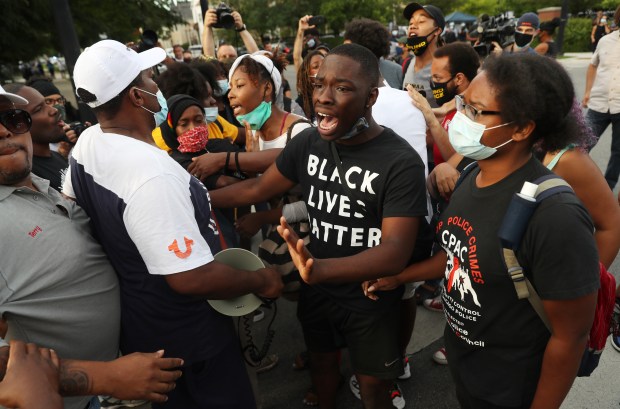
Snelling, born in February 1969 in the Englewood neighborhood on Chicago’s South Side, joined CPD in 1992. He worked as a patrol officer in various South Side districts before becoming a sergeant at the police academy. In 2020, he was promoted to lead the Englewood District as commander. During the nationwide protests and looting in the summer of 2020, Snelling showed restraint by allowing community members to handle conflicts peacefully, earning respect in the neighborhood.
Prior to Snelling’s leadership, CPD was under David Brown, the former chief of police in Dallas. After Brown’s resignation in March 2023, Waller served as interim superintendent. Upon taking the role in August 2023, Snelling focused on a collaborative approach to crime reduction. The philosophy faced challenges during Operation Midway Blitz, when CPD officers clashed with federal immigration enforcement efforts.
Despite criticism, Snelling clarified that CPD’s role is to respond to 911 calls regardless of immigration status. He stressed the importance of communication with federal agencies to avoid being “in the dark.” Throughout Operation Midway Blitz, community members criticized CPD’s assistance to federal agents. In response, Snelling worked to improve communication and decrease the use of tear gas by federal agents.
Snelling called for attention to the root causes of violence, particularly focusing on the youth. He highlighted the importance of addressing the needs of children in underserved communities to prevent future violence, emphasizing that children should not be blamed for their circumstances.
Snelling’s 18 years at the police academy made him an authority on the use of force and firearms training, as well as report writing. Certified to teach courses on active shooter scenarios, Tasers, firearms, and personal fitness, Snelling was a sought-after expert witness in legal cases involving police officers. He testified in high-profile cases, including the trial of officers accused of covering up the fatal shooting of Laquan McDonald.
During the 2024 Democratic National Convention, Snelling’s commitment to rigorous training showed, with CPD receiving commendations for its handling of protests. Maggie Hickey, the independent monitor for the consent decree, praised CPD for its de-escalation tactics and coordinated responses.
Snelling managed the department through a period of labor stability. Shortly after his confirmation, the City Council approved a new contract for officers with a 20% pay raise. The agreement allowed serious misconduct cases to be heard by a third-party arbitrator, resulting in an ongoing legal battle over internal discipline.
Snelling maintained a complex relationship with the Civilian Office of Police Accountability (COPA), often criticizing the agency’s reliance on personal opinions in its investigations. He advocated for fairness in disciplinary actions for officers.
Throughout his leadership, Snelling emphasized transparency and accountability within CPD and remained open to public debate.