Clarence Thomas Challenges Prescribed Political Views for Black Americans
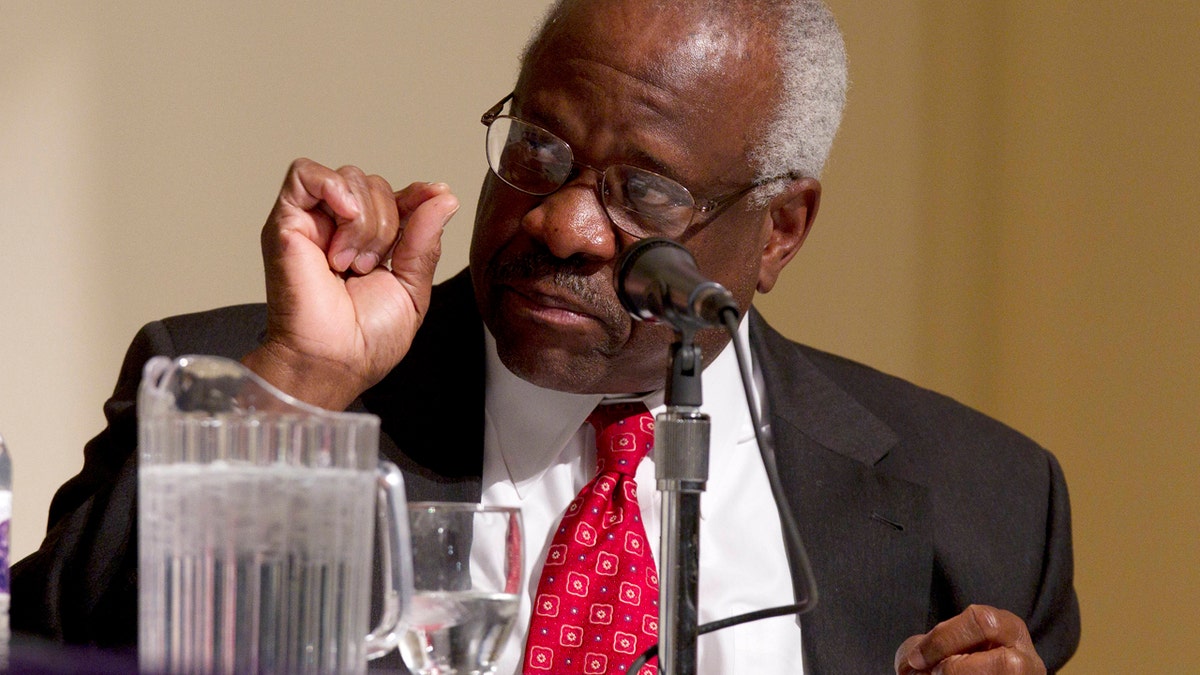
Supreme Court Justice Clarence Thomas spoke out against the notion that Black Americans should adhere to particular political views based on their race. During an interview with Republican Texas Sen. Ted Cruz on the “Verdict with Ted Cruz” podcast, Thomas emphasized the individuality of political beliefs.
“We had this saying [that there are] only two things I have to do: stay Black and die,” Thomas shared in response to Cruz’s comment on his individualistic approach. He criticized the expectation that individuals must think in a certain way because of their skin color, highlighting a deterministic view forcing specific thought processes.
Thomas addressed the perception of him as a contradiction for deviating from predetermined political viewpoints, asserting his choice to reject such invitations.
Clarence Thomas, an associate justice of the Supreme Court, has a unique background. Raised in segregated Georgia in humble beginnings, he lived first in Pin Point and then in Savannah. The Gullah creole language was part of his upbringing, rooted in the African slave descendants’ culture.
During his time at the College of the Holy Cross, Thomas initially embraced left-wing Black nationalism, admiring Malcolm X and contributing to the Black Student Union’s establishment. However, his political stance shifted after a violent protest in 1970 drove him away from left-wing activism, urging him instead toward self-reliance influenced by his grandfather.
Thomas further compared imposed ideas for Black Americans to the restrictions of racial segregation, illustrating their detrimental nature. He challenged people by asking about the segregation of the Savannah Public Library during his childhood and extending those restrictions to determining access to knowledge.
“When I was a kid, the Savannah Public Library was segregated,” Thomas noted, highlighting that restricted access remains unfair in various contexts, including ideas and books.
Through these reflections, Thomas questioned the objections to embracing diverse ideas and emphasized the continuity of barriers, likening them to segregation’s limitations.