Clarence Thomas Discusses Views on Race and Criticism
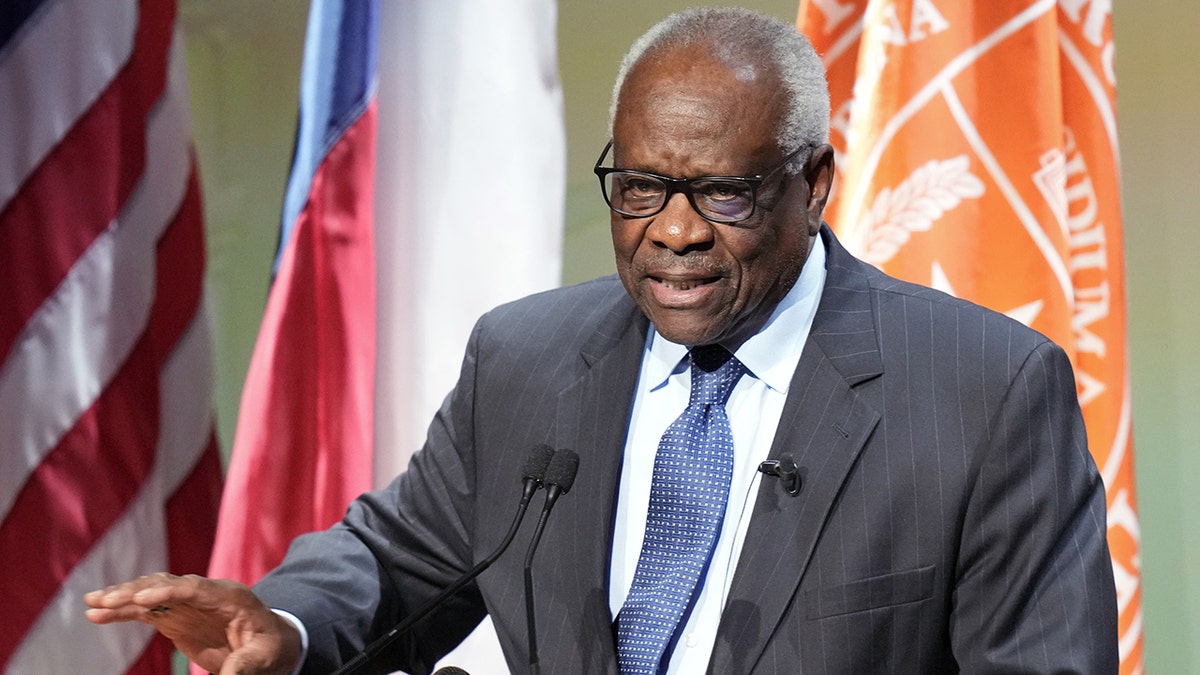
Supreme Court Justice Clarence Thomas recently addressed how his views on race and politics have sparked criticism regarding his identity as a Black person. Speaking during a conversation with Peter Robinson at the Hoover Institution, Thomas expressed disbelief at such critiques, asking, “How stupid is that? Look at me,” while gesturing to himself. He remarked on comments like “black is a state of mind.”
During the conversation, Thomas discussed the role of Black Americans in politics. He credited economist Thomas Sowell for influencing his thinking on race and politics. Sowell, a Black conservative, helped Thomas gain confidence in challenging popular expectations about the political views commonly attributed to Black Americans.
Pressure on Political Beliefs
As a young man, Thomas felt compelled to adopt certain political beliefs due to his race. He faced resistance when he questioned those beliefs. He shared feeling pressure from media, politicians, and vocal critics who would label him as wrong or bad for holding different views.
While attending Yale Law School, Thomas questioned the policy of school busing. He wondered why Black families would want their children relocated to distant schools. Expressing such views at Yale led to opposition, with peers suggesting he shouldn’t think that way because of his race.
Disconnection with Leaders
Thomas highlighted a gap between the positions of Black political leaders and the opinions of everyday Black individuals. He pointed to differing perspectives on topics like school busing and racial preferences. Leaders often had one stance, while the general population had another.
Upon being introduced to Sowell’s Race and Economics, Thomas felt validated. He described it as a relieving experience, finding logical support for beliefs he had already been forming. This connection freed him from isolation over his opinions and led to a friendship with Sowell.
Evolving Views
Thomas admitted he initially rejected Sowell’s ideas during his time at Yale in the early 1970s. He resisted Sowell’s book Black Education: Myths and Tragedies, doubting that a Black man should hold such views. However, Sowell’s example encouraged Thomas to express his own beliefs despite possible backlash.
“If they can prove you wrong, fine,” Thomas said. “But if they call you names or say you’re not black, I mean, how stupid is that? Look at me.” He linked such criticism to a broader societal pressure for Black Americans to conform to set ideas.
Thomas emphasized that learning to think independently was a significant lesson he took from Sowell. Sowell always spoke his mind, Thomas noted, but never imposed his views on others.