Concerns Over Changes to U.S. Navy Aircraft Carrier Designs
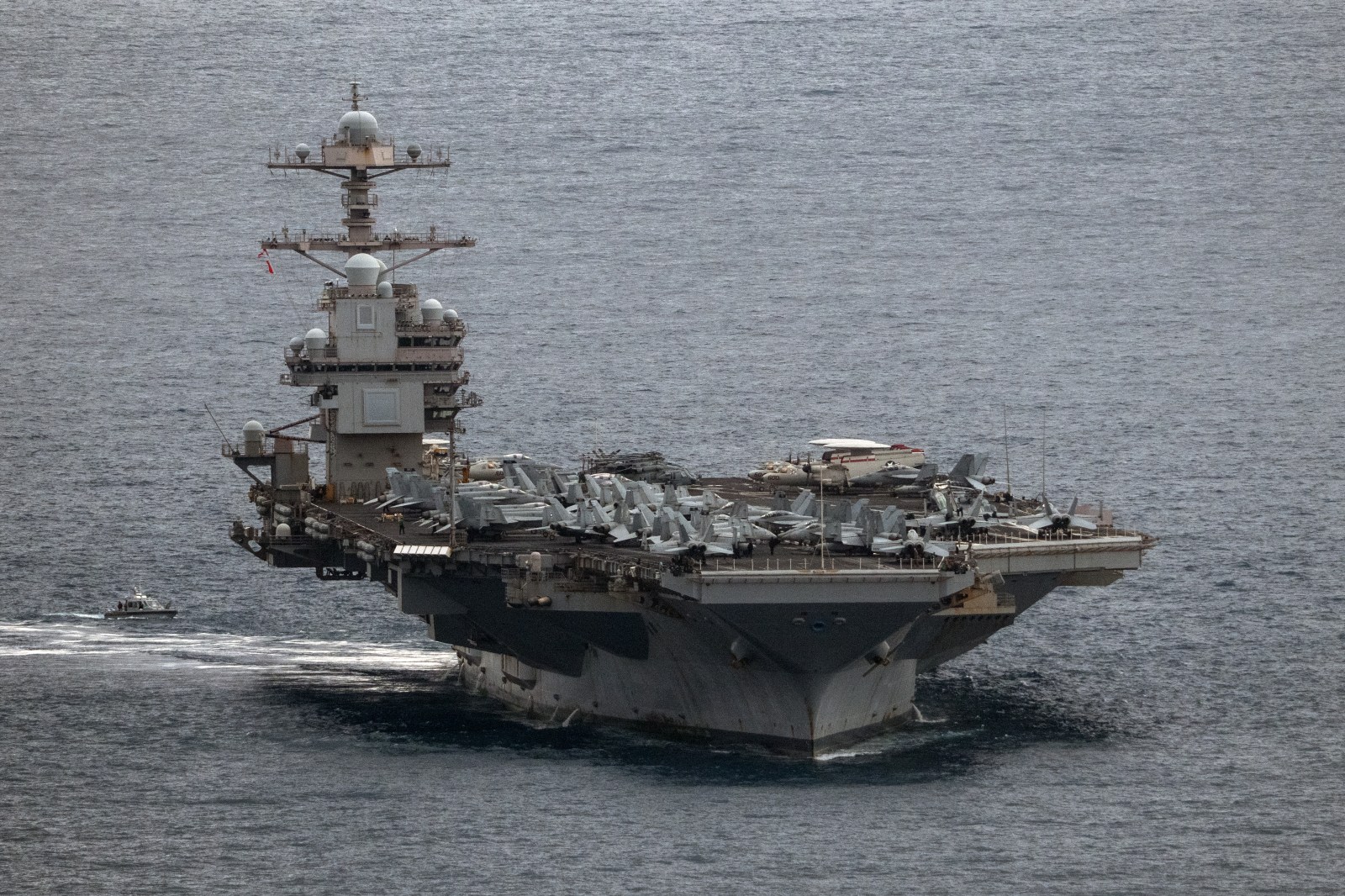
President Donald Trump’s directive to alter the design of U.S. Navy’s latest aircraft carriers has sparked concerns among defense analysts, contractors, and former officials. They argue these changes may inflate costs, delay construction, and undo years of design efforts by the Navy.
Controversial Changes
Trump signed a national security memorandum urging the Pentagon and Navy to draft a plan within 60 days for the USS Doris Miller, a Ford-class carrier, to replace the Electromagnetic Aircraft Launch System (EMALS) and Advanced Weapons Elevators with steam catapults and hydraulic systems.
The Ford class is set to succeed the aging Nimitz-class fleet over future decades. The push for changes grew after The Washington Post reported that Navy officials are considering shifting the island, or command tower, on Ford-class carriers forward to meet Trump’s design preferences. This redesign could demand considerable time and money, according to officials.
“A major redesign would be very disruptive,” stated Bryan Clark, a former Navy officer and defense analyst at the Hudson Institute.
The Pentagon rerouted inquiries to the White House, which did not comment.
Aircraft Carrier Redesign
Navy officials explained that moving the island on Ford-class carriers was originally aimed at operational enhancements. The relocation allowed extra aircraft parking space, improved launch efficiency, reduced turbulence during landings, and boosted safety. They noted that previous examinations during Trump’s initial term suggested island relocation could cost billions and significantly delay the project.
The Ford-class fleet includes the USS Gerald R. Ford, now in service, the USS John F. Kennedy in sea trials, and the under-construction USS Enterprise and USS Doris Miller.
Steam Catapult Debate
Trump has criticized EMALS for its complexity in contrast to conventional steam catapults. The recent memorandum underscored a preference for reliable and affordable technology and designs.
The Navy has pointed out several EMALS advantages. The system allows faster aircraft launches than older carriers and needs fewer personnel for operation. The Associated Press highlighted that EMALS reduced the number of sailors needed to manage catapults aboard the USS Gerald R. Ford from about twelve to two. This system is easier to maintain and requires less space.
Internationally, China’s newest aircraft carrier employs electromagnetic catapults, and France plans similar technology for a future carrier.
Cost and Delay Risks
General Atomics, the EMALS manufacturer, cautioned against course changes on the USS Doris Miller due to the system’s advanced production stage. The company stated that abandoning EMALS now would entail “significant cost, schedule, and integration risks.” They signed a $1.2 billion contract in 2023 for the carrier’s launch and recovery systems.
Clark warned that making alterations to key carrier systems post-design could disrupt multiple construction aspects. The Navy is already dealing with shipbuilding delays and maintenance backlogs.
Trump’s memorandum cited cost growth and design changes as key reasons for reforms in naval procurement. The Navy also contends with broader operational challenges, having utilized carriers extensively for operations near Iran.
Critics Push Back
Several defense analysts questioned if the proposed changes justified the disruption. Todd Harrison, a defense budget analyst and former Air Force officer, noted that Trump’s modifications are “highly unusual and disruptive” since they weren’t Navy-requested.
Senator Mark Kelly, a former Navy pilot, criticized the proposal. During an interview, he remarked that redesigning ongoing ship construction “probably” costs billions. He stated, “Donald Trump knows nothing about this stuff. Not in any world would I suggest to the Navy to change the design of some system on a ship at this point.”
Critics argue that redesigning in-progress vessels could hinder modernization efforts by increasing costs and reversing the Navy’s technological advancements, such as adopting electromagnetic launch systems.