Concerns Over Proposed Data Center in Arizona Divides Community and Politicians
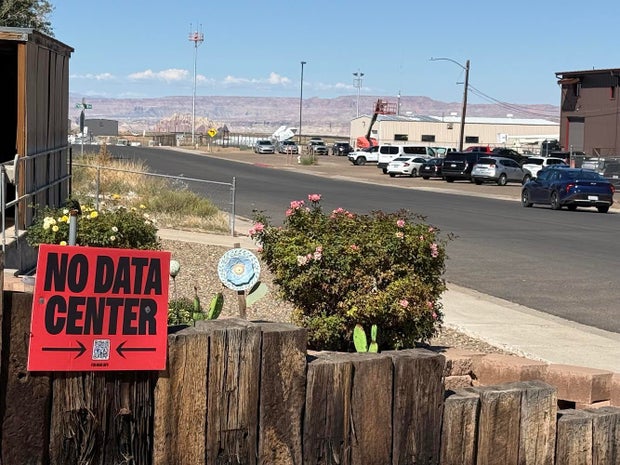
Doug Herrera continues to live in the home built by his father, who passed away from cancer. He fears pollutants from nearby uranium mining could have contributed to the illness and now worries a proposed $10 billion data center might endanger his health. Speaking from his porch in Arizona, Herrera stated, “I’m a patriot, but I’m highly against the data center.” His concern is evident with a yard sign reading “No Data Centers.”
Page, known for its stunning Southwestern desert landscapes with Joshua trees and red-rock formations, has seen its City Council approve land sales for a data center. However, zoning and additional approvals are pending. Residents, conscious of potential health risks, have signed petitions and mobilized against the project. The data center boom is causing division in communities like Page, becoming a focal point in the midterm elections. Candidates in Arizona’s 1st Congressional District are divided over new centers; the state’s attorney general has requested a halt on new approvals and construction.
The proposed center in Arizona involves a 500-acre purchase by a developer. Emerging research on potential health issues provides leverage to Democrats and some Republicans opposing expansive centers. The situation has made some politicians supporting data center growth vulnerable in traditionally conservative states such as Ohio and Texas.
Lee Hannah, a political science professor at Wright State University, noted a surge in grassroots opposition against data centers. “Local decisions supporting data centers are now career-ending,” he said. The hyperscale centers, crucial for AI infrastructure, require massive electricity consumption and backup gas generators, leading to air pollution. Studies associate this pollution with heart conditions, respiratory issues, and increased cancer risk.
Researchers from the University of California-Riverside suggest emissions could cause nearly 1,300 deaths annually by 2030 and a public health burden of over $20 billion by 2028. Other environmental groups highlight the risks of ‘forever chemicals’ and excessive noise from the centers. Alison Steele, executive director of the Environmental Health Project, warned, “By the time substantial research is available, decisions will be made.”
The Data Center Coalition argues that backup power usage is minimal, and regulations limit emissions. “Data centers strive to be responsible partners,” said Dan Diorio from the coalition. Nonetheless, the concerns divide many, including Republicans who side against constructions despite President Trump’s support for economic reasons.
A recent poll showed two-thirds of Americans opposing new data center constructions in the U.S. States heavily favoring Mr. Trump, and home to the proposed 2,000-plus centers, are witnessing standoffs. According to Cleanview, 60% of capacity under construction is in states Trump won comfortably. Hannah highlighted the dilemma for Trump’s coalition, noting data centers primarily rise in rural areas with strong Republican backing.
In Arizona, GOP House candidate Jay Feely, endorsed by Trump, sees data centers as vital against China, while Democratic opponent Amish Shah calls for a construction pause. A recent poll showed 57% of Arizona’s registered voters opposing more large data centers.
Political ads featuring groundbreaking ceremonies for data centers from years ago now haunt campaigns. Ohio sees numerous related initiatives on ballots. Former Sen. Sherrod Brown attacks Republican Sen. Jon Husted over his data center support. Tax breaks attracted Meta, Amazon, and Google to build centers in Ohio, spurring protests over health, environmental, and financial impacts.
Ohio’s races depict data centers as controversial, with a memo from the National Republican Senatorial Committee noting its significant impact on Husted’s campaign. Husted emphasizes local decision-making for data center construction and advocates for companies bearing infrastructure costs.
Polls reveal varied concerns over air and water pollution from data centers, with cooling system chemicals and diesel generators posing health risks. Shaolei Ren from the University of California-Riverside pointed out air pollution from generators affecting communities.
In July, Page residents ousted the mayor amid backlash over the data center land sale. Signs opposing construction dot this scenic town of about 7,000. Jan Boehme, living near the proposed site, worries about noise and its impact on her neighborhood. “We’re against it,” she said, fearing the health effects and disturbance the center could bring.
KFF Health News, a national newsroom, produces in-depth journalism focused on health issues. It is an integral part of KFF, an independent source for health policy research and journalism.