Construction Resumes on Brandon Road Project to Combat Invasive Carp
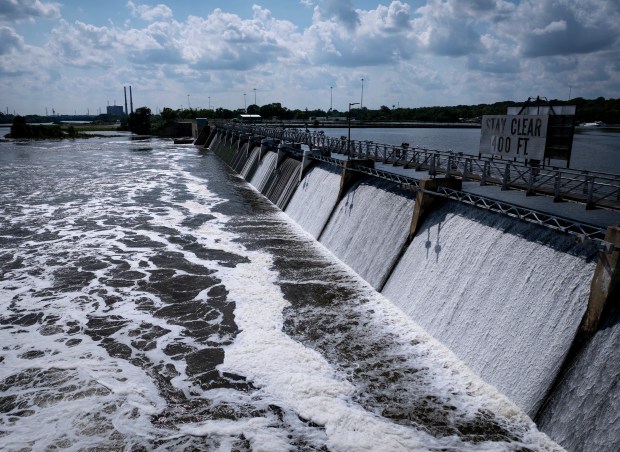
The U.S. Army Corps of Engineers has restarted work on the Brandon Road Lock and Dam project near Joliet, a critical part of a $1.15 billion initiative to prevent invasive carp from entering the Great Lakes. The project had temporarily stopped on July 24 due to an unexplained halt from the Corps’ Rock Island District. Shortly after, hundreds of small silver carp were found 80 miles from Lake Michigan in the Illinois River. This discovery suggests possible spawning near the lake and raises alarms about a potential carp invasion.
In the past, President Donald Trump directed maximum speed on this project, but delays have worried environmentalists and politicians about potential threats to the Great Lakes ecosystems and industries. Joel Brammeier of the Alliance for the Great Lakes highlighted the regional support and the necessity of continuing the project without delays.
This effort has seen bipartisan support from Illinois and Michigan, though recent friction arose between state governors and federal oversight. The temporary pause was lifted following discussions between Trump and Michigan Governor Gretchen Whitmer. With construction back on track, stakeholders emphasize the urgency of maintaining progress to protect regional ecosystems and economics.
Environmental groups from various states have urged continuous work to prevent greater costs and disruptions from potential species invasions. Experts like Brian Gill from the Shedd Aquarium reinforce that proactive measures are more cost-effective than dealing with the consequences of invasive species.
The project represents significant state contributions, with Illinois and Michigan investing millions, while Congress increased the federal cost share for operations and project phases. The first phase of the project involves site preparation and installing technologies to deter carp, including a bubble barrier and acoustic deterrents, moving towards electric barriers and flushing locks in later phases.
These carp — silver, bighead, grass, and black — have proven challenging due to their breeding patterns and lack of natural predators in American waters. Originating from experiments in Arkansas, they have spread through flooding and now threaten local ecosystems by dominating resources.
Ongoing monitoring by biologists has intensified, especially after juvenile silver carp were recently discovered closer to Lake Michigan. The inclusion of electrofishing in these efforts aims to control carp populations in critical areas near waterways.
Though recent surveys in Lake Calumet found no significant carp presence, examining captured fish’s microchemistry helps track origins and spread. Contract commercial fishing will continue targeting known carp-inhabited areas to prevent further establishment.