Controlling Blue Catfish in the Chesapeake Bay Through Local Consumption
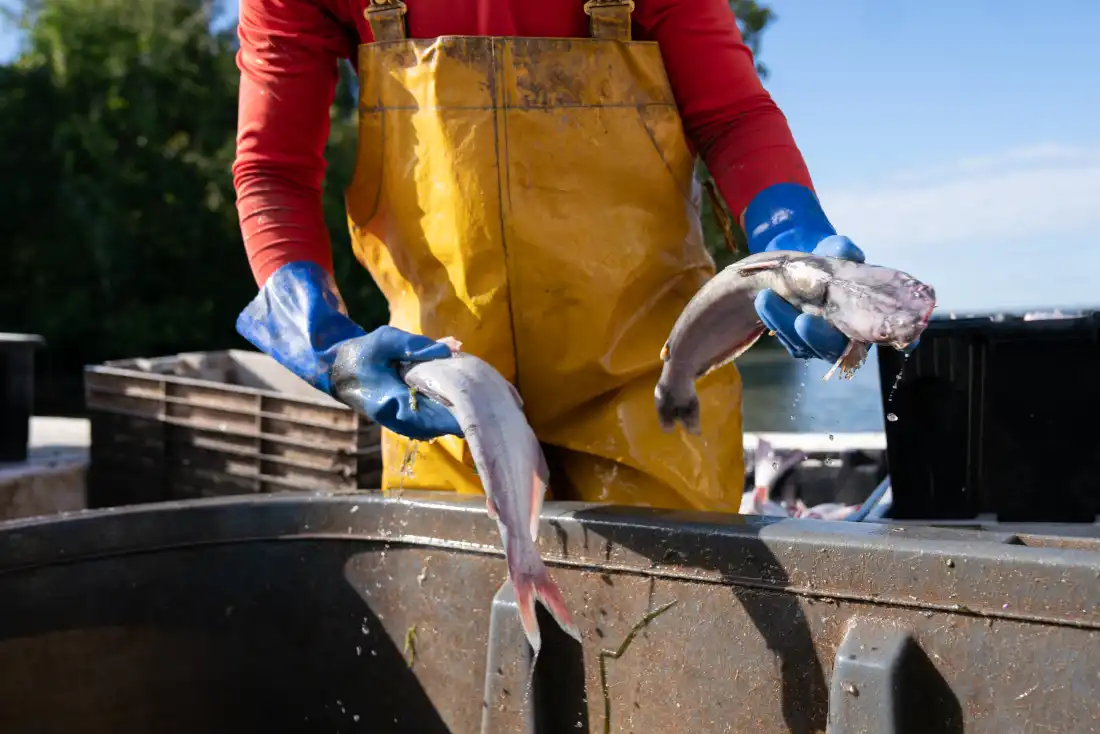
Invasive blue catfish pose a threat to the Chesapeake Bay, consuming native species such as the blue crab. One novel approach to controlling their population involves local schoolchildren enjoying them as part of their lunch menu.
Preston, Md. — At Preston Elementary School, located on Maryland’s Eastern Shore, students are offered a unique lunch option. Second-grader Ben Rochon proudly says, “I got a catfish sandwich!” Students are trying homemade catfish cakes, happily known as “catty patties.” While some prefer them with ketchup or mayo, fifth-grader Teagan Donovan prefers it plain: “I like it by itself with no toppings. I ignore the bun.”
Although fish cakes must compete with pizza for popularity, they are gaining interest. Beth Brewster, in charge of food services for Caroline County Public Schools, believes the fish cakes are beneficial both nutritionally and environmentally. Made from blue catfish, the dish serves as a tasty solution.
Blue catfish have spread throughout the Chesapeake Bay, developed into apex predators, and are causing concerns due to their dietary impacts on native species. Having migrated from rivers in Virginia, these predators pose a risk to Maryland’s seafood culture. Efforts to limit their impact rely heavily on human consumption.
“I have a fish for you,”said Brewster when joining forces with Bay2Tray, an initiative connecting seafood with schools and communities in Maryland and Virginia.
Fifth-grader Raelynn Truitt shares her love for the catfish cake, remarking, “It kind of tastes like crabs.”
Branson Williams, managing Maryland’s Invasive Fishes Program, reports that the catfish have defied expectations, flourishing throughout Maryland’s tidal tributaries despite their origin in the Midwest. During rainy years, they expanded their reach.
The presence of blue catfish, a species introduced for recreational fishing in the 1970s, is a cause for concern. Officials in Virginia and Maryland warn of their impact on traditional seafood populations.
Rocky Rice, a waterman from Maryland, has shifted his focus from crabbing to catching blue catfish. Though the market for catfish doesn’t match crabbing’s profitability, it provides stability through high-volume catches.
Rice notes, “What I started as a seasonal fill-in has become my primary job.” Blue catfish offer year-round fishing opportunities, with no seasonal or size restrictions.
He remarks, “They’re good. It’s a snow white, mild fillet.” His preference is covering the catfish as fried nuggets or fillets, reflecting his regional culinary style.
Once Rice returns with his catch, it processes for distribution. However, bottlenecks occur because catfish require USDA inspections, limiting processor availability.
Despite challenges, blue catfish are reaching various outlets, including schools, food banks, and grocery stores. Jenn Lovewell, overseeing Bay2Tray, emphasizes the sustainability and affordability of this protein.
Lovewell and Brewster advocate for increased harvesting and consumption as a necessary means to manage the blue catfish population.