Controversial Voting Overhaul Returns to Capitol Hill Amid Concerns
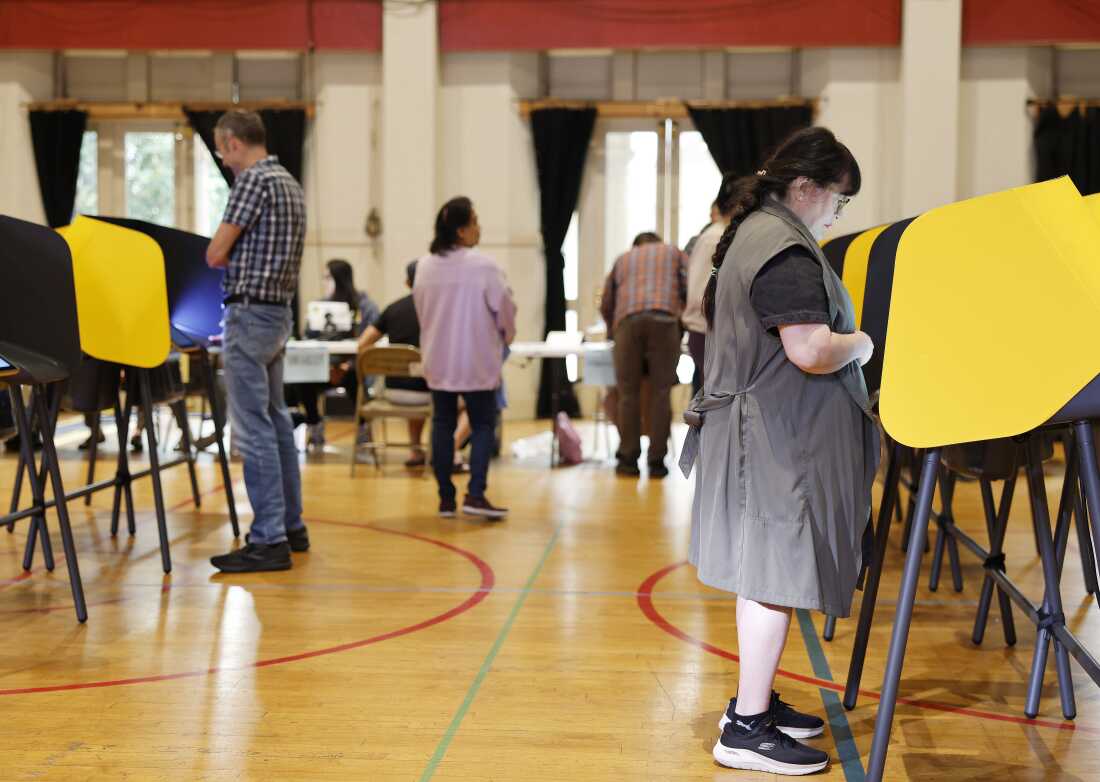
On November 4, 2025, voters attended a polling station in Pasadena, California. A controversial piece of legislation, previously introduced as the Safeguard American Voter Eligibility Act and now renamed the SAVE America Act, has resurfaced on Capitol Hill. This bill includes new photo identification requirements and reflects President Trump’s efforts to influence upcoming elections during a midterm year.
Opponents of the bill argue that it could disenfranchise millions of voters. The SAVE America Act narrowly passed the U.S. House of Representatives last week, supported by all Republican members and one Democrat. However, it faces significant obstacles in the GOP-led Senate, where Democratic opposition and the 60-vote threshold for overcoming a legislative filibuster pose challenges. While some Republicans have suggested bypassing the filibuster, GOP leadership remains hesitant.
Key Provisions of the SAVE America Act
The bill mandates that eligible voters present proof of citizenship, such as a valid U.S. passport or a birth certificate accompanied by a valid photo ID, when registering to vote. In its latest form, it also requires voters to show photo identification at voting stations.
Rep. Bryan Steil (R-Wis.), chair of the Committee on House Administration, stated that this bill strengthens the earlier SAVE Act. Critics point out that while non-citizens are already prohibited from voting in federal elections and voter fraud is rare, the current law requires citizenship attestation under penalty of perjury.
U.S. Rep. Bryan Steil (R-Wis.) commented during discussions on the House floor last week regarding the SAVE America Act’s provisions.
State-Level Practices and Concerns
Some states already verify citizenship for new voters. Additionally, about three dozen states require voters to show identification at polling places, with some insisting on photo IDs. Democrats and voting rights groups claim the SAVE Act’s identification requirements could significantly hinder millions of Americans who lack easy access to necessary documents. As of 2023, for example, nearly half of Americans did not possess a passport.
This legislation’s immediate implementation is seen as a potential burden for voters and election officials, especially in the absence of additional funding. Election officials could face criminal penalties for registering voters without citizenship proof under this act.
Senate Prospects and Public Opinion
The bill’s future in the Senate appears uncertain, even as Trump and his administration actively promote the overhaul. Public polling indicates that 8 in 10 Americans support the proof-of-citizenship and photo ID requirements, which Trump and others emphasize in their campaigns.
Critics believe the SAVE bill ties into Trump’s ongoing efforts to undermine trust in the electoral process and influence the upcoming midterms. Michael Waldman, head of the Brennan Center of Justice, which supports expanded voting access, dubbed the measure a “power grab in legislative garb.”
Recent suggestions from Trump to “nationalize” elections, as well as hints at a potential executive order mandating voter ID, have raised concerns. A previous 2025 executive order requiring citizenship proof for voter registration was halted by federal judges.
New Provisions in the SAVE Act
- Photo ID Provision: Acceptable IDs include U.S. passports, driver’s licenses, state IDs, military IDs, and tribal IDs. Those lacking an ID must vote provisionally, returning with an ID within three days or signing an affidavit citing a religious objection to photography.
- Name Discrepancy Guidelines: Applicants may provide an affidavit confirming that the current name matches a prior name on official documents, acknowledging concerns about women whose names changed after marriage.
- Exemptions for Service Members: Absent military members and their families are exempt from certain requirements.
- DHS Voter List Submission: States must submit voting lists to the Department of Homeland Security for comparison with the Systematic Alien Verification for Entitlements (SAVE) system. While designed as a national citizenship tool, errors in the system have incorrectly identified U.S. citizens in the past.
The debate over the SAVE America Act highlights ongoing tensions around voting rights and election security in the U.S.