Debating Daylight: Chicago’s Split Over Clock Changes
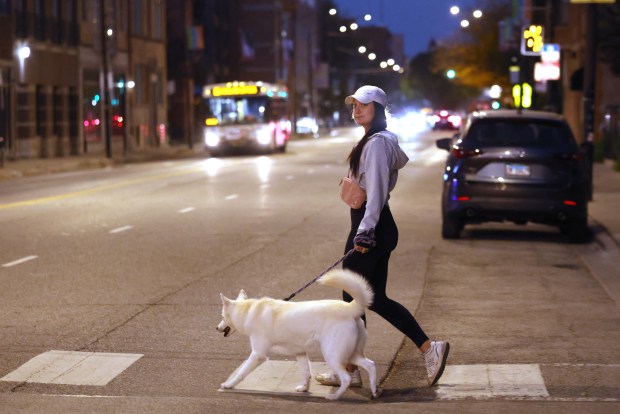
Chicagoans are once again discussing the merits of daylight hours in either the morning or evening as proposed legislation to eliminate the biannual clock change remains stagnant in the Senate. Opinions on the matter diverge widely, with perspectives ranging from doctors to dog walkers. Many view daylight saving time as beneficial to business, while others lament the loss of summer’s light.
Chris Prentice, an actor based in Edgewater, highlights the polarized views. ‘People argue that standard time is fabricated,’ says Prentice. ‘While it is, it’s arguably less artificial than daylight savings.’ Clocks will revert to standard time on Sunday to conserve energy and optimize sunlight. This fall back gives an hour back, but diminishes evening light. Medical experts favor standard time because it aligns better with the sun’s natural cycles. March’s spring forward disrupts sleep and increases heart disease risk, according to Dr. Sabra Abbott, a neurologist specializing in circadian rhythms.
Abbott states, ‘During daylight saving time, your body tries to adhere to solar time.’ Conversely, business owners prefer eight months of daylight saving time due to reduced evening foot traffic. They advocate for year-round daylight saving time, pointing out how later sunsets stimulate economic activity. President Donald Trump has long supported permanent daylight saving time, citing benefits for golfers and hunters. He endorses a federal solution via the Sunshine Protection Act, stalling in the Senate despite passing the House.
Senator Tom Cotton, opposing permanent daylight saving, fears dark conditions for schoolchildren. Prentice agrees, noting the unusual alignment with Cotton’s stance. The debate transcends typical political boundaries, with Prentice advocating based on lifestyle considerations. Winter evenings are crucial for his performances, and extended evening light could reduce ticket sales.
Chicagoans are divided. While some argue for personal safety benefits in darker mornings, others simply want leisure time post-work. A 2025 AP-NORC poll found most ‘night people’ favor permanent daylight saving time. Advocates often choose their daylight preference before rationalizing their arguments.
Federal lawmakers have introduced a competing bill to make standard time permanent, leaving three options: permanent daylight saving, permanent standard time, or maintaining the current system. Springfield faces political deadlock as legislators remain split. State Senator Rachel Ventura notes that disputes over daylight predate her Senate term. Ventura favors permanent daylight saving time, believing it helps commuters while morning darkness is inevitable for early-start children.
Richard Klatzco of Novelty Golf & Games supports permanent daylight saving, seeing it as business-friendly. While evening light aids operations, ChiTown Drive-In’s Bryce Bowman finds earlier darkness more profitable. Permanent daylight saving would limit showings due to late summer sunsets.
Gina Scaletta, a dog walker, favors standard time for safer morning conditions. Dr. James Rowley, recalling the 1974 permanent daylight saving experiment, highlights safety concerns as a significant argument against it. Rowley, a sleep specialist, points to health risks from prolonged disruptions to the natural clock and advocates for morning sunlight’s role in regulating sleep.
Dr. Abbott concurs, outlining how permanent daylight saving could misalign daily schedules. Abbott notes research linking late sunrises to higher depression rates and misaligned body clocks. Only 12% of Americans support the current system, though legislative changes aren’t imminent.
States can adopt permanent standard time, evident from examples like Arizona and Hawaii. Yet federal restrictions prevent permanent daylight saving time, despite several states passing conditional laws. Experts caution that inconsistent time zones could confuse cross-border commuters. Without the Sunshine Protection Act vote, clocks will fall back on Nov. 1.
Prentice remains hopeful for retaining morning light, symbolizing Chicago’s resistant spirit. ‘Chicagoans insist on calling their tallest building the Sears Tower,’ Prentice remarks. ‘If we can’t agree on names, agreeing on clocks seems unlikely.’