Democratic Party Challenges and Strategic Missteps
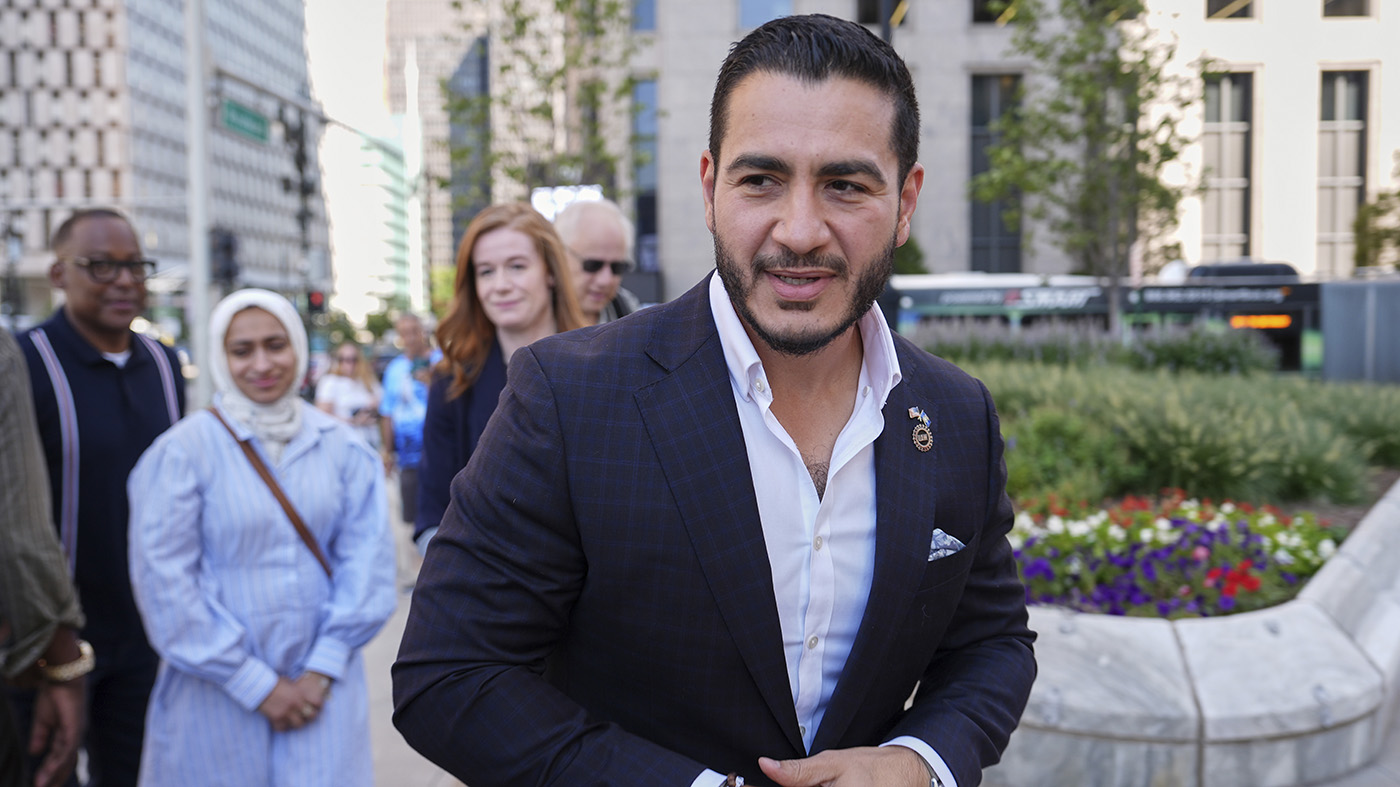
Abdul El-Sayed recently attended a news conference at the Spirit of Detroit after securing the Democratic nomination for the U.S. Senate in Michigan. Despite President Trump’s low approval rating of 34 percent, Democrats face challenges that threaten to squander their electoral opportunities. A significant area of concern is the strategy of the Democratic establishment to invest large sums in a national ad campaign targeting their own party members.
Jonathan Cowan, leader of the centrist Democratic group Third Way, announced a $15 million campaign against the rise of democratic socialism. When asked to define democratic socialism, establishment figures often avoid direct answers. They instead point to political figures like Dr. Abdul El-Sayed of Michigan and New York City Mayor Zohran Mamdani, despite El-Sayed not identifying as a democratic socialist.
The challenge for centrist Democrats is their inability to define democratic socialism without opposing popular policies. These policies enjoy significant support among Democratic voters. With a third of the Democratic base identifying as democratic socialists, this approach proves unpopular.
Despite not being a democratic socialist, the author argues that to gain congressional control, the Democratic Party must listen to their voters and their key policy concerns. Citing a loss of credibility among long-standing Democratic leaders, the text urges a shift in strategy to prevent further disconnection from voter priorities.
El-Sayed’s victory in the primary, despite being outspent, underscores the failure of centrist Democrats to deter voters from progressive politicians. New York City’s Zohran Mamdani also overcame political adversities. These examples reflect the establishment’s misstep in framing races as progressive versus centrist, rather than outsider versus establishment.
Progressive candidates have succeeded by focusing on key issues like affordability and jobs, avoiding conspiracy-like distractions. Current progressives, currently less associated with divisive culture battles of the past, are connecting with swing voters by addressing economic realities.
El-Sayed’s campaign, alongside candidates like Texas Rep. James Talarico, centers on economic issues, distancing from the extremist labels some centrist groups try to impose. Direct engagement with voters, championing their concerns, is proving successful.
Centrists face criticism for their incremental approach, perceived as avoiding timely decisive action. Progressive candidates are recognized for their willingness to engage honestly with constituents, addressing difficult policy discussions head-on.
Max Burns, founder of the Democratic firm Third Degree Strategies, observes that centrists are managing the party’s traditional ally base’s expectations. In contrast, progressive success reflects a commitment to addressing voters’ pressing needs rather than waiting for insufficiently opportune moments.