Democrats Divided Over Israel Aid Legislation
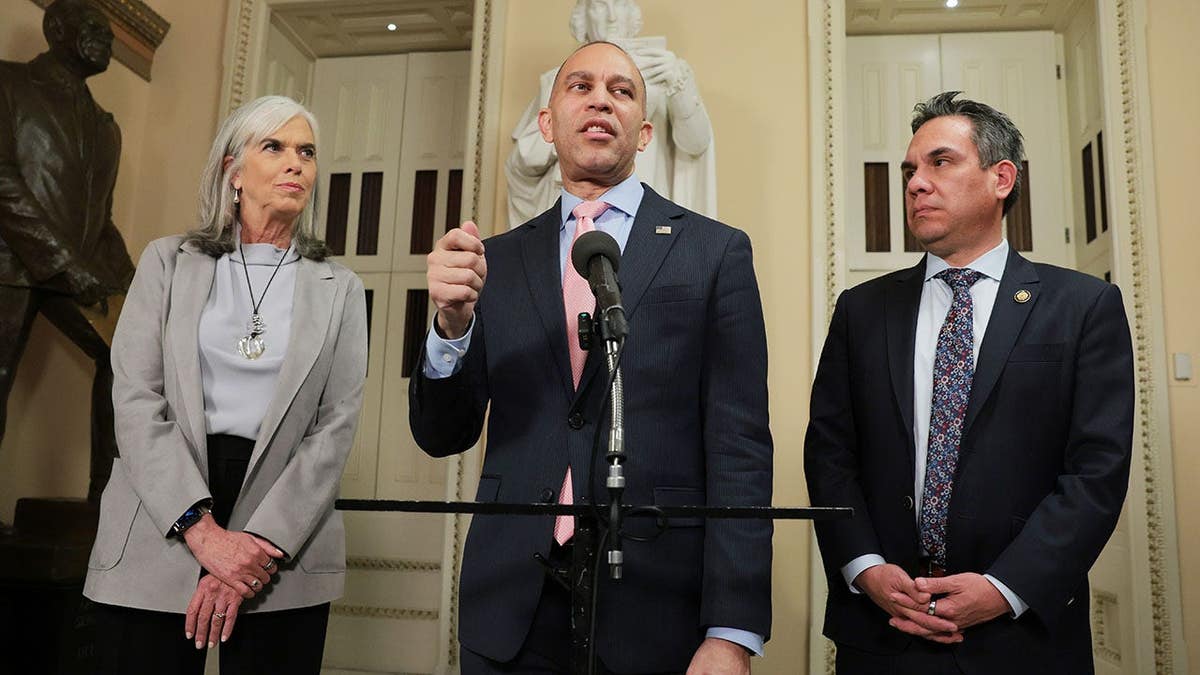
The recent vote in the House of Representatives exposed significant divisions within the Democratic Party over aid to Israel. The proposal to cut $3.3 billion in foreign aid to Israel was decisively rejected by a vote of 104-313, highlighting a deepening shift in attitudes as support for the Palestinian cause grows.
House Minority Leader Hakeem Jeffries and 97 Democrats opposed the amendment, while Rep. Katherine Clark and 102 other Democrats supported it. Ten Democrats chose to vote present. The amendment, presented by Rep. Thomas Massie, labeled Israel as a significant beneficiary of U.S. aid. Massie criticized Israel’s aid as the “biggest welfare recipient” of the United States, standing as the sole Republican backing the amendment.
The same terrorists and terrorist entities that threaten Israel also threaten the United States and our people directly.– Rep. Mario Diaz-Balart
Opponents of the measure argued that the proposal could jeopardize crucial U.S.-Israel relations and hinder efforts against terrorist groups like Hamas and Hezbollah. Rep. Mario Diaz-Balart emphasized the potential risks to both nations’ security and suggested that aiding Israel indirectly supports the U.S. industrial base.
Former House Majority Leader Steny Hoyer voiced concern that the amendment might embolden those opposing peace, threatening Israel’s existence and targeting Jewish communities. Despite the amendment’s defeat, its supporters considered it a step forward.
Chair of the Congressional Progressive Caucus, Greg Casar, saw the vote as progress. He argued that the party should direct taxpayer money toward domestic concerns rather than military expenditures overseas.
Critics of the amendment, including Jeffries, pointed out its flawed structure. They maintained it could inadvertently restrict funds for humanitarian aid and refugee resettlement, areas needing careful consideration.
As attitudes within the Democratic Party continue to evolve, a greater number of lawmakers are questioning the ongoing financial support to Israel. Recent polls reveal a shift in Democrat voter sympathies, further influencing legislative discourse.
Prominent Democrats, including Rep. Joaquin Castro, call for leveraging U.S. support to influence Israel’s actions in Gaza. Rep. Greg Landsman criticized the amendment for potentially compromising U.S. national security, attributing its timing to Republicans wanting to highlight party divisions.
The NBC survey from March showed 67% of Democratic voters sympathize more with Gaza than Israel. This mirrors the party’s shifting dynamics, as observed in recent electoral outcomes that favored anti-establishment candidates with strong positions against Israeli actions.
Rep. Ro Khanna faced scrutiny for his stance on the U.S.-Israel aid relationship, underlining the growing challenge moderates face from left-leaning factions within the party. This evolving sentiment suggests that such legislative efforts may gain traction in the future.